
Day three of the Rawalpindi test was filled with its share of dramatic moments, but none captivated attention quite like the final delivery. With South Africa having dominated play, Pakistan’s Mohammad Rizwan casually tapped the base of the stumps with his bat, dislodging the bails, after driving a ball from Keshav Maharaj towards cover. He hadn’t attempted a run.
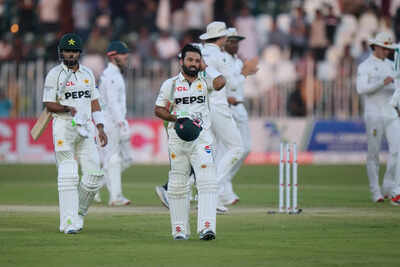
South African wicketkeeper Kyle Verreynne immediately appealed for a ‘hit wicket’, convinced that Rizwan’s actions should lead to his dismissal. However, the umpires, with a knowing smile from Sharfuddoula at the bowler’s end and support from square-leg umpire Chris Brown, swiftly dismissed the appeal. Curiously, reports suggest the South African players were not immediately informed of the exact reason for the decision.
While a batsman removing the bails with their bat certainly looks like a dismissal, the Laws of Cricket offered a different perspective, supporting Rizwan’s continued stay at the crease. Law 35.1 explicitly states the conditions under which a batsman can be given out ‘hit wicket’. These include during the bowler’s delivery stride, while attempting a shot or taking a run immediately afterward, or when making a second or further stroke to protect the wicket. Rizwan’s actions didn’t fall into any of these defined categories, rendering the appeal invalid.
The South African team seemed to accept the unusual turn of events gracefully. All-rounder Senuran Muthusamy later conceded he was too far from the play to fully grasp what transpired, implying no major contention from his side.
As stumps were drawn, Pakistan held a slim 23-run lead with six wickets still in hand, ensuring South Africa’s hopes of leveling the series remained very much alive for the following day.