
In the illustrious history of cricket, few narratives are as inspiring as that of GS Lakshmi. In 2019, she shattered glass ceilings by becoming the first woman ever appointed to the ICC’s International Panel of Match Referees. This monumental achievement opened doors for women in the traditionally male-dominated world of sports officiating. Now, Lakshmi is poised to make history once more, moving from being the sole female referee to joining a groundbreaking 18-member all-women panel that will officiate the upcoming ODI World Cup. Lakshmi attributes this significant progress to the unwavering support from both the Board of Control for Cricket in India (BCCI) and the International Cricket Council (ICC) over the years. While all-women officiating teams have previously overseen events like the 2022 Commonwealth Games in Birmingham and the 2023 and 2024 ICC Women’s T20 World Cups, this marks a historic first for an all-female panel to officiate the Women’s ODI World Cup itself.
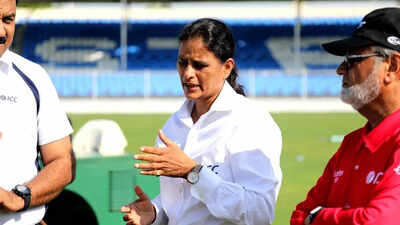
Academic Challenges Paved the Way for a Sporting Career
Originally from Rajahmundry, Andhra Pradesh, Lakshmi’s introduction to cricket took place almost forty years ago on the bustling streets of Jamshedpur, where her father was employed at Tata Motors. Back then, women’s involvement in cricket was virtually non-existent. She had no idea that this unfamiliar sport would eventually lead her down such an extraordinary path to success.
“I was never a particularly strong student,” she recalled. “Like many children, I played casual street cricket with my brothers and their friends. I truly had no grasp of cricket’s potential, nor did I know if I possessed the talent for it.”
The year 1986 proved pivotal when her academic results put her college education at risk. Her father, keen to secure her future, informed Jamshedpur Women’s College that she played cricket, hoping a sports quota might offer a solution. “My grades made college admission difficult,” the 57-year-old Hyderabad resident shared. “When asked about extracurriculars, my father mentioned cricket. The college coach then conducted a trial, was impressed by my bowling action, and promptly requested my inclusion in his team.”
From 1989 to 2004, Lakshmi played for various domestic teams, beginning her career with Bihar. Following her retirement as a player, she transitioned to coaching, leading the South Central Railways.
An Urgent Call for More Women in Umpiring
Lakshmi, a former right-arm fast bowler, observes a rapid and positive transformation within the sport. She believes the current system offers significantly enhanced opportunities for women to excel, which in turn encourages parents to support their daughters in pursuing cricket careers.
She sees the ICC’s decision to appoint an all-women officiating panel for the prestigious tournament—jointly hosted by India and Sri Lanka from September 30 to November 2—as a truly “welcome move,” symbolizing cricket’s progressive advancements.
“Players will definitely view this as a viable alternative career path once their playing days are over,” Lakshmi commented. “I’ve been on the panel since 2019, and there’s been immense encouragement and numerous opportunities for women officials. This all-female panel is truly the icing on the cake, showing the faith placed in us.”
This upcoming event marks her second 50-over World Cup, and her fifth World Cup appearance overall in women’s cricket.
The experienced referee hopes to inspire more women to pursue umpiring roles. “I would be even happier if more women stepped forward for umpiring,” she stated. “It’s an area where participation is still low, and that mindset needs to change. Currently, there are only about six or seven women umpires in India.”
Navigating the Intensity: Officiating Men’s vs. Women’s Cricket
As the first woman to officiate a men’s ODI game during the 2019 United Arab Emirates Tri-Nation series, Lakshmi notes that men’s cricket tends to be more aggressive. “I don’t believe there’s a significant difference in officiating men’s and women’s games,” she explained. “The primary distinction is the aggressive nature of men’s matches. They play with intense aggression, which requires a heightened level of focus from us. This isn’t to say women don’t play with intensity, but in terms of player behavior, women’s cricket is generally smoother. Otherwise, the competitive standards are identical.”
A Personal Regret: Not Representing India as a Player
While Lakshmi carries the regret of never having played for India during her athletic career, she finds immense satisfaction in her current role, contributing significantly to cricket’s evolving landscape as a highly respected referee.
She recounted, “After my father passed away in 1990, I faced significant pressure to marry. In 1991, I even received a call-up to the Rest of India team on my wedding day – a golden opportunity to join the national squad. However, cultural expectations prevented me from playing.” She eventually took a break, only to return to cricket later, helping South Central Railways clinch their first inter-Railways title in 1995.
In 1999, at the age of fifty, she earned a place on the Indian team for a tour of England, though she ultimately did not make it into the playing XI. Reflecting on her journey, she admitted, “I regret not having a longer playing career.”
Looking to the future, Lakshmi, with three World Cup finals already under her belt as an official, remains highly optimistic about the eventual inclusion of a female match official in a men’s World Cup. “Why not!” she enthusiastically stated.