
The iconic India-Pakistan cricket rivalry spiced up with another intriguing off-field moment during their highly anticipated Asia Cup Super Four match in Dubai on Sunday evening. The atmosphere was thick with anticipation, not just for the game, but also due to a brewing controversy.
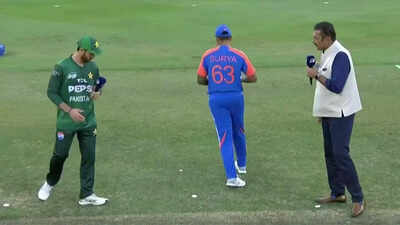
At the crucial toss, veteran commentator and presenter Ravi Shastri wasted no time, cutting straight to the chase with Pakistan captain Salman Ali Agha. His direct question: “How is the mood inside the dressing room?” This pointed inquiry came hot on the heels of a lingering handshake dispute that had already grabbed headlines since their previous group-stage encounter.
Despite the probing question and the intense spotlight, Salman remained composed. He calmly deflected the underlying tension, opting to keep the conversation focused purely on the game. “The mood is very normal. Pitch looks to be on the slower side. We want to start well with both bat and ball. It’s a new game, a fresh challenge,” he stated, announcing two changes to his squad with Hasan Nawaz and Khushdil Shah not playing.
Meanwhile, Indian skipper Suryakumar Yadav, after winning the toss, declared his team’s decision to bowl first. He shared his tactical perspective, “The track looks good, and there was dew yesterday. Since the first round, we’ve been approaching this as a knockout tournament, so our mindset remains unchanged. This pitch feels quite normal, just another game.” India reinforced their squad by bringing back their ace pacer, Jasprit Bumrah, and the enigmatic spinner Varun Chakaravarthy, replacing Arshdeep Singh and Harshit Rana, signaling a full-strength assault.
However, the most talked-about moment wasn’t a strategic play or a spirited quote, but rather a glaring omission. For the second consecutive time in this Asia Cup, the customary handshake between the two captains at the toss was noticeably absent. This unspoken gesture, amidst the ongoing scrutiny and prior controversies between the two camps, ensured that the narrative around the match would highlight the off-field dynamics as much as the cricketing action itself.