Pralhad Joshi Gets Charge of Education Ministry: What's Next
Introduction
Hours after Union Education Minister Dharmendra Pradhan's resignation was accepted, the government moved quickly to fill the vacancy, handing additional charge of the Ministry of Education to Union Minister Pralhad Joshi. The reshuffle caps off weeks of escalating nationwide protests over alleged irregularities in the NEET-UG medical entrance exam, and comes at a moment when public attention on India's examination system is higher than it has been in years. Here's a clear look at what happened, who Pralhad Joshi is, and what comes next.
Table of Contents
- What Was Announced
- Who Is Pralhad Joshi?
- The Protests That Led Here
- Timeline: From Paper Leak to Resignation
- What the Government Has Agreed To
- Reactions From Across the Political Spectrum
- What This Means for Students and the Education System
- Challenges Ahead for the New Charge
- Case Studies: How Past Exam Controversies Were Handled
- Common Questions About the Reshuffle
- Actionable Information for Students and Parents
- FAQs
- Conclusion
- Key Takeaways
What Was Announced
Union Minister Pralhad Joshi has been assigned additional charge of the Ministry of Education, according to an official communiqué, following President Droupadi Murmu's acceptance of Dharmendra Pradhan's resignation. Joshi will continue to hold his existing portfolios — Consumer Affairs, Food and Public Distribution, and New and Renewable Energy — while also taking on responsibility for the Education Ministry.
The announcement came on a Saturday evening, just hours after Pradhan's resignation was made official, reflecting the government's apparent effort to move quickly and avoid an extended leadership vacuum at the ministry during an active period of public unrest.
Who Is Pralhad Joshi?
Pralhad Joshi is a senior Union Cabinet minister who, prior to this appointment, was already managing a notably broad set of responsibilities across consumer affairs, food distribution, and renewable energy. His addition of the Education Ministry, even on an "additional charge" basis rather than a full standalone appointment, places him in direct oversight of one of the government's most politically sensitive portfolios at a particularly difficult moment.
Additional charge appointments are a common tool in Indian Cabinet management, allowing a minister to temporarily or semi-permanently oversee more than one ministry, though they can also raise questions about whether a single minister has sufficient bandwidth to address a fast-moving crisis alongside their existing responsibilities.
The Protests That Led Here
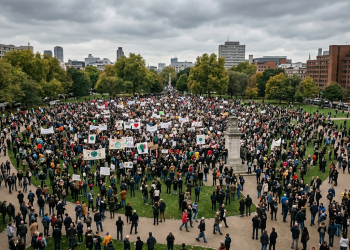
The developments trace back to widespread anger over the 2026 NEET-UG paper leak and related irregularities, including controversy over CBSE on-screen marking processes. The protest movement was significantly amplified by the Cockroach Janta Party (CJP), a youth-led satirical political movement founded in May 2026 after a public remark comparing unemployed young people to "cockroaches" drew backlash and was reclaimed by students as a rallying symbol.
The CJP-led demonstrations, centered at Jantar Mantar in New Delhi, drew support from established student organizations and grew into one of India's largest youth-led protest movements in recent years. The movement gained further national attention after activist Sonam Wangchuk began an indefinite hunger strike at the protest site in late June in solidarity with the demonstrators, and intensified further after his removal from the site drew visible public anger. Tensions escalated on July 20, when clashes between protesters and police resulted in injuries on both sides, following the imposition of prohibitory orders and the demolition of the protest encampment.
Timeline: From Paper Leak to Resignation
- May 2026 — The Cockroach Janta Party is founded as a satirical youth movement following a public comment about unemployed graduates.
- June 2026 — Nationwide protests begin over the NEET-UG paper leak and CBSE marking irregularities; Sonam Wangchuk begins a hunger strike in late June.
- July 20, 2026 — Protests turn violent at Jantar Mantar following police action and the demolition of the protest camp, with injuries reported on both sides.
- Following days — Continued protests and public pressure, alongside reported negotiations between government representatives and protest leaders.
- Resignation weekend — President Droupadi Murmu accepts Dharmendra Pradhan's resignation with immediate effect; Pralhad Joshi is assigned additional charge of the Education Ministry within hours.
What the Government Has Agreed To
Alongside the resignation and reshuffle, the government has reportedly agreed to several demands raised by protesters, including reforms to how public examinations are conducted, compensation for students affected by the exam irregularities, and withdrawal of FIRs filed against protesters during the demonstrations. These concessions represent a notable shift after the ministry had previously and repeatedly denied that any systemic paper leak had occurred, characterizing earlier reported issues as isolated incidents limited to specific exam centers.
Whether these commitments will be formalized quickly, and whether they will satisfy the protest movement's broader demands for structural reform of the National Testing Agency and the exam system more generally, remains to be seen in the days following the reshuffle.
Reactions From Across the Political Spectrum
Reaction to the resignation and reshuffle has come from multiple directions. Opposition politicians and commentators have framed the resignation as a long-overdue acknowledgment of accountability failures, while some government-aligned voices have characterized the outcome as a responsive, orderly transition rather than a crisis-driven concession. Political analysts have noted that the scale and speed of the CJP-led movement — described by some as one of the more significant youth political mobilizations India has seen in years — appears to have forced a faster government response than more traditional forms of political protest have historically achieved.
It's worth noting that opinions on both the underlying causes of the exam irregularities and the appropriate government response remain genuinely contested across India's political spectrum, and readers should expect continued debate over both issues in the weeks ahead.
What This Means for Students and the Education System
For the millions of students who sit for NEET-UG and other centrally administered exams each year, the immediate practical questions center on two things: how quickly the promised reforms and compensation measures are implemented, and whether the National Testing Agency undergoes any structural changes as a result of the controversy. Previous exam controversies in India have sometimes led to procedural adjustments without fundamental changes to exam administration, which is part of why some protest organizers have emphasized concrete, written commitments over verbal assurances.
Challenges Ahead for the New Charge
Pralhad Joshi's task now involves managing an active public trust crisis in the examination system while also continuing to run three other substantial ministries. Analysts point to a few specific near-term challenges: quickly and visibly implementing the reforms the government has agreed to, restoring public confidence in the National Testing Agency's exam administration processes, and managing ongoing protest activity, all while avoiding the appearance that education has become a secondary priority given his existing workload.
Case Studies: How Past Exam Controversies Were Handled
The original 2024 NEET-UG controversy: Allegations of paper leaks and grace-mark irregularities first emerged in 2024, following exam results that raised questions from parents, teachers, and opposition politicians. At the time, the then-Education Minister maintained that there was no evidence of a systemic paper leak, characterizing reported issues as isolated to specific centers — a position that became increasingly difficult to sustain as the 2026 controversy unfolded.
Comparative government responses: Previous instances of exam irregularities in India, including earlier NEET and UGC-NET controversies, generally resulted in retests for affected candidates and formation of academic review committees, but rarely resulted in ministerial resignations — making the 2026 outcome a notable departure from historical precedent.
Common Questions About the Reshuffle
- Is this a permanent appointment or temporary? As of this writing, Joshi holds "additional charge" of the ministry, a designation that can be either temporary or extended, depending on future Cabinet decisions.
- Does this resolve the underlying protest movement? Not necessarily — protest organizers have indicated they will continue monitoring whether promised reforms are actually implemented before considering the matter resolved.
-
Will the National Testing Agency itself see structural changes? This remains unclear and is likely to be one of the most closely watched developments in the coming weeks.
Actionable Information for Students and Parents
-
Monitor official Ministry of Education and National Testing Agency communications directly for updates on compensation and reform timelines, rather than relying solely on social media.
- If affected by the 2026 NEET-UG irregularities, watch for official guidance on retest, compensation, or grievance redressal procedures as they're formalized.
- Follow verified news sources for updates on FIR withdrawals if you or someone you know was involved in the protests.
- Stay attentive to any announced changes to NTA's exam administration procedures, since these may affect future exam cycles beyond just NEET-UG.
FAQs
1. Who is India's new Education Minister as of this reshuffle?
Union Minister Pralhad Joshi has been given additional charge of the Ministry of Education, alongside his existing portfolios of Consumer Affairs, Food and Public Distribution, and New and Renewable Energy.
2. Why did Dharmendra Pradhan resign as Education Minister?
His resignation followed sustained nationwide protests over alleged irregularities in the 2026 NEET-UG exam and CBSE marking process, led significantly by the youth-focused Cockroach Janta Party movement.
3. What is the Cockroach Janta Party?
It's a satirical, youth-led political movement founded in May 2026, which grew rapidly into one of the largest youth protest movements in India in recent years, centered on demands for exam reform and broader accountability.
4. What role did Sonam Wangchuk play in the protests?
The climate activist began an indefinite hunger strike at the protest site in late June 2026 in solidarity with the demonstrators, which significantly raised national attention on the movement.
5. What has the government agreed to as part of the resolution?
Reported concessions include exam process reforms, compensation for affected students, and withdrawal of FIRs filed against protesters during the demonstrations.
6. Is Pralhad Joshi's appointment permanent?
As of this writing, it is designated as "additional charge," which can be extended or formalized further depending on future Cabinet decisions.
7. What triggered the initial protests back in 2024?
Allegations of grace-mark irregularities and a possible paper leak first emerged following the 2024 NEET-UG results, prompting parliamentary debate and opposition calls for the then-minister's resignation.
8. How large has the protest movement become?
Reporting indicates the CJP's associated social media following has grown to tens of millions, and the movement has been described by analysts as one of India's most significant youth-led protest movements in recent years.
9. Will NEET-UG itself be canceled or retaken?
Specific decisions about retests or exam validity depend on further NTA and Ministry of Education announcements, which had not been fully detailed publicly as of this writing.
10. What happens if the promised reforms aren't implemented quickly?
Protest organizers have signaled they intend to continue monitoring the government's follow-through, suggesting further public pressure is possible if commitments aren't formalized and implemented visibly.
Conclusion
The handover of the Education Ministry to Pralhad Joshi marks a significant, fast-moving chapter in a controversy that began with exam irregularities and grew into one of India's most closely watched youth political movements in recent memory. Whether this reshuffle marks a genuine turning point toward exam reform, or simply a change in leadership without deeper structural change, will depend heavily on what happens in the weeks immediately following — particularly whether the government's promised reforms are implemented visibly and quickly enough to satisfy a protest movement that has shown it's willing to keep pushing.
Key Takeaways
- Pralhad Joshi has been given additional charge of the Ministry of Education, alongside three other existing portfolios.
- The reshuffle follows President Droupadi Murmu's acceptance of Dharmendra Pradhan's resignation amid nationwide NEET-UG protests.
- The protest movement was significantly driven by the Cockroach Janta Party, a satirical youth political movement founded in May 2026.
- The government has reportedly agreed to exam reforms, student compensation, and withdrawal of FIRs against protesters.
- Whether the reshuffle satisfies the broader protest movement will depend on how quickly and visibly these commitments are implemented.