
Kashmir has always been known for its exquisite willow bats, but for a long time, its cricketing talent remained unseen on the national stage. That changed with Parvez Rasool. Making his Ranji Trophy debut in 2008, Rasool carved out an impressive career, playing 95 First-Class matches, taking 352 wickets, and scoring 5,648 runs. Yet, his impact goes far beyond statistics. He broke barriers, becoming the first player from Jammu & Kashmir to secure an IPL contract and represent India, fundamentally changing how J&K cricket was perceived – no longer just a source of bats, but a hub of talent. His journey, from challenging bus commutes in Bijbehara to donning the Indian cap, symbolizes an opened door for many aspiring cricketers who followed in his footsteps.
In a candid interview, Rasool delves into his decision to retire, even after being J&K’s leading wicket-taker last season. He sheds light on the ongoing struggles faced by talented domestic players from smaller states to gain recognition and opportunities, and how the glamour of IPL often eclipses consistent performances in first-class cricket.
Rasool clarifies that his retirement wasn’t premature but a well-timed decision to transition into mentoring younger cricketers at the grassroots level. He expresses immense satisfaction with the growing recognition of Jammu & Kashmir cricket and its players, a significant shift from its previous obscurity. Having captained J&K for six years and won the Lala Amarnath award twice, he feels he contributed meaningfully to its rise. Despite being J&K’s highest wicket-taker in his final Ranji Trophy season, he sensed a change in dynamics, prompting him to step aside gracefully. “It’s part of life,” he says, emphasizing the importance of leaving on one’s own terms and with respect.
Reflecting on his challenging ascent, Rasool acknowledges the immense difficulty of his journey from Bijbehara. He empathizes with the struggles faced by local players, recalling his own experiences traveling 50 km by bus from his hometown to Srinagar for trials, often with large kit bags that bus drivers were reluctant to accommodate.
These arduous journeys were not for an academy, as none existed in his hometown. Even today, the situation remains largely unchanged. Rasool recalls traveling to Srinagar for a month-long trial period, as it was the only place with a turf wicket, unlike the mat pitches commonly used in his region.
The strong support from his cricketing family, particularly his father, significantly eased his path. He highlights the stark contrast for other youngsters in Kashmir, especially from villages, who often struggle to convince parents to pursue cricket due to a severe lack of opportunities, facilities, and inspiring role models. Rasool considers himself fortunate for his family’s unwavering encouragement, a rarity in rural areas lacking infrastructure.
He consistently performed across age-group levels – Under-14, Under-19, and Under-23 – which eventually earned him a spot in the Jammu Kashmir Ranji Trophy team. His debut against Himachal saw him score 40 runs in a team total of just 110. Despite receiving offers from larger teams during his peak, Rasool chose to remain with J&K, driven by his desire to uplift cricket in his home state.
Rasool expresses profound joy at being credited with bringing cricket into the mainstream in Kashmir. He is incredibly proud to see a new generation of cricketers like Abdul Samad, Aqib Nabi, and Umran Malik emerging and making a mark. He notes a significant cultural shift, with parents now more willing to encourage their children to pursue cricket.
The passion for local cricket in the valley is unparalleled, drawing thousands of spectators to games. Rasool believes that his pioneering efforts illuminated a path for youngsters, instilling the belief that dedication and hard work can lead to playing at the highest levels.
Despite the surging interest, Rasool laments the severe lack of cricketing infrastructure in Kashmir. He states that the basic facilities remain largely unchanged from his playing days, with only the Sher-e-Kashmir stadium in Srinagar and one ground in Jammu available. While the Jammu Kashmir Sports Council has developed some grounds and nets, these require significant improvement. He emphasizes that the JKCA (Jammu and Kashmir Cricket Association) still operates with just these two main grounds.
Rasool firmly believes that proper infrastructure and facilities are paramount for player development, even more so than coaching. “If you keep coaching, and won’t give facilities to players, then things won’t work out,” he asserts.
Regarding Abdul Samad, who was once touted as a future star, Rasool defends his performance, highlighting his strong showing last year, including two Ranji Trophy centuries. He expresses bewilderment at Samad’s controversial dropping from the quarter-final, noting that such decisions can deeply demotivate a player. Nevertheless, Rasool remains confident in Samad’s talent and predicts a brighter future for him.
Rasool confirms the prevalent fear among domestic players that their performances might go unnoticed unless they belong to a prominent state board or a “big team.” He emphasizes the crucial need for strong advocacy and support for deserving players. He cites Aqib Nabi’s exceptional recent performances – a five-wicket haul (including four in four balls) in the Duleep Trophy and a seven-wicket haul in a Ranji Trophy match – yet Nabi hasn’t been considered for the India A team. This, Rasool points out, illustrates how talents from smaller states often fail to receive the recognition they merit.
A critical issue outsiders often miss, according to Rasool, is the diminishing value of domestic cricket since the advent of the IPL. He highlights the unfair reality where a player who consistently performs across an entire domestic season, scoring 600 runs or taking 30-40 wickets, might be overlooked in favor of someone who delivers just one standout performance in the IPL. This fast-tracking of IPL performers, he believes, significantly overshadows the consistent hard work and achievements in domestic cricket, which he finds disheartening.
Rasool strongly advocates for streaming domestic matches, perhaps on platforms like YouTube, acknowledging that full telecasts might be challenging. He argues that increased visibility would undoubtedly change public perception towards domestic cricket, as these matches are often “very interesting” and deserving of a wider audience.
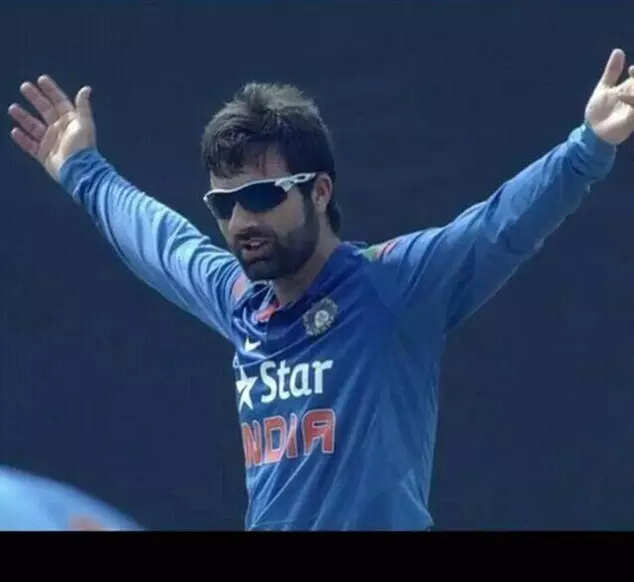
Reflecting on his career, Rasool expresses deep regret over not receiving sufficient opportunities despite his consistent domestic performances. He recounts his time with Pune Warriors in 2013, where, despite being the season’s top all-rounder, he was benched until the team was out of contention. In his limited chances, he performed well, notably taking two wickets including Jack Kallis in his first IPL match, yet subsequent opportunities remained scarce.
He also felt his strong first-class form warranted a Test call-up, especially given the Indian pitches that suited his style. His international debut for India in Bangladesh yielded two wickets on a flat pitch, only for him to be dropped after a single game. Similarly, his T20I debut against England in 2017 also saw him play just one match before being overlooked. Rasool firmly believes that one match is insufficient to judge a player’s capability, leaving him with the lingering regret of unfulfilled potential despite his consistent efforts.

When asked about the need for senior players like Rohit Sharma and Virat Kohli, who have retired from Tests and T20Is, to play domestic cricket to maintain match fitness, Rasool suggests it’s an individual decision. He emphasizes their vast international experience and Virat Kohli’s intense dedication to practice, noting Kohli’s self-critical nature even during net sessions. Rasool believes that at their level, these players are acutely aware of their physical condition and can best judge whether they require additional match practice.
Rasool credits legendary spinner Bishan Singh Bedi as a pivotal figure in his cricketing education. Bedi’s coaching in 2011 marked a breakthrough season, fundamentally altering the mindset of the J&K team. Before Bedi, the team merely participated; he instilled a competitive spirit, urging them to “go and compete” and “fight.” This transformation ignited a spark in both Rasool and J&K cricket.
Bedi consistently motivated Rasool, assuring him of his ability. Under Bedi’s guidance, the J&K team, which previously lost every match, developed a winning mentality. Rasool fondly remembers Bedi’s encouraging words: “go and express and back yourself and go boys play, that’s it.” He reveres Bedi as a “great person” whose influence extended far beyond technical coaching, focusing on positive reinforcement and mental strength.