
The Women’s World Cup 2025 has been embroiled in controversy following a provocative on-air comment by former Pakistan captain and current commentator, Sana Mir. Her reference to ‘Azad Kashmir’ during Pakistan’s opening match against Bangladesh sparked immediate outrage, leading to a significant backlash on social media and drawing scrutiny from cricket enthusiasts and governing bodies worldwide.
A widely circulated clip captured Mir stating, ‘… captaining a very young side. Yes, they have won the qualifiers, but a lot of these players are new. Natalia, who comes from Kashmir, Azad Kashmir, plays in Lahore a lot of cricket. She has to come to Lahore to play most of her cricket there.’
In response, Indian fans swiftly took to social media, urging the International Cricket Council (ICC) and the Board of Control for Cricket in India (BCCI) to take decisive action. They demanded Mir’s removal from the commentary panel, citing the fundamental principle that politics should not be intertwined with sports. This incident has reignited crucial discussions about commentators’ responsibility to maintain neutrality during international broadcasts, given the ICC’s stringent regulations against political statements in cricket.
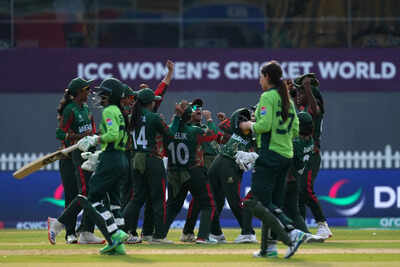
Meanwhile, the ongoing controversy unfortunately overshadowed Pakistan’s struggles on the field against Bangladesh’s exceptionally disciplined bowling attack. On a rather unresponsive pitch, Bangladesh effectively limited Pakistan to a disappointing total of 129 runs, all out in just 38.3 overs.
Bangladesh’s 20-year-old pacer, Marufa Akter, opened with a spectacular spell, claiming the crucial wickets of opener Omaima Sohail and experienced batter Sidra Amin for consecutive first-ball ducks. This left Pakistan in a dire situation at 2 runs for 2 wickets. Following the powerplay, slow left-arm spinner Nahida Akter intensified the pressure, dismissing Muneeba Ali for 17 and Rameen Shamim for 23, effectively preventing Pakistan from building any significant momentum in their innings.
Throughout their innings, Pakistan struggled to maintain a decent run rate, seldom exceeding four runs per over. They only managed to cross the 100-run mark in the 30th over, hitting a mere 14 boundaries in total. The Pakistani batters found it difficult to counter Bangladesh’s strategic rotation of bowlers, resulting in a consistent fall of wickets.