
Former Punjab junior cricketer Nikhil Chaudhary reflects on a pivotal decision: staying in Australia after COVID-19 restrictions lifted. “It was all God’s plan,” Chaudhary shared from Brisbane. “I have no regrets in saying that staying back in Australia changed my life, my cricket. If I had been in India, my cricket career would have been a mess. You know how it works. Talent and performance don’t matter – you need strong recommendations to play cricket,” he remarked with a touch of humor.
The 29-year-old has moved past the disappointments of his playing days in India’s domestic circuit. Chaudhary progressed through Punjab’s age-group system, representing the state in U-16, U-19, and U-23 categories, and even featuring in a few limited-overs matches for Punjab. However, despite making it to the Ranji Trophy squad, he never got the chance to play First Class cricket in his home country. His maiden experience in this format came in his adopted country, Australia.
A recent opportunity arose when left-arm spinner Matthew Kuhnemann was selected for Australia to play against New Zealand. This opened a door for Nikhil, who hadn’t played red-ball cricket for two years.
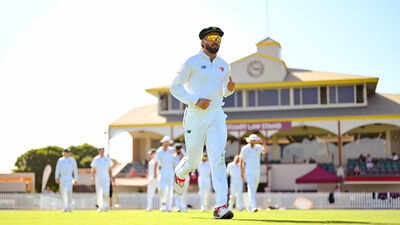
“Two days before our match against Queensland, I received a call from the Tasmania selectors informing me that I was picked for the Sheffield Shield. I wasn’t expecting this because I hadn’t played red-ball cricket for almost two years. In club games, I was solely focused on my white-ball game,” he recalled. “There were a few eyebrows raised; some were happy, some weren’t. There were a few nerves. Matthew Wade came to my rescue, and after I was handed the debut cap, he advised me, ‘Play the way you play in limited overs.'”
Wade’s encouraging words helped ease Chaudhary’s tension, but it wasn’t enough immediately. In the first innings, he scored 14 runs off 29 balls. “It isn’t my game. I can’t hold the fort. And then, with the ball in hand, I was bowling slow, trying to give the ball more air, which again is not my strength. I bowl quick leg-breaks,” he explained. This is when Tasmania’s bowling coach, James Hopes, offered crucial advice. “He asked me to bowl quick. It worked, and I picked up a fifer on my debut,” Chaudhary proudly stated.
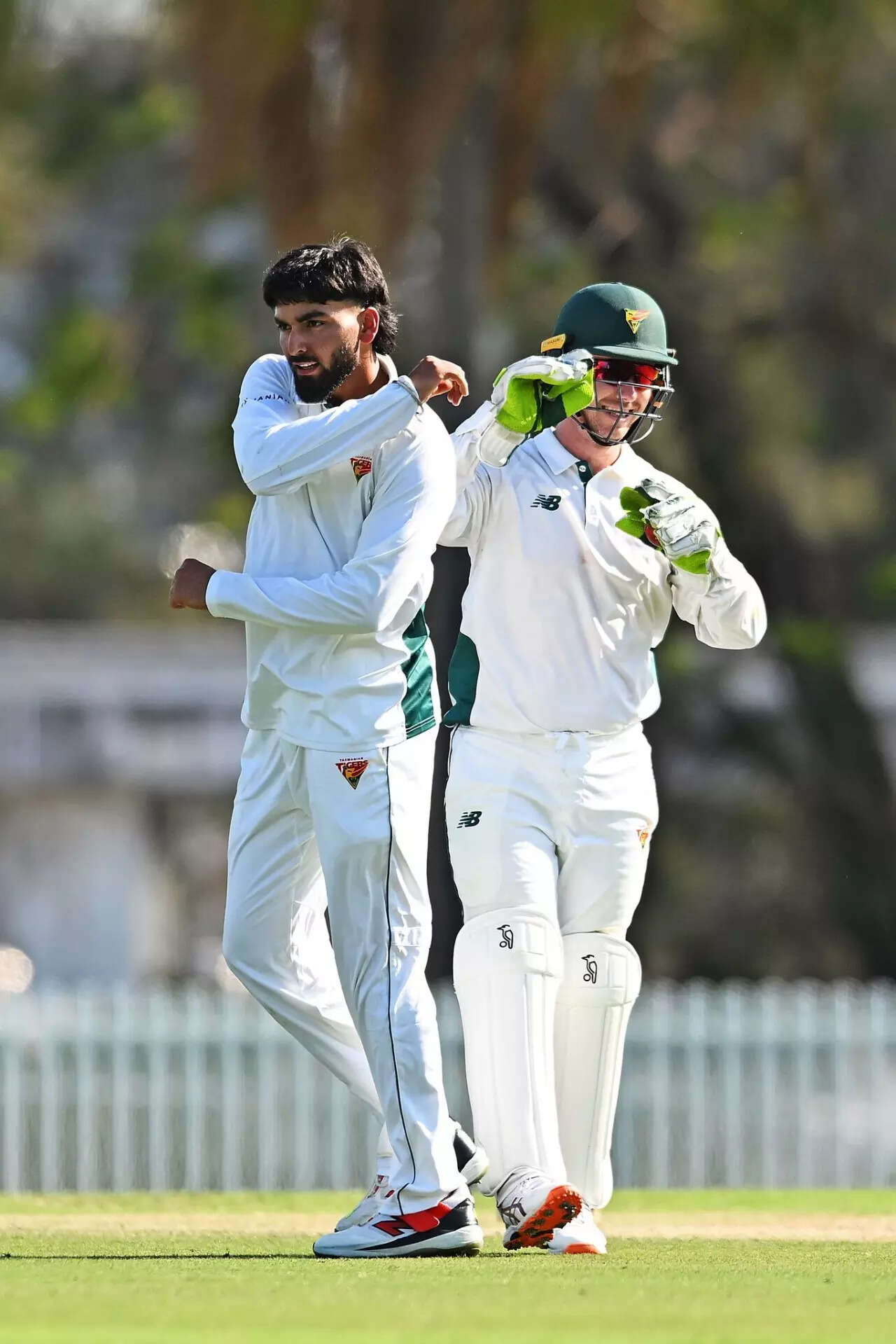
The match had one more dramatic turn. On the final day, battling a high fever, Chaudhary watched as Tasmania found themselves in a precarious position, with Queensland pushing for an innings victory. During the tea break on Day 4, the coaches urged Nikhil to rest and prepared batters No. 9, 10, and 11. Chaudhary, slated to bat at No. 8, was overwhelmed with emotions. He reflected on his time stranded in Australia during COVID, the odd jobs he took to survive, the cricket he played in Brisbane to keep his passion alive, his Big Bash League (BBL) contract—and now, the chance to justify the faith Tasmania cricket had placed in him.
“I took pills and told everyone that I could still save this match. I walked out and played my natural game, remained unbeaten on 76 off 80 balls, and we managed to salvage a draw,” Chaudhary recounted. “The icing on the cake was that chief selector George Bailey was also watching the game.”
If I had been in India, my cricket career would have been a mess. You know how it works. Talent and performance don’t matter – you need strong recommendations
Despite his heroics, he remained unsure about being selected for the next match, given Matthew Kuhnemann’s imminent return. “He is an Australian cricketer, and you have to make way for the international guys. There’s no harm in it. I was just glad to make my First Class debut,” he humbly stated. However, Kuhnemann, often dubbed Australia’s ‘Jaddu’ (Ravindra Jadeja), was called up for the three-match white-ball series against India, granting Nikhil another opportunity. While his performance against Western Australia was subdued, he was part of one of the most thrilling First Class matches in recent memory, with Tasmania clinching a three-run victory.
The Journey
Chaudhary first grabbed attention after he confidently hit Pakistan speedster Haris Rauf for a six over backward point and celebrated with a signature thigh-five after taking wickets for the Hobart Hurricanes in the BBL. He then performed well in the Dean Jones Cup (List A) before making his First Class debut.
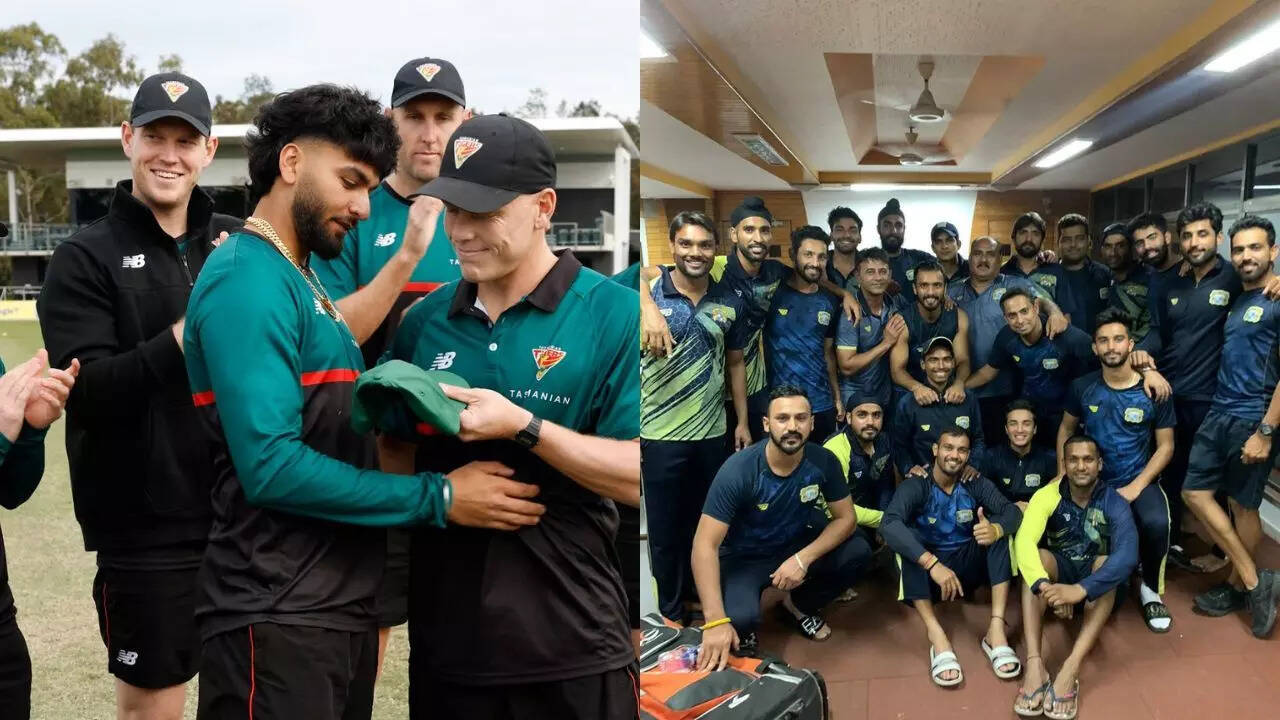
While his rise seems quick, it is a testament to immense hard work. “Once I decided to stay back, I had to find work. I got a job chopping vegetables in a Mexican restaurant. I called my mother for help, as I’d never even sliced a lemon in my life. Just as she predicted, I ended up cutting my fingers. The restaurant staff understood my predicament and then tasked me with chopping meat instead,” he recounted. “One job wasn’t enough. I also worked for Australian Post, delivering parcels door-to-door, and even drove Uber for a while before I secured the BBL contract.”
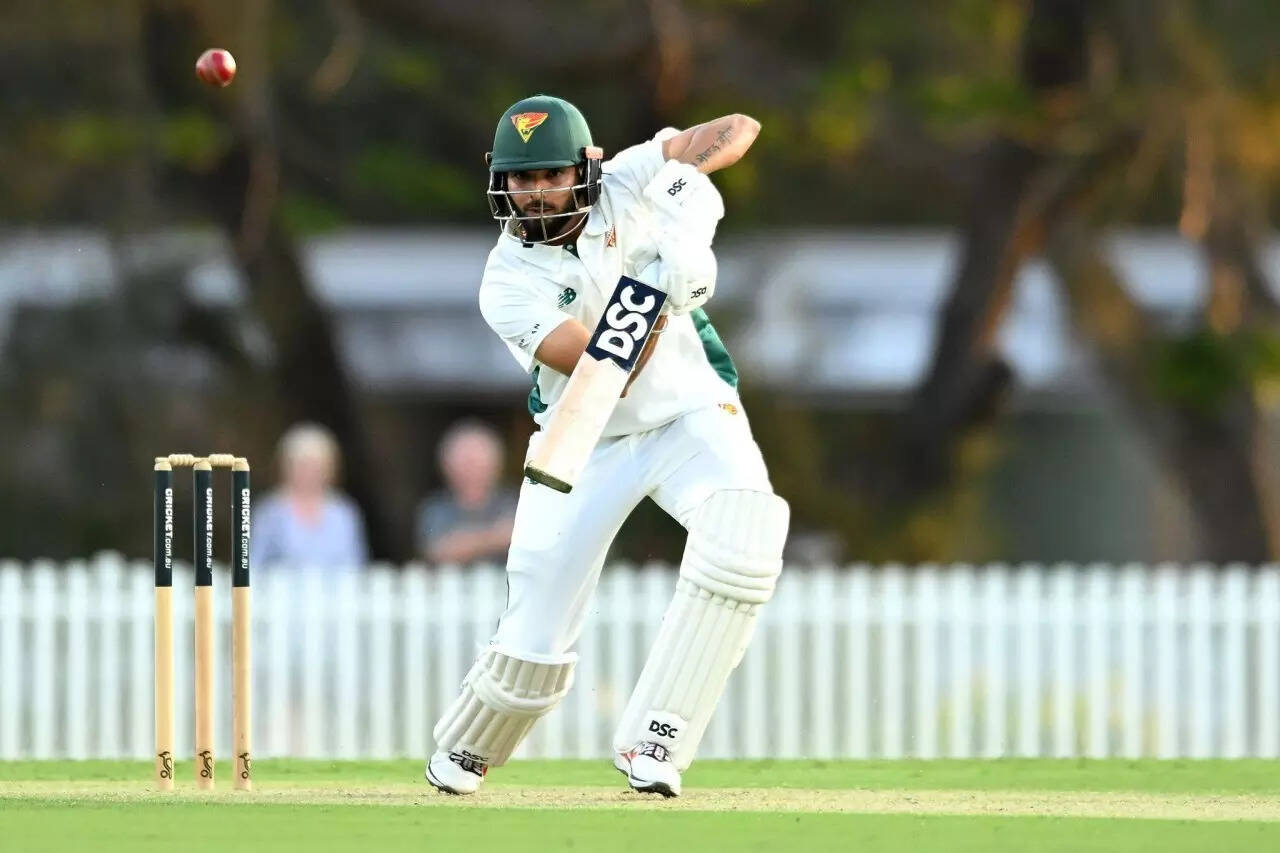
Making ends meet proved challenging, but adapting to Brisbane’s bouncy pitches presented an even greater hurdle for Nikhil. “I had played all my cricket in Ludhiana and across India with Punjab’s age-group teams. In India, playing on the front foot is deeply ingrained in your muscle memory. It’s easy hitting on the up, but here the ball used to whistle past. As a leg-spinner, I was doing well, taking plenty of wickets in club games, but I needed to improve my batting.”
“So, in 2023, I dedicated myself to working on my footwork. From July to September, I hired a professional sidearm coach and trained three times a week for three hours indoors. This significantly enhanced my game,” he revealed. In Punjab, Chaudhary was known for his powerful hitting and effective bowling. However, upon moving to Australia, he transitioned to leg-spin.
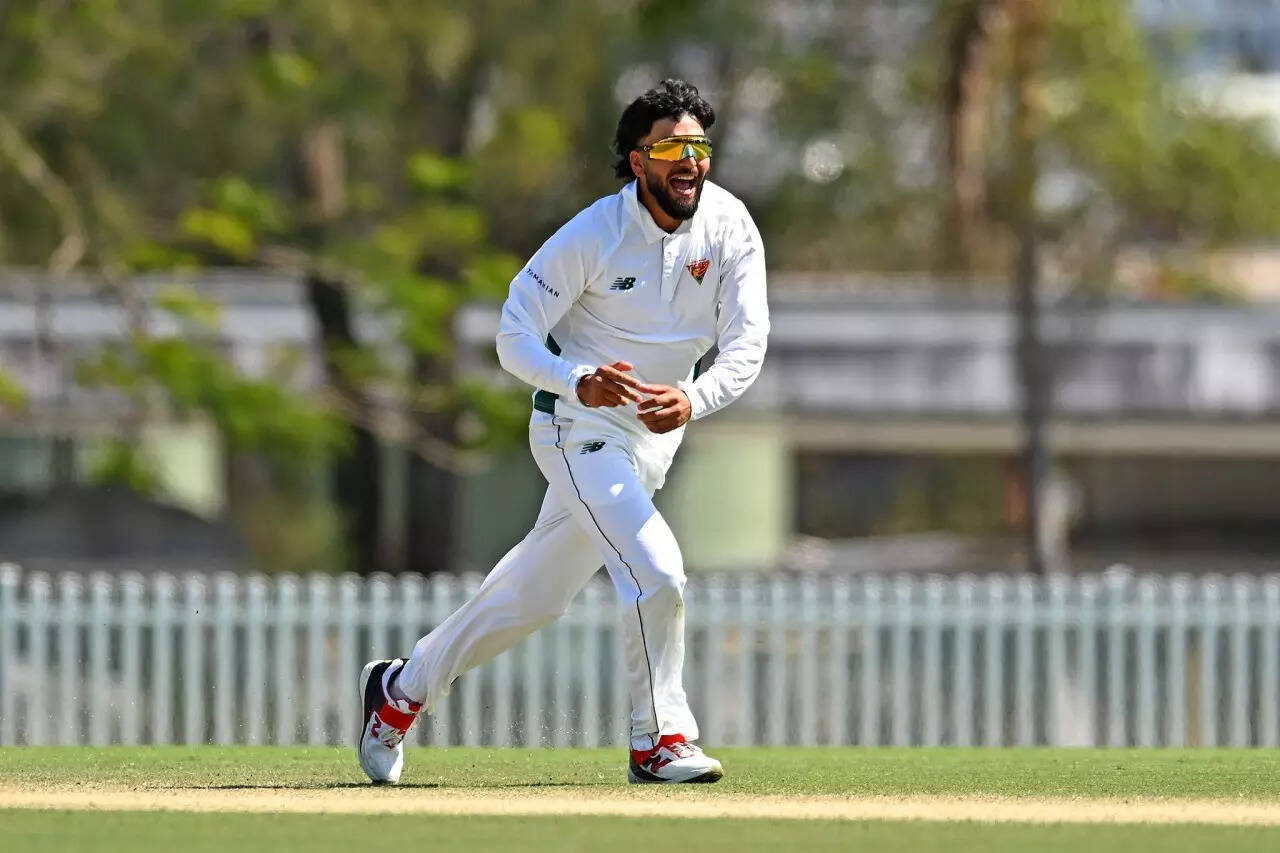
“I used to bowl leg-spin in the Punjab nets as well. You can ask Anmol Malhotra (Punjab’s wicketkeeper); he hated facing me (Malhotra confirms this). I switched to leg-spin to manage my workload, and it was yielding positive results,” he explained. With his game seemingly in order, Chaudhary still sought to improve. He was particularly impressed by the athleticism of Australian cricketers. This led him to Marco Mastrorocco, Director of Athletic Development at Athletix in Brisbane.
“They are massive but still incredibly quick. These boys grew up playing rugby. Even with professional cricket contracts, they train like rugby players. I started training with Marco too, and within six months, I noticed significant changes in myself. I’m now quicker when chasing the ball or running between the wickets,” he proudly stated.
Nikhil still harbors an unfulfilled dream: to play international cricket. He believes that within 18 months, he will earn the right to wear the yellow and gold. “Wo bhi hoga paaji (That will also happen). One tick box at a time,” he concluded with determination.