
As the Indian Street Premier League (ISPL) prepares for its highly anticipated third season, the league is shifting its core philosophy from sheer expansion to building a robust, structured foundation. In an exclusive conversation, ISPL League Commissioner Suraj Samat revealed details about the upcoming season and the ambitious National Framework. This countrywide system is meticulously designed to identify, monitor, and nurture grassroots cricket talent in a more organized and equitable manner.

The groundbreaking framework, championed by ISPL’s esteemed Core Committee, led by Indian cricket legend Sachin Tendulkar, aims to bring order and opportunity to India’s vast and often chaotic tennis-ball cricket landscape. With an impressive 4.4 million participants expected this year, Samat emphasizes that this new model will forge a “structured pathway” for aspiring players, enabling them to progress from local competitions to the national spotlight.
The National Framework will be implemented through zonal tournaments, each rigorously overseen by ISPL’s central governing body. Player performance will be tracked using a sophisticated points-based system, with weekly updates to a top-1000 national ranking – an unprecedented approach for amateur cricket. “This will clearly show players exactly where they stand and motivate them to work even harder,” explains Suraj Samat.
Suraj Samat on ISPL 3: 101 Indian cities, Bollywood star power and a Porsche for the MVP!
This systematic approach is a direct result of insights gained from ISPL’s first two seasons. After successfully engaging 28 million viewers and expanding operations from 55 to 101 cities, the league recognized the critical need for consistent scouting and talent development across the nation. The new structure ensures that each franchise conducts organized selection tournaments within its designated zone, with ISPL serving as the overarching monitoring and guiding authority.
Excerpts from the conversation with Suraj Samat:
Q: We’re heading into the third ISPL season. How does it feel, and what are your initial thoughts as things get underway?
Suraj: ISPL has truly come a long way since its inception. We’ve recognized the immense potential of the ISPL brand. We saw about 15 million viewers for the first 11 matches in Season One, and a 32% increase in TV reach for Season Two, which recorded approximately 28 million viewers. This shows us that our growth is consistent and strong. Operationally, we’re expanding from 55 cities to 101 cities, allowing even more people to participate and come together for this league.
Q: What have been your key learnings from Season One to Season Two, and how are those influencing your plans for the third season?
Suraj: We realized that many more people want to be involved with ISPL, and to truly reach the grassroots—which is our primary goal—we need a National Framework. That’s why we’re introducing the National Framework starting from Season Four. This will be the final season where we conduct traditional trials. We’ve learned that performance-based trials are far more effective than selectors holding regular trials in various locations. Additionally, we’re implementing home trials this year. This insight came from the first two seasons, as we understood that many individuals find it challenging to travel to multiple venues, and they perform much better in their familiar surroundings. This comfort level is crucial for the initial round of selections, and we’re expecting about 100,000 children to participate in these home trials this season.
Q: Can you elaborate on the National Framework and what it entails?
Suraj: The idea for a National Framework emerged when we realized that with 4.4 million participants this year, conducting individual trials would become an impossible task. If these numbers continue to grow, it would be extremely difficult to identify the right talent for ISPL. So, our Core Committee, led by Sachin Tendulkar, collectively proposed creating a framework that offers a clear, structured pathway for grassroots players to achieve their cricketing aspirations and enter the mainstream. This framework also provides a transparent, performance-based platform across the country, where players can compete in multiple tournaments throughout the year, complete with prize money. They will understand what they stand to gain and how consistently they need to perform. ISPL will publish a list of 1000 players every Monday, updating their points. These points will clearly indicate their standing and how much more effort they need to put in. Essentially, the National Framework is all about promoting inclusivity. Crucially, we’re allowing selection tournaments for all types of balls used in grassroots cricket, whether it’s a rubber ball or a softball. As you know, India is incredibly diverse; in the south, they play with softballs, in the north with tape balls, and in central regions with rubber balls. Even in the rainy season, different balls are used. So, we are not restricting anyone from the grassroots level from participating in our selection tournaments. This truly demonstrates our commitment to inclusivity.
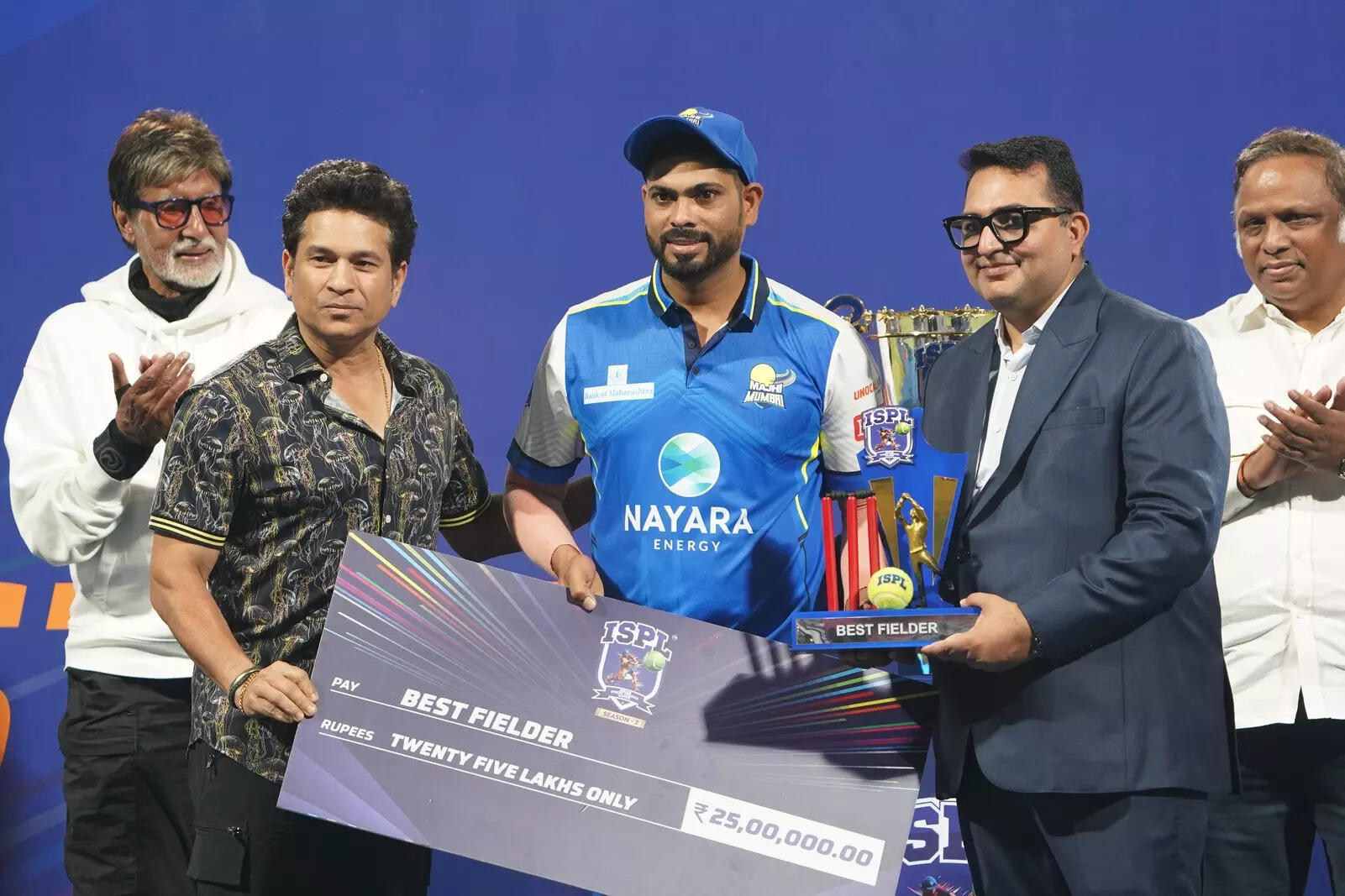
Q: With the National Framework, teams are responsible for unearthing talent in their regions. What role does ISPL play in monitoring and ensuring this process runs smoothly?
Suraj: Even now, teams have their own scouts. However, our objective with the National Framework is to formalize and structure this process. It’s vital that each team is assigned a zone to focus on, where they can organize tournaments and demonstrate genuine grassroots development. ISPL, acting as the central umbrella organization, guides them, monitors their efforts, ensures best practices are followed, and provides support if any issues arise.
Q: ISPL’s third season is being promoted as “bigger, better, and bolder.” What can fans and players look forward to this season?
Suraj: We’ve announced a spectacular Man of the Series award: a Porsche 911. This marks the first time, both nationally and internationally, that a car of such caliber has been offered to a player. Our focus also extends to fan engagement. 80% of the Most Valuable Player points will come from the player’s performance in the finals, while 20% will be determined by fan voting. This will significantly boost fan involvement.
Furthermore, we’ve extended the number of playing days to 28 this year. With the addition of two new teams, Ahmedabad and Delhi, we now have eight teams competing, leading to more matches. Each team will play 10 matches, guaranteeing an abundance of cricket content and showcasing even more talent. And, of course, ISPL always delivers entertainment, both for those on the ground and our online audience. There’s a lot in store!
Q: What message do you aim to send by offering a Porsche as the winner’s prize, drawing parallels to Ravi Shastri winning an Audi years ago? What aspirations are you instilling in ISPL players and aspirants?
Suraj: The aspirational value we’re striving to create is for every individual to truly believe they can structure their dreams and achieve long-term success. In India, everyone dreams of becoming a star someday. We are providing them with that platform and that crucial opportunity. Our hashtag perfectly encapsulates this vision: “Jitna Kheloge, Utna Jeetoge” (The more you play, the more you win). Our goal is to encourage them to play, perform, and ultimately live their dreams.
Q: As the league expands from 55 to 101 cities, offering more opportunities, it also presents significant logistical challenges. How do you plan to overcome these?
Suraj: We’ve successfully navigated these challenges in our first two seasons and have learned valuable lessons. We began with 18 cities, scaled to 55, and are now at 101. Our core principle is to maximize player exposure, ensuring that every selector has the opportunity to observe each and every player, helping them realize their dreams. We acknowledge the logistical hurdles that may arise, which is precisely why we’ve introduced the National Framework for Season Four. I am confident that everything will align perfectly, ensuring every tournament across the country is truly inclusive for all players. The exciting part is that in upcoming seasons, players won’t be restricted by zones; a North Zone player can compete in the South Zone. Ultimately, it’s all about accumulated points and performance.
Q: How can a player ensure continuity and ongoing involvement with the ISPL?
Suraj: Once a player registers with us, they receive a unique identification number. This number enables them to participate in multiple tournaments that serve as selection events for ISPL. Under the National Framework, each zone will host its own tournaments, allowing players to compete throughout the year and accumulate points. These accumulated points will determine their performance ranking, which will then be prominently displayed on our website. We will showcase the top 1000 players: 100 from each zone, including 200 under-19 players (25 from each zone) and 800 players from Open categories (100 from each zone). This ensures every player has an equal opportunity to be part of the league.
Q: The squad size is now set at 18 players, including two under-19 players. What was the rationale behind this change?
Suraj: We’ve also increased the purse to Rs. 1.5 crores, a 50% increase. This decision stemmed from the realization that many talented players weren’t getting the chance to join ISPL. Additionally, with only 16 players, teams often faced significant challenges due to injuries. The first two seasons clearly demonstrated the need for at least 18 players in every squad, with two dedicated under-19 players who can be mentored for future mainstream cricket opportunities.
Q: Salman Khan and Ajay Devgn have acquired the newly launched Delhi and Ahmedabad franchises. How did these associations come about?
Suraj: It’s quite interesting – Salman bhai has actually been in touch with me since Season One. Many of the ideas you saw implemented in the first season were originally his suggestions. We’ve always maintained contact, and he was consistently intrigued by what we were building. When the time came for expansion, Salman bhai was a natural choice to be involved. I approached him and asked if he would be part of it, and he graciously accepted. As for Ajay Devgn sir, we were discussing the Ahmedabad franchise with someone else, but we realized the immense mass following he commands in Ahmedabad and across the country. Since ISPL is fundamentally about inclusivity for the masses, he was a perfect fit for Ahmedabad.
Q: How were Delhi and Ahmedabad selected as city franchises?
Suraj: Delhi was originally part of our plans in Season One. However, Akshay Kumar Sir specifically requested Srinagar, stating that if the league was about inclusivity, he wanted a team from his mother’s hometown. So, he took Srinagar. That’s how Delhi was temporarily omitted. But as you can see, Delhi and Ahmedabad are central to the country, attracting the highest number of trials and participants. This is how we ultimately select our franchises.

Q: The involvement of Bollywood stars in a cricket league isn’t new. What do you hope to achieve with this association, and do you believe it detracts from the focus on cricket?
Suraj: My firm belief is that cricket remains the absolute forefront of ISPL. Our roots are in grassroots cricket, and our aim has always been, as evident in the first two seasons, to prioritize grassroots cricket over extensive Bollywood focus. Our National Framework initiative further reinforces this, concentrating on cricket development rather than purely Bollywood activations. What Bollywood brings is faster recognition and helps the product reach a broader audience. Moreover, these Bollywood celebrities themselves are Indians, and cricket truly pulsates in every Indian’s heart. If you look at the last two seasons, you’ll see Saif Ali Khan and Kareena Kapoor Khan actively present at the ground. Saif was even there with his child for the final matches and was instrumental in team building from the very beginning. Similarly, for Season Two, Amitabh Bachchan Sir was present for all of his team’s matches, alongside Abhishek Bachchan Sir. Akshay Kumar Sir even brought his daughter for the first time, which was quite a moment. This whole arrangement fosters a sense of belonging for them. They deeply understand the noble cause of bringing these talented children from the streets to the stadium, providing them with a platform to shine. I truly believe this is a God-gifted endeavor. ISPL’s success feels divinely orchestrated, as gathering so many stars and corporate partners within just 1-2 years would otherwise be incredibly challenging.
Q: The third season will be held in Surat. Why Surat, and what are your expectations from the city?
Suraj: Many people ask me why Surat and not another city. I recall one day sitting with Sachin Sir, and I asked him where he thought we should take ISPL next, as our plan was to move the league to a different city every two years. He replied, “I’ve played at this stadium in Surat. Tennis ball cricket and grassroots talent often emerge from Tier 2 cities. So, I think we should be somewhere around there, provided there’s a good stadium, and I’ve played there before. Please go visit it first.” We conducted a recce, and when I returned for the meeting, I told him, “Sir, I liked what I saw, and I believe we can proceed if you’re comfortable with it.” He emphasized the importance of eventually reaching every city in the country. However, to start moving away from Maharashtra, Surat seemed ideal. Firstly, the stadium is beautiful. Secondly, approximately 30% of tennis ball or grassroots cricket is played in and around the Surat area. So, it was crucial for us to be at the center of the action.
Q: What are your expectations for the third season of the ISPL?
Suraj: Our primary objective is to fully implement the National Framework after Season Three. We are intensely focused on ensuring that numerous tournaments are organized across the country, with every zone actively hosting these events. More importantly, our aim is to guarantee that the players selected in Season Three receive the mainstream platform they deserve and are given every opportunity to shine. In Season Two, for instance, a player (Abhishek Kumar Dalhor of Majhi Mumbai) was selected for net bowling in the IPL with Kolkata Knight Riders. This is precisely what we envision: talent should be able to showcase its abilities and find its rightful place.
Q: Is there any formal deal or collaborative effort for ISPL players who excel to join domestic or IPL teams?
Suraj: No, absolutely not. There is no such formal tie-up. We firmly believe that when a grassroots player excels, opportunities will naturally arise for them. If you observe any prominent cricketer in India today, be it Sachin Sir or Virat Kohli, many started their journey with tennis ball cricket. So, tennis ball cricket often forms the fundamental basis of cricket in the country. Our role here is simply to showcase what these young men can do—their abilities, their playing style, and their potential. It’s then up to other franchises in mainstream cricket to recognize and recruit them.