
India’s Asia Cup encounter against Oman on Friday witnessed an unexpected turn of events as star batsman Suryakumar Yadav, who typically features at No. 3, did not come out to bat. This appeared to be a deliberate strategic decision by the Indian team, aimed at providing valuable time at the crease for their middle and lower-order players.
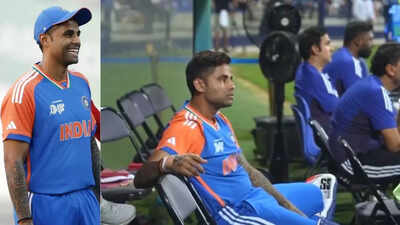
Having chased totals in their previous two matches against the UAE and Pakistan, where India lost only one and three wickets respectively, opportunities for the lower batting lineup were scarce. With India batting first on this occasion, the team opted for a shuffled order.
Sanju Samson impressively anchored the innings, scoring a composed 56 runs off 45 balls, while Abhishek Sharma provided an aggressive start at the top. Further valuable contributions from Axar Patel and Tilak Varma in the middle order helped India reach a total of 188 for 8.
The strategic changes became even clearer as players like Harshit Rana, followed by frontline bowlers Arshdeep Singh and Kuldeep Yadav, were promoted ahead of Suryakumar. Consequently, the celebrated batsman remained in the dugout, a rare sight in limited-overs cricket for a top-order player to stay padded up throughout an entire innings without facing a single delivery.
Oman’s bowling effort was commendable, with Faisal leading their attack with early swing and precise bowling in the death overs. Ramanandi and Kaleem also secured crucial breakthroughs, collectively restricting India to a score below the anticipated 200-run mark.
As the Super Four stage draws near, this tactical decision offered India’s lower-order batsmen crucial match practice, even if it meant their captain, Suryakumar Yadav, had to sacrifice his turn at the crease.