
India is under immense pressure after a crushing defeat in the first One-Day International against Australia at Perth’s Optus Stadium. What was supposed to be a triumphant return for star players Rohit Sharma and Virat Kohli instead saw India hand over a 1-0 series lead to the hosts.
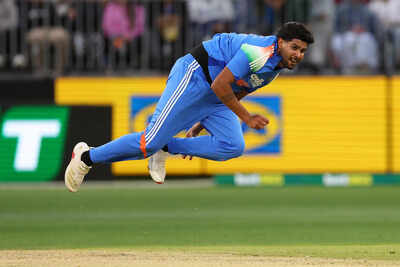
Harshit Rana of India during the match. (Photo by Paul Kane/Getty Images)
After winning the toss, Australia chose to bowl, and India’s batsmen found themselves struggling against the challenging conditions in a match disrupted by rain. The team could only manage a modest total of 136 runs for 9 wickets in their allotted 26 overs. The target was then revised to 131 for Australia under the Duckworth-Lewis-Stern (DLS) method. Disappointingly, both Rohit Sharma and Virat Kohli had short stints at the crease, scoring just 8 runs off 14 balls and 0 off 6 balls, respectively. While Arshdeep Singh did provide an early glimmer of hope by dismissing Travis Head, Australia chased down the target with ease, securing victory by seven wickets and with 29 balls to spare.
The Indian bowling unit, overall, seemed toothless, but it was young pacer Harshit Rana who bore the brunt of intense fan criticism. His inclusion in the squad had already sparked debate, with some speculating it was influenced by his association with coach Gautam Gambhir. Rana’s four-over spell proved expensive and wicketless, costing 27 runs. This performance has significantly heightened questions about his place and potential at the international stage.
As the match concluded, social media was flooded with memes and sarcastic remarks, with many fans mockingly labeling Harshit Rana as ‘India’s Haris Rauf’ – a reference to the Pakistani fast bowler who has also faced scrutiny for his expensive spells. The online trolling highlighted the frustration and disappointment among supporters.
With the next match of the three-game series scheduled for October 23rd in Adelaide, the Indian team must quickly regroup and strategize. The spotlight will undoubtedly be on Harshit Rana, who faces immense pressure to perform and justify his selection. Another loss would leave India in a precarious position, making it incredibly difficult to salvage the series.
This opening defeat has brought critical concerns about team selection and performance under pressure to the forefront. The upcoming Adelaide fixture will be a true test of India’s resilience and ability to bounce back. The challenging rain-affected conditions of the first match highlighted issues with the team’s adaptability, particularly the batting collapse in the shortened format and the bowling unit’s struggle to defend a small total. While the return of seasoned players like Rohit Sharma and Virat Kohli was expected to bolster the squad, their quick departures only compounded India’s difficulties.
The pressure is now on the team management to make tactical adjustments while instilling confidence in their players. The second ODI offers a crucial chance for India to address these shortcomings, level the series, and demonstrate both individual and collective improvement against a confident Australian side. The ongoing debate around selection choices and balancing new talent with established players is sure to continue as India prepares for this pivotal encounter.