
Dhruv Jurel’s rise from Agra to the Indian Test team is built on unrelenting work ethic, meticulous training, and remarkable temperament. Mentored by Vikram Rathour and coaches at the Rajasthan Royals’ academy, the wicketkeeper-batter has impressed with Saha-like glovework and Dravid-like patience.

Dhruv Jurel (PTI Photo)
Meticulous is the word former India batting coach Vikram Rathour generously uses when he talks about Dhruv Jurel. Rathour has observed the 24-year-old closely, first in the Indian dressing room and later with the Rajasthan Royals (RR) in the Indian Premier League (IPL).
“Great work ethic. Very sincere guy. A nice kid. Very pleasant to speak to. He understands his cricket. Very intelligent as far as his game is concerned,” Rathour shares in a candid conversation about Jurel.
Jurel had played only 15 first-class matches, with a highest score of 249 against a weaker Nagaland side. Yet, something about him caught the eye of the Indian selection panel, led by Ajit Agarkar, earning him his maiden call-up. With Rishabh Pant still recovering from a horrific car accident, KS Bharat played the first two Tests against England, and then in Rajkot, Jurel seized his opportunity.
“Rajkot was the first time I saw him play. And then in Ranchi, he delivered a fantastic knock; that partnership with Kuldeep was phenomenal. Throughout that series, a couple of his innings were incredible. The chase in Ranchi is something I will always remember. Conditions were difficult, we were under pressure, and the series was on the line,” Rathour recounts.
Jurel initially burst onto the scene during the 2020 Under-19 World Cup, followed by a standout campaign as a finisher in IPL 2023. However, Rathour explains that adapting to the longer format was not an easy transition.
“In that England series, he displayed immense temperament and excellent technique. He is someone who clearly wants to work hard. He kept pushing for more batting, more batting. Even before the start of the day, he wanted to come early and bat in the nets. Then I also had the chance to work with him at RR. He’s someone with a really good technique, a great mindset, and he works incredibly hard on his game,” Rathour adds.
Rathour believes Jurel’s wicketkeeping is on par with former India gloveman Wriddhiman Saha’s. One of Jurel’s coaches, who has guided him from his early years, concurs.
“Jurel is unbelievable. He is at Saha’s level. He is a next-level keeper. Against spin, he is probably the best keeper in India. And against fast bowling, he is absolutely unbelievable,” the coach shares.
“At the trials, I initially confused him with Aryan Juyal. I had to review his video again. He hit an inside-out shot over covers, and I was instantly convinced,” the coach says.
“Honestly, whether it was Sanju Samson all those years ago, or Riyan Parag and Yashasvi Jaiswal recently, all of them I selected based on one impactful shot. I can vividly recall those shots even today. Jaiswal came in and flicked the first ball over fine leg. Riyan Parag hit a six over mid-wicket. Sanju pulled the first ball for a six in Jaipur. That shot Jurel hit truly showed the spark in him. The rest of the innings was okay, not outstanding, but that particular shot remained etched in my mind,” he adds.
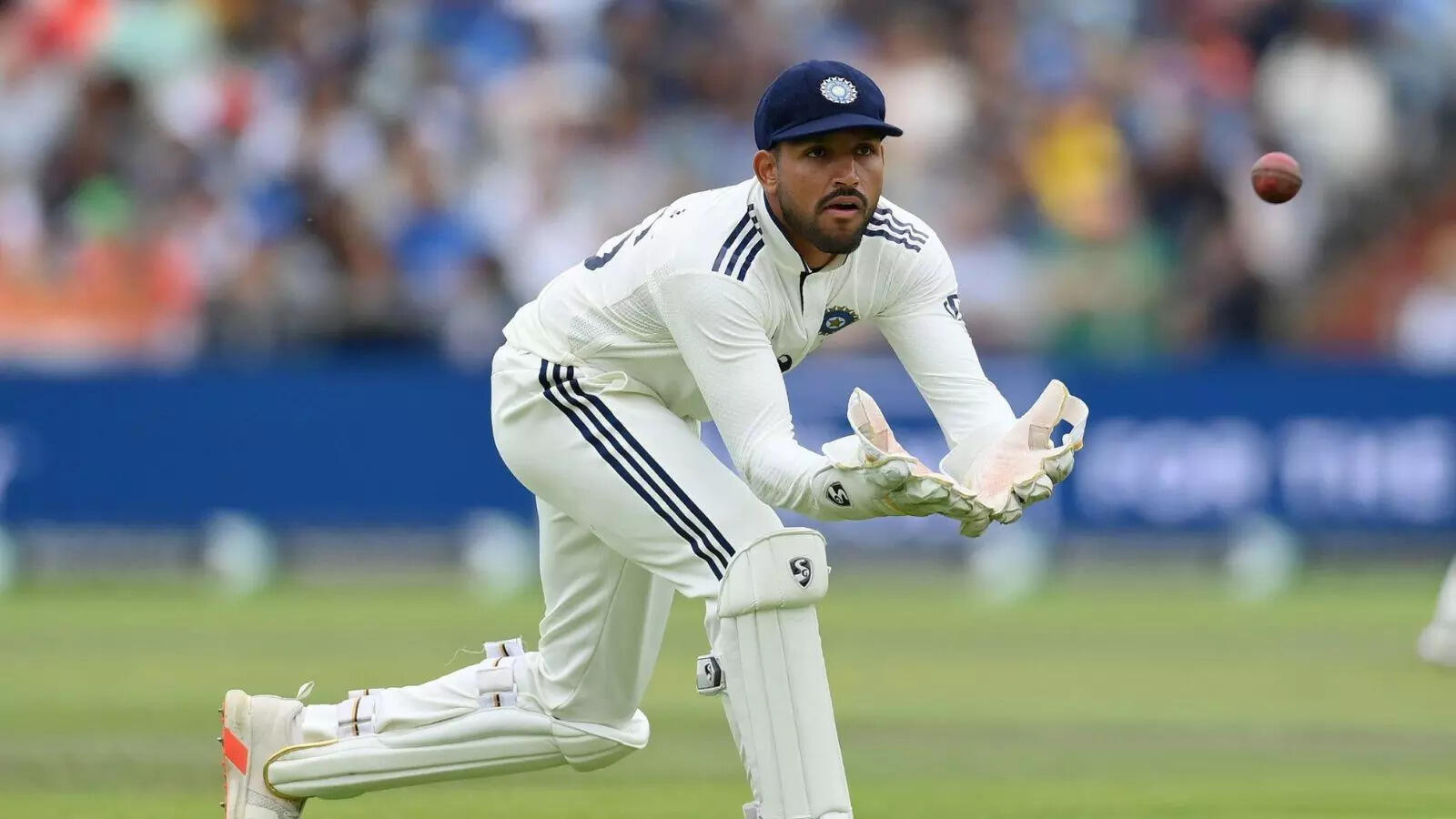
Dhruv Jurel
The making of Dhruv Jurel
Talegaon, a small village located approximately 100 kilometers from Nagpur in Maharashtra’s Wardha district, is a place often noted for its alarming farmer suicide rates. The only significant industry here involves crafting iron goods such as knives, daggers, and various kitchen tools.
It was from this improbable backdrop that the Rajasthan Royals established their training base, and where their coaches helped sculpt one of India’s brightest young stars. Jurel spent countless weeks and months in Talegaon, meticulously honing his skills, much like the blades the village is renowned for.
“Jurel was completely different. We had to change everything. The great thing was that we started from scratch because we had the time; he wasn’t playing in the main side, so we could completely restructure him,” the coach explains.
“You observe his back-lift, how he initiates his first step in his pre-movement—everything has been meticulously planned.”
“It was a plan executed over three years. For instance, even when he made it to the Indian side and almost scored a century against England in Ranchi, just three days before that Test, he was at our academy. We organized a practice session for him where he batted for 130 overs in two hours and twenty minutes.”
“We still discuss that session. He often says, ‘Sir, no one believes me that I’ve done this much.’ I told him to let it be; only he knows how much he improved in that single session. He went from 50–60% to 80%,” he recalls.
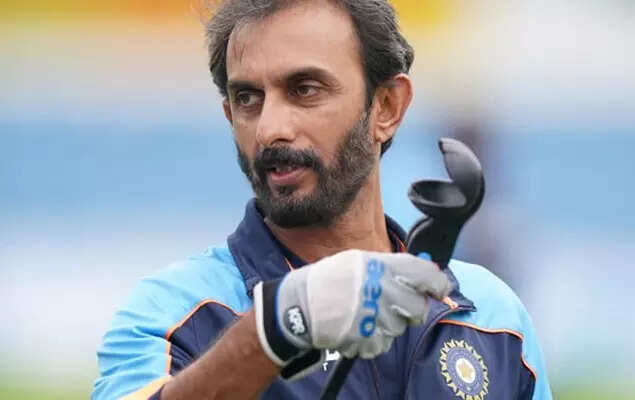
Former India batting coach Vikram Rathour
Like Rathour, one of Jurel’s coaches commends Jurel’s exceptional work ethic and his insatiable hunger for improvement, drawing parallels between his temperament and that of Rahul Dravid.
“His work ethic is out of this world. He can just keep going. He reminds me of Rahul Dravid with that level of discipline. He’ll keep batting for hours,” he states.
In the ongoing West Indies series, Jurel received another opportunity as Rishabh Pant was still recovering from his injury. The Agra native seized this chance with both hands, smashing his maiden Test century at the Narendra Modi Stadium in Ahmedabad.
Prior to the series, he had an impressive outing against Australia A, scoring 140, 1, and 56. However, in the first innings of the second match in Lucknow, he was trapped for just 1 by pacer Henry Thornton.
“Oh my god. He had to address that issue that very evening. He called, panicking, ‘I’m not able to do this, I’m not able to do that.’ He’s an emotional chap; I deal with him very carefully. We tackled all those issues that day itself. I said, we can’t let this happen again.”
“So, we made some technical changes. There’s a lot of releasing of the back foot that he does now. If you see him playing straight or on the on-side, he keeps releasing the back foot into the ball. That helps him play shots down the ground, through mid-wicket and square leg—anywhere from mid-on to square leg. By releasing the back foot, he gets into a beautiful position. It’s something Sachin Tendulkar used to do when hitting down the ground. Sachin would always release that back foot beautifully. Not many people can do that,” the coach explains.
The coach notes that Jurel constantly keeps him on his toes. “He asks difficult questions; a proper cricket nerd.”
“He has an insane work ethic, and it’s helped him become the readymade product he is now. He’s putting in the work—morning, noon, and night. He leaves no stone unturned.”
“He’ll call all the time, ‘Sir, is this okay? Is that okay?’ He keeps sending videos. In terms of his meticulous preparation, he’s the number one guy. Others check when something goes wrong, but he checks even when he’s performing well. His video will always come,” he says.
With India currently undergoing a transition and the middle order far from settled, Jurel could emerge as a robust middle-order option, potentially even alongside Pant donning the gloves.
“Who knows, I think somebody like Jurel is good enough to play even as a batter in Tests,” says a confident Rathour.
Jurel possesses every attribute to carve a significant space for himself purely as a batter, and as a wicketkeeper, he is nothing short of a superman, among the very best in the business.