
The Asia Cup is currently gripped by a major controversy, threatening to overshadow the entire tournament. For the second consecutive day, uncertainty has intensified as Pakistan escalated its demands for the removal of match referee Andy Pycroft. This highly contentious request stems from a post-match handshake dispute with India, a demand which, according to sources, the International Cricket Council (ICC) has firmly rejected.
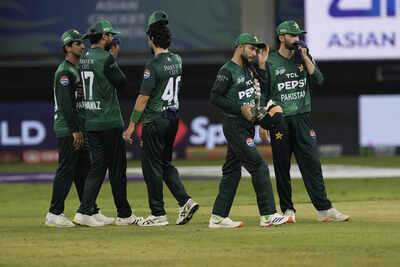
Pakistan players react after their loss in the Asia Cup cricket match against India at Dubai International Cricket Stadium in Dubai, United Arab Emirates.
The dispute began after India’s decisive seven-wicket victory in a Group A match on Sunday. Following the game, Indian players reportedly bypassed the traditional post-match handshakes and even closed their dressing room doors to their opponents.
Mohsin Naqvi, who serves as both the Pakistan Cricket Board (PCB) chairman, president of the Asian Cricket Council (ACC), and Pakistan’s federal interior minister, voiced his strong displeasure on social media. He condemned India’s actions as being ‘against the spirit of the game’.
Naqvi announced on X that ‘The PCB lodged a complaint with the ICC regarding violations by the match referee of the ICC code of conduct and the MCC laws pertaining to the spirit of cricket. The PCB demanded an immediate removal of the match referee from the Asia Cup.’
The formal complaint, submitted by team manager Naveed Cheema, specifically alleges that Pycroft instructed Pakistan captain Salman Ali Agha not to shake hands with the Indian captain before the toss, adding another layer to the controversy.
Handshake drama becomes ugly! India vs Pakistan Asia Cup 2025 in DANGER?
Further fueling the drama, Pakistani media outlets reported that the PCB had dismissed its director of international cricket operations, Usama Wahla. His termination was reportedly due to his slow response to the unfolding controversy and, according to some sources, his decision to permit pacer Shaheen Shah Afridi to accept the post-match award after Captain Salman Ali Agha boycotted the presentation ceremony.
While the ICC has remained publicly silent, sources have confirmed that Pakistan’s request for Pycroft’s removal was rejected. An ICC official reportedly stated that acceding to such a demand would ‘set a wrong precedent’ and jeopardize the independence of match officials. This decision was reportedly communicated to the PCB on Monday evening.
Historically, India has also faced controversies involving match referees. However, the ICC has consistently supported its officials, with a notable exception being the 2008 ‘Monkeygate’ incident where Steve Bucknor was reluctantly replaced by Billy Bowden for the third Test in Perth.
Certain Pakistani media sources indicate that the PCB is now attempting face-saving solutions, reportedly requesting that former West Indies captain Ritchie Richardson replace the 69-year-old Pycroft for their upcoming matches.
The PCB’s contentious relationship with Pycroft is not a recent development. The former Zimbabwe cricketer has a history of reporting Pakistani players, including Shoaib Malik, Saeed Ajmal, and Mohammad Hafeez, for suspicious bowling actions.
Adding further layers of intrigue, Pakistan’s pre-match press conference for their crucial match against UAE in Dubai was abruptly canceled without explanation. Despite this, their training session at the ICC Academy proceeded as scheduled, even overlapping with India’s session on Monday evening, though both teams utilized separate grounds on the same campus.
Pakistan now faces a critical do-or-die scenario in the tournament. A loss to an energized UAE team would lead to an early exit. Currently, Pakistan sits second in the standings with two points from two matches (one win, one loss), maintaining a narrow advantage over their opponents.
Pakistan’s implied threat to withdraw from the Asia Cup presents significant challenges, primarily a potential revenue loss estimated between $12 to $16 million for the country. As it stands, the five Test-playing nations—India, Pakistan, Sri Lanka, Bangladesh, and Afghanistan—each receive 15% of the Asian Cricket Council’s (ACC) annual revenue, collectively accounting for 75% of the total, with the remaining 25% distributed among associate nations.