
The cricket world is abuzz with a fresh conflict brewing between the Pakistan Cricket Board (PCB) and the International Cricket Council (ICC). A recent match in Dubai has sparked a heated debate over alleged protocol breaches, specifically involving the Pakistan team’s media manager. The core of the issue stems from the media manager’s reported use of a mobile phone within the Players & Match Officials Area (PMOA) – an act explicitly highlighted by ICC CEO Sanjog Gupta as a direct violation of critical anti-corruption guidelines.
In response to the ICC’s accusations, the PCB has issued a strong defense, asserting that their team’s media manager is an authorized member of the squad and his presence in the PMOA is entirely permissible. They further claimed that ICC protocols permit media managers to use cameras. However, this defense seems to be on thin ice, as the strict PMOA regulations explicitly forbid any mobile phone use within this designated restricted zone, regardless of the individual’s role.
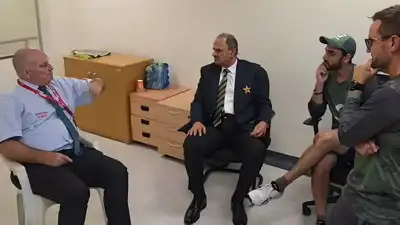
The contentious incident took place during a crucial meeting convened by match referee Andy Pycroft. Present at this gathering were key Pakistan team officials, including Captain Salman Ali Agha, coach Mike Hesson, manager Naveed Cheema, and media manager Naeem Gillani. Also attending was ICC General Manager Wasim Khan. It was during this very meeting, which focused on the earlier ‘handshake controversy’ involving Indian and Pakistani players, that the PCB’s media manager allegedly recorded the proceedings.
Prior to this, the PCB had controversially called for Pycroft’s removal and asserted that he had apologized during the meeting regarding the handshake incident. However, investigations revealed that no such apology was offered. Instead, Pycroft expressed regret for any potential miscommunication with the Pakistan captain and coach. Adding another layer to the drama, the PCB subsequently released video footage of the meeting on social media, notably without any accompanying audio.
What Exactly is the PMOA, and What are the Rules on Mobile Devices?
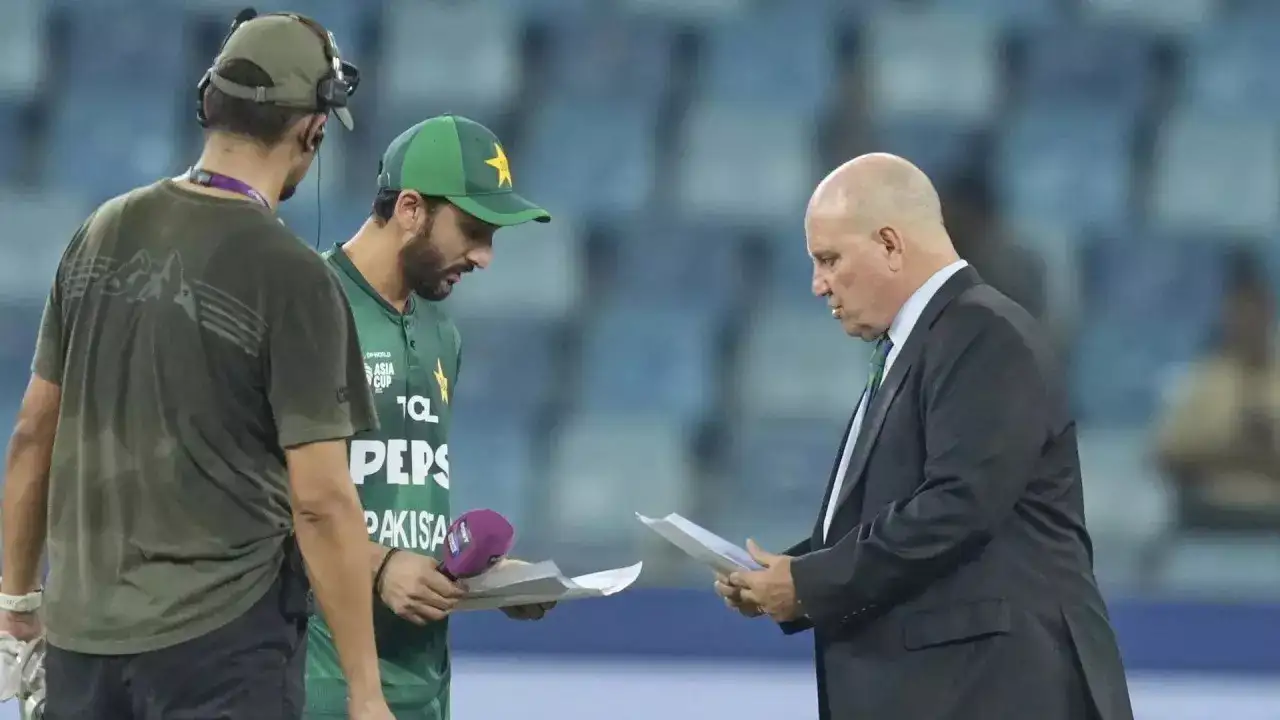
According to the ICC’s stringent minimum standards for Players and Match Officials Areas (PMOA) during international matches, a ‘mobile device’ is broadly defined. This includes any portable gadget – such as personal digital assistants (PDAs), Blackberries, mobile phones, smartwatches, or tablet computers – that can connect to or utilize mobile telecommunications or Wi-Fi technology. The key is its capability to transmit textual material, data, voice, video, or multimedia services.
Strict Prohibition in PMOA (Article 4.1.1)
Article 4.1.1 unequivocally states: “No person shall be allowed to use and/or carry any Mobile Device for any reason whatsoever, whether to access the Internet or otherwise, in the PMOA.” This means absolute restriction on such devices within the designated area.
While the rule is strict, Article 4.2 outlines specific exceptions and their conditions:
Exceptions for Team Managers (Article 4.2.1)
- Under Article 4.2.1, each team manager is permitted to carry a mobile device within the PMOA, but only for specific purposes:
- For essential cricket operations directly related to their role.
- For a player or player support personnel to handle an important personal matter, provided the team manager grants explicit permission prior to its use.
Exceptions for Team Security Managers (Article 4.2.3)
Team security managers are also allowed to carry a mobile device in the PMOA. However, these devices must remain on silent mode at all times while in the area. Their use is strictly limited to genuine security emergencies, and not for any other purpose, whether inside or outside the PMOA at the venue.
The rulebook further clarifies that any team manager using a laptop or similar communication device for personal reasons, rather than solely for cricket operations of a logistical or administrative nature, will automatically violate Article 4.2.5.
As the situation unfolds, tensions continue to escalate. The PCB has yet to furnish the requested documentation to the ICC, which was meant to substantiate their demand for an inquiry into the initial handshake controversy. This unresolved drama adds significant intrigue to the upcoming second Asia Cup clash between India and Pakistan on Sunday, promising an even more charged encounter.