
Shubman Gill’s inaugural series as India’s One-Day International (ODI) captain has commenced with an unwelcome record against Australia. Across the three-match series, Gill managed scores of just 10, 9, and 24, resulting in a series average of 14.33. This marks the lowest average recorded by any Indian captain in an ODI series specifically against Australia, placing him below cricketing legends like MS Dhoni (17.20 in 2016) and Sourav Ganguly (18.60 in 2001).
These white-ball struggles aren’t entirely new for Gill. Earlier, during the T20 Asia Cup in 2025, he was brought back into the squad and appointed vice-captain. He opened the innings alongside Abhishek Sharma, a move that saw consistent opener Sanju Samson, who had previously notched three centuries in that role, shifted further down the batting order. The tournament proved disappointing for Gill, where he accumulated only 127 runs at an average of 21.16.
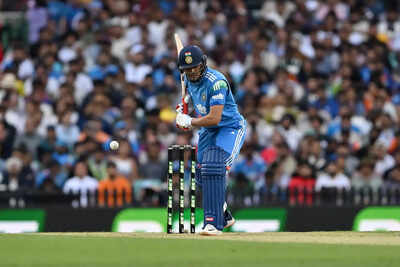
Despite these difficulties in the shorter formats, Gill has been in exceptional form in Test cricket. Since taking on the captaincy, he was outstanding in the England Test series, where he scored 754 runs at an impressive average of 75.40, emerging as the leading run-scorer. He continued this strong performance against the West Indies at home, contributing a half-century in the first Test and an unbeaten 129 in the second.
However, the transition to white-ball leadership presents a different challenge. With burgeoning talents like Yashasvi Jaiswal waiting for their opportunities, Gill faces increasing pressure to demonstrate consistency with the bat to cement his position as India’s long-term ODI captain. His adaptability and performance in the limited-overs format will be critically observed in the upcoming series.