
In their extensive 1,068-match One Day International history, the Indian team has unfortunately experienced five bilateral series whitewashes: against West Indies in 1983 (5-0) and 1989 (5-0), South Africa in 2006 (4-0) and 2022 (3-0), and New Zealand in 2020 (3-0). This Saturday could mark a sixth such occurrence unless head coach Gautam Gambhir and captain Shubman Gill can engineer a dramatic turnaround at the Sydney Cricket Ground, a venue where India has a dismal record of 16 losses in 19 matches against Australia.
Sydney holds significant, if not always pleasant, memories for India’s star players. It was the last ground where Virat Kohli played for India in Test cricket, and also where Rohit Sharma controversially withdrew from the final Test of the Border-Gavaskar Trophy last year, never to feature in whites for India again. If Kohli’s symbolic gesture of raised gloves to the appreciative Adelaide crowd after his second consecutive duck was any indication, then Sydney might just be the last time Australian fans witness him in Indian colors. This very venue also saw him famously react to abusive sections of the crowd during his initial visit in 2011.
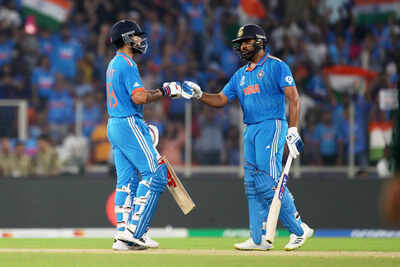
However, putting the Border-Gavaskar Trophy aside, Rohit Sharma also cherishes some fond memories in Australia’s vibrant metropolis. He remains the only current Indian player to have been part of both ODI victories against Australia at the SCG. In the first final of the 2008 CB Tri-Series, he played a crucial innings of 66 runs off 87 balls, partnering with Sachin Tendulkar (117*) in a 123-run fourth-wicket stand to successfully chase down 240 runs.
Later, in 2016, as a formidable white-ball opener, Rohit notched up 99 runs from 108 balls and forged a 97-run partnership with player-of-the-match Manish Pandey (104*) to help India avoid a whitewash by chasing down 331 runs with just two balls to spare.
That memorable match also marked the international debut of the formidable pacer Jasprit Bumrah. Though initially selected only for the subsequent three-match T20I series, an injury-hit bowling attack forced Bumrah to step off the plane, don his bowling boots, and plunge into action. He immediately made an impact, taking 2 wickets for 40 runs in his 10 overs.
Bumrah will once again be in Sydney, arriving with the T20 squad on Friday. However, no special considerations are expected this time; his participation will be strictly limited to the T20Is.
Frankly, the team combinations and tactical approaches employed by India in the two ODIs ‘Down Under’ have been far from ideal, and they deserve no special favors. Overloading the batting lineup with three all-rounders while neglecting bowling resources, and inexplicably sidelining a match-winner like Kuldeep Yadav, was a strategy destined to fail on Australia’s quicker and truer pitches.
While Harshit Rana delivered a spirited batting performance in Adelaide and bowled sharply in his initial spell, dismissing Travis Head, his pace noticeably dropped in his second spell. His execution of slower cutters became erratic, leaving him vulnerable to batsmen like Mitch Owen. This suggests Rana might not yet be ready for multi-format international cricket, and perhaps more time in domestic cricket is warranted for his development.
With the series already lost, India could experiment by bringing in Prasidh Krishna, a tall, hit-the-deck bowler, to replace Rana. They might also consider promoting Yashasvi Jaiswal to the opening slot. Furthermore, the team management should critically assess whether they are optimally utilizing KL Rahul at number six.
Axar Patel is undoubtedly a talented multi-skilled cricketer, but he isn’t a Brian Lara or Yuvraj Singh who can consistently thrive at number five on pitches that offer assistance to bowlers. Perhaps Rahul, with an impressive average of 56.47 and a strike rate of 96.36 in 31 innings at that position, would be a more effective choice. While India’s white-ball cricket depth, fueled by the IPL, is often envied globally, Australia’s Big Bash League demonstrated its own talent pool in Adelaide, with Matt Short (Adelaide Strikers), Cooper Connolly (Perth Scorchers), and Mitch Owen (Hobart Hurricanes) outshining their IPL counterparts.
India’s bilateral ODI record since the 2019 World Cup has been concerning. They’ve suffered series defeats against New Zealand (away), South Africa (away), Bangladesh (away), Sri Lanka (away), and Australia (both home and away, twice). It’s high time to move past past laurels and focus on the serious work ahead.