
Imagine MS Dhoni, drained after a grueling match, sinking into his chair. He’d probably still hear the distant roar of 45,000 ‘Thala’ chants, merging with the powerful beats from the DJ console, a symphony that intensifies each time the home team’s dressing room door creaks open. Since 2008, Chennai has placed its fervent hopes on Dhoni, affectionately known as ‘Number 7’, ever since he was chosen for the Chennai Super Kings. This partnership quickly blossomed into a profound obsession for the city’s devoted cricket fanatics. Both Dhoni’s soaring triumphs and crushing disappointments have unfolded in this sacred space within Chennai’s magnificent MA Chidambaram Stadium. While the cricketing legend might currently be enjoying life on his Ranchi farm or piloting drones, one of his most passionate admirers, architect Sanjeevi Krishnakumar, is very much present.
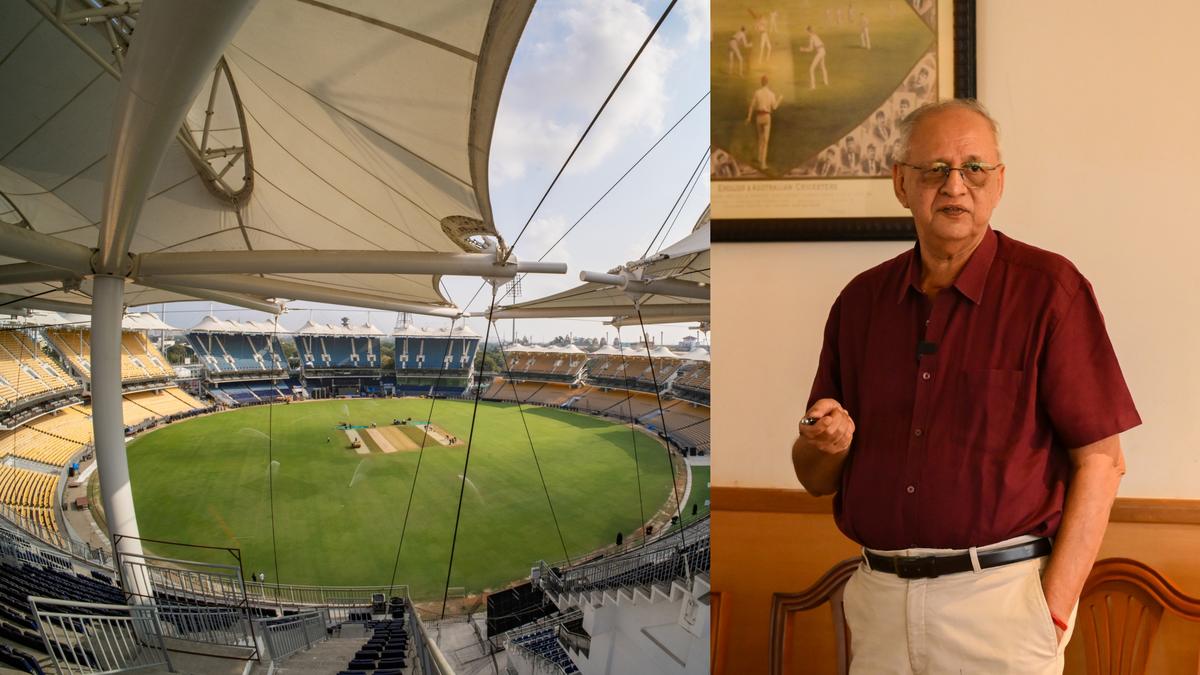
A striking view of the MA Chidambaram Stadium in Chennai, featuring architect Venkat Aiyadurai. (Photo Credit: Special Arrangement, S Shivaraj)
“Goosebumps, right?” he exclaims, eyes shining with pure excitement. Sanjeevi cautiously settles into the iconic No. 7 chair within the CSK dressing room, almost as if seeking silent permission. “Visiting Chepauk Stadium has been a lifelong dream,” the 23-year-old architect shares, his gaze sweeping across the spaces once occupied by other CSK legends like Ravindra Jadeja and Ravichandran Ashwin. “To actually be here, where the players relax and prepare, truly gives me chills.”
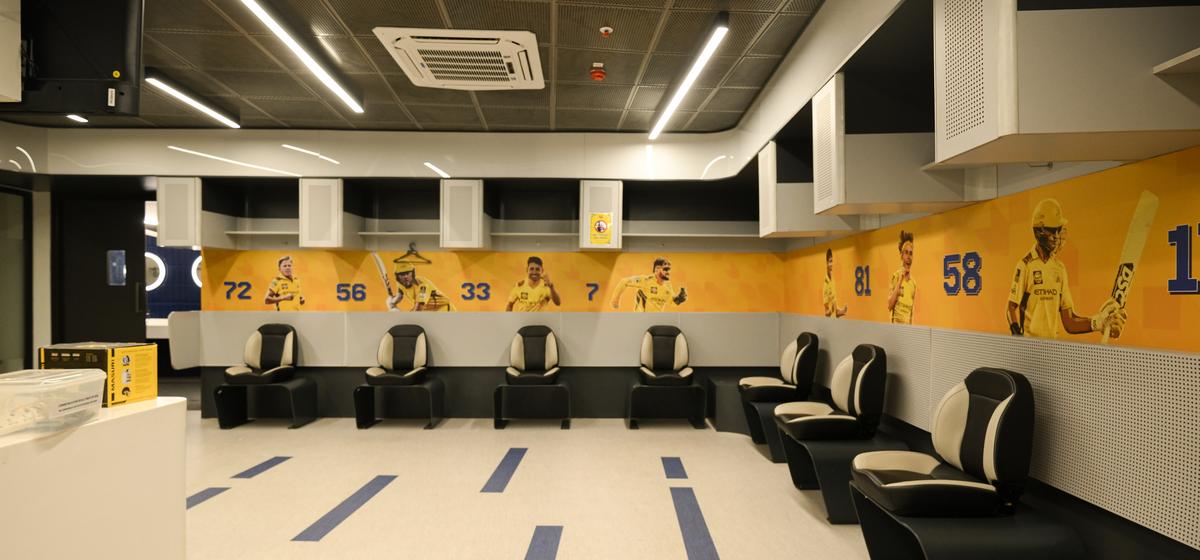
Inside the Chennai Super Kings’ dressing room at MA Chidambaram Stadium. (Photo Credit: S Shivaraj)
Sanjeevi, accompanied by over 50 fellow architects, journeys from the home team’s intimate dressing room towards the sacred stands of the MA Chidambaram Stadium. While the stadium buzzes with vibrant yellow during IPL matches and patriotic blue for Team India games, on this particular Friday evening, only a handful of staff are meticulously tending to the pitch and serving patrons within the historic Madras Cricket Club. Leading this special tour, organized by the Indian Institute of Architects (Chennai Centre), is a man intimately familiar with every detail of these revered sporting grounds. Venkat Aiyadurai, from Nataraj and Venkat Architects, already had a history of collaborations with the Tamil Nadu Cricket Association on projects like the Madras Cricket Club and the Anna Pavilion. However, in 2007, he faced a daunting, seemingly impossible request: “Can you design a brand-new stadium?”
“It honestly worried me immensely,” Venkat recollects. “I had absolutely no idea where to even begin.”
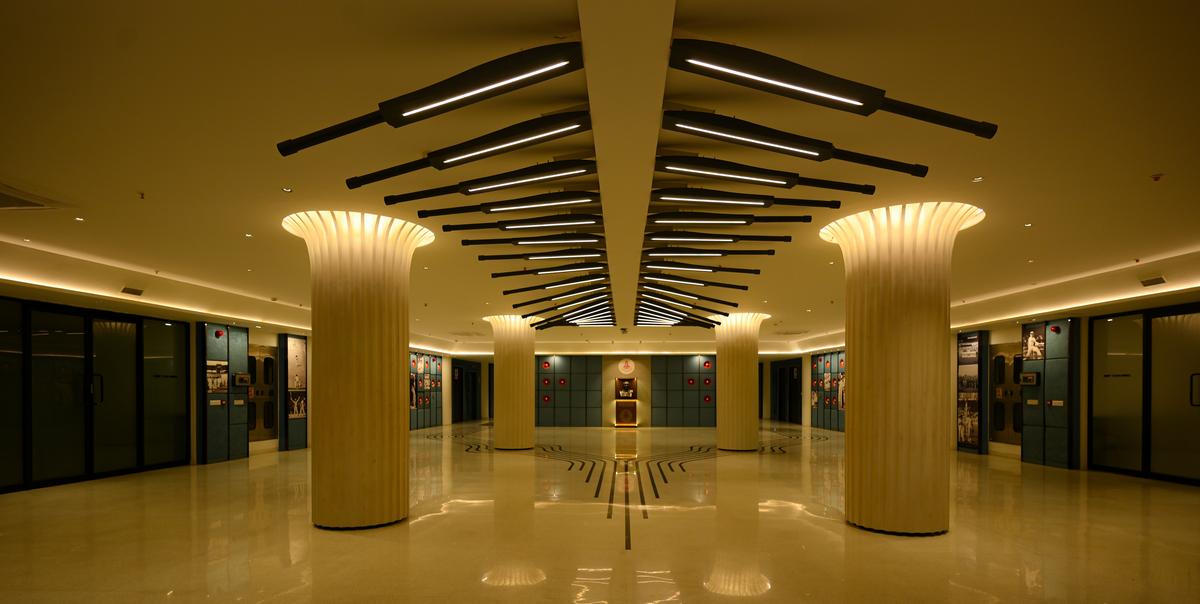
A glimpse into the ‘Anbuden’ space of the Chennai Super Kings, nestled within the MA Chidambaram Stadium. (Photo Credit: S Shivaraj)
Anxious for direction, Venkat and his team sought counsel from one of Britain’s foremost architectural minds, Sir Michael Hopkins, renowned for his work on the iconic Mount Stand at Lord’s Cricket Stadium. Following extensive discussions, a clear path forward emerged, focused on modernizing the stadium to meet the evolving demands of the game: increased spectator capacity, enhanced comfort, and smoother movement throughout the premises. Venkat, a lifelong cricket enthusiast, reflected on past experiences: “I’m an avid cricket fan and have been watching the game for many years. In the olden days, with temporary stands and roofs, the sea breeze after 3 PM tea breaks would make the ball swing beautifully. It was a pacer’s dream during Test matches. I was determined to reintroduce that natural advantage with our new design.”
Re-establishing this natural breeze, which offered vital assistance to swing bowlers, became a cornerstone of the new stadium’s design. This also translated into significantly improved ventilation for spectators. Chennai’s cricket matches are notoriously hot and humid, but the strategic gaps integrated between the 12 new stands were engineered to make the fan experience considerably more comfortable. Equally crucial was perfecting the spectator’s viewing experience, a challenge given the traffic, crowds, and humidity fans typically endure on match days. “In the olden days, it was a real struggle for those seated at higher angles to clearly see the boundary below,” Venkat recounts. Collaborating closely with the Hopkins Architects team, Venkat meticulously applied the architectural principle of C-value—the vertical distance between a spectator’s eye and the sightline over the head of the person in front. “This directly impacted how well spectators could follow the game. We dedicated considerable effort to ensure it was absolutely right.”
Chennai’s newly redesigned stadium, which opened its doors in 2007 and has since hosted countless thrilling sporting encounters, has garnered praise from numerous cricketing luminaries. Among them is former Indian cricketer and respected umpire, S. Venkatraghavan. “He recently shared with me,” Venkat proudly states, “‘I’ve visited grounds across the globe, but Chepauk is truly unique; no matter where you sit, you have a perfect view of the boundary.’ To me, that was the ultimate compliment.” And what about contemporary cricketing legends? “Rahul Dravid had wonderful things to say about the ground,” Venkat reveals. “And from what the CSK team tells me, Dhoni absolutely loves playing here.”
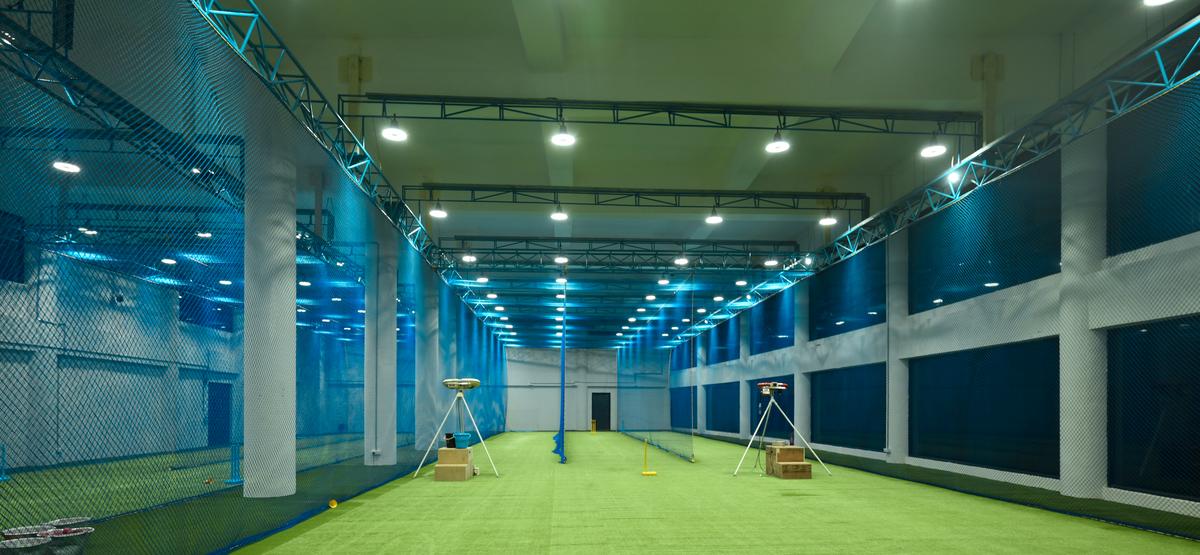
An advanced indoor practice facility located within the stadium. (Photo Credit: S Shivaraj)
Throughout its storied history, Chennai’s MA Chidambaram Stadium has been the stage for countless unforgettable Test matches, including the famous 1986 Tied Test between India and Australia. Dedicated cricket enthusiasts will also recall numerous high-scoring one-day international clashes and incredible comebacks at this venue. However, the arrival of the IPL in 2007, with its thrilling late-evening T20 format, ignited a demand for modern amenities like air-conditioned hospitality boxes – all meticulously incorporated into the stadium’s innovative redesign.
With the TNCA ground staff currently preparing a fresh green cover, Chepauk is poised to host upcoming matches for the T20 World Cup and IPL 2026. Soon, the stadium will once again echo with enthusiastic whistles. And with any luck, Dhoni himself will return, proudly sporting the iconic yellow jersey.