
As Kolkata bursts into vibrant celebrations for Durga Puja, a bustling city hides a quiet truth: an unseen army works tirelessly behind the scenes to keep the grand festivities alive. While millions immerse themselves in joy, a dedicated workforce in critical sectors sacrifices their own festive cheer to ensure everything runs without a hitch.
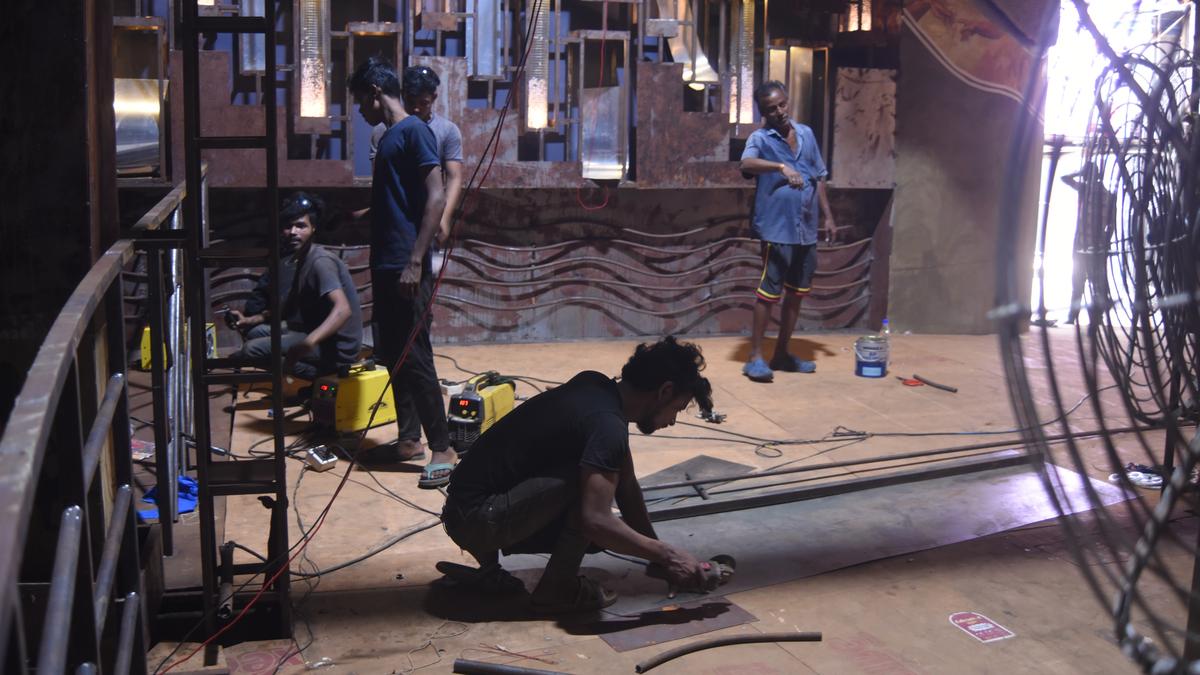
Workers in the pandals come from the districts across West Bengal to give shape to the themed extravagant artwork that bring the Durga Puja to life.
Take Milan, a young painter in his early twenties at the Chorbagan Durga Puja Pandal in north Kolkata. With paint bucket by his side, he’s putting the final touches on an extravagant art piece. His mind, however, isn’t on the upcoming revelry. Married with a family back in Nandigram, West Bengal, he yearns to finish on time and earn enough to bring home special festive treats for them.
Further south, near Rajdanga Udayan Sangha, Jagdish Shaw, a 50-year-old tea seller, endures sleepless nights. He circles the pandal, hoping the huge crowds will translate into extra earnings. “People told me there’s a massive crowd here, I should sell tea here. I came here with faith, yet not a single person bought a cup,” he recounts, tired but hopeful. As he wipes away sweat, Mr. Shaw worries that even Kolkata’s biggest celebration might not guarantee a few small gifts for his family.
It’s a similar story for the city’s police force. Traffic sergeants like Ayan Gupta in south Kolkata work grueling shifts, often operating on just four hours of sleep for nearly two weeks. “From 2 p.m. to sometimes the next day early morning, I am on the road managing traffic and crowd. So are all my colleagues. We can hardly go home and spend time with our families. The festivities are not the same for us,” Gupta shares. Their continuous duty ensures smooth movement for millions of pandal-hoppers, but it comes at a significant personal cost.
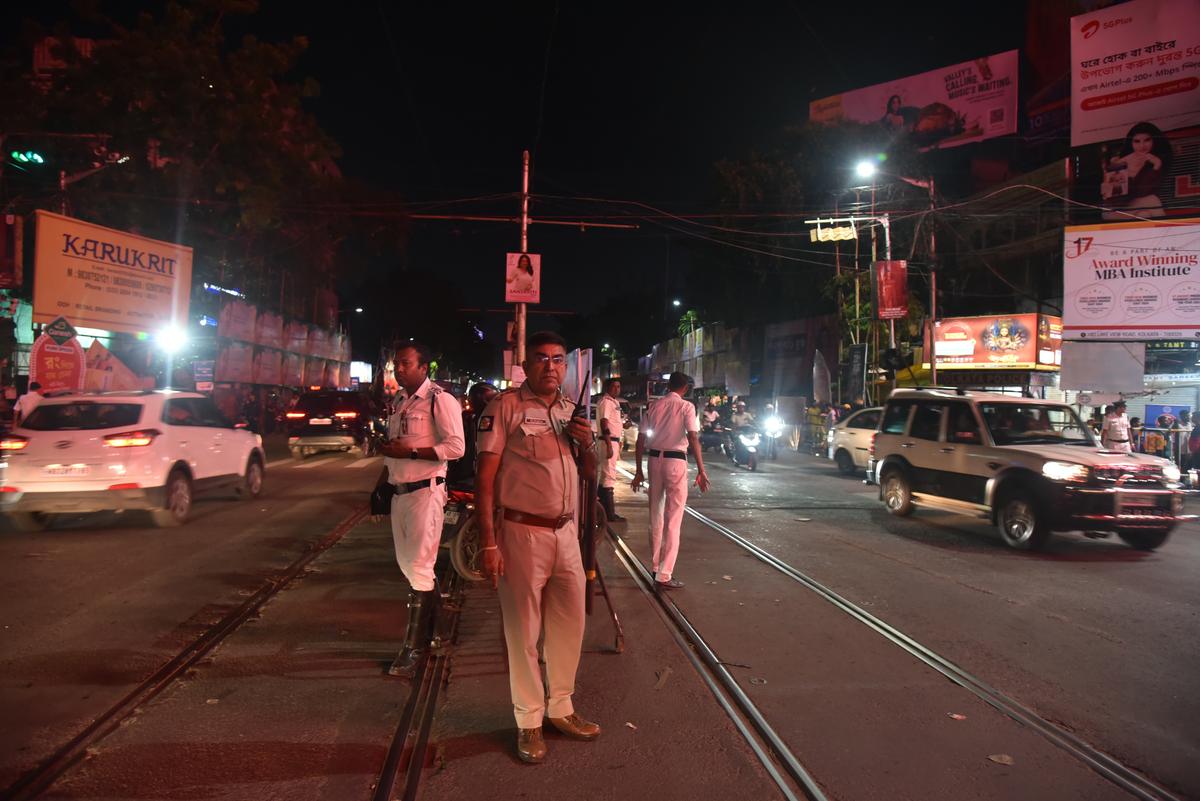
Police officials are on constant duty, managing traffic and crowds as lakhs of pandal-hoppers flock to the streets.
The medical emergency services industry faces equally intense pressure. While hospital outpatient departments (OPDs) close during the four main festival days, all other critical services operate 24/7. Dr. Dhiman Kahali, a cardiologist at BM Birla Heart Hospital, recalls “Puja evenings when multiple heart attack patients arrived one after another, requiring urgent angiograms and primary angioplasties. In such moments, the rituals outside take a back seat. This commitment comes with personal sacrifices; many of us are absent while our families gather at home.” He emphasizes their duty to keep essential services accessible to society.
Beyond these immediate services, countless other individuals form the backbone of Durga Puja’s splendor. Dhaakis (traditional drummers), skilled artisans, dedicated laborers, and hardworking food industry employees all contribute immensely. They ensure the seamless flow of festivities for the lakhs who partake in this grand celebration, often navigating severe economic challenges despite their pivotal role in creating such magnificent grandeur.