
A recent comprehensive survey within the Thiruvananthapuram wildlife division has brought exciting news: five brand-new species of dragonflies and damselflies, collectively known as odonates, have been discovered! This extensive survey, conducted from September 12 to 14, meticulously documented an astounding total of 121 different odonate species, showcasing the rich biodiversity of the region.
This significant undertaking was a collaborative effort between the esteemed Society for Odonate Studies and the Kerala Forests and Wildlife Department. According to leading odonate expert Sujith V. Gopalan, this study represents a monumental achievement in understanding the biodiversity of the region.
The initiative was formally launched by N. Syam Mohanlal, the forest conservator of the ABP circle, with S.V. Vinod, the wildlife warden, officially flagging off the field work. A dedicated team of two dozen volunteers eagerly participated, working under the expert guidance of renowned odonate specialists, including Dr. Gopalan, Vivek Chandran, Muhammed Sherif, Renjith Jacob Mathews, and Reji Chandran.
Researchers established 10 strategically chosen camps and explored their surrounding habitats. Dr. Gopalan explained that these camps were carefully positioned along varying altitudes to ensure comprehensive coverage of the division’s diverse environments and minute microhabitats.
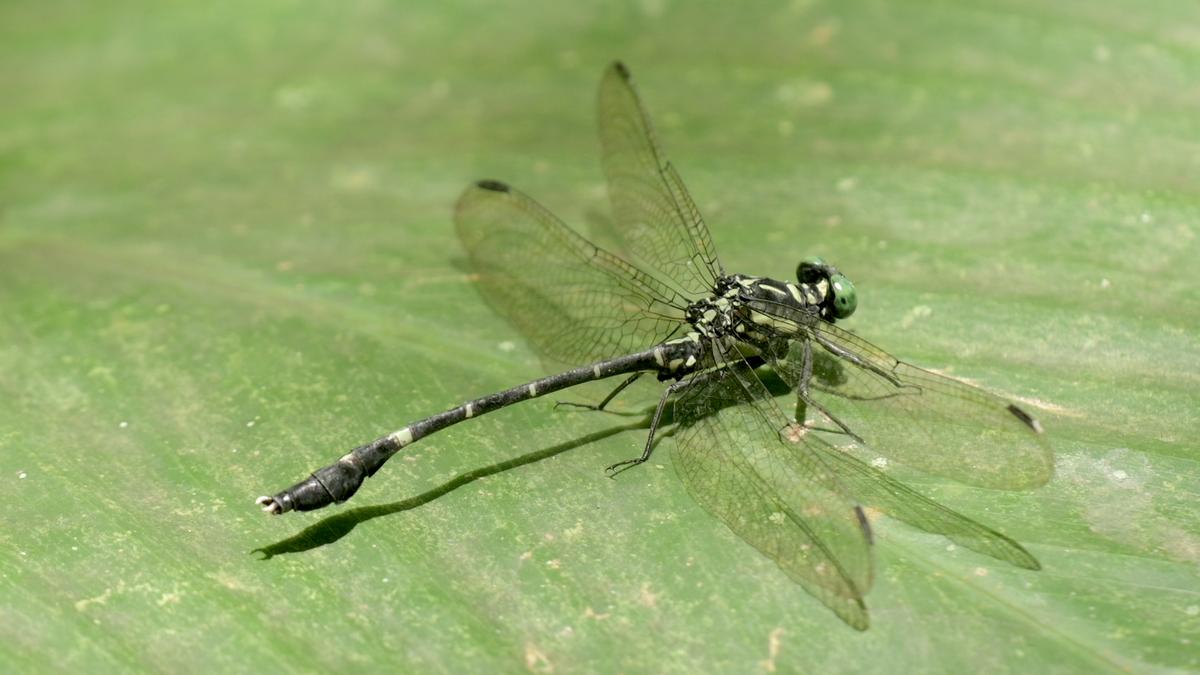
Merogomphus aryanadensis, also known as the Dainty Longleg, is one of the fascinating new species identified.
Over the three-day assessment, a remarkable count of 73 dragonfly species and 48 damselfly species were meticulously cataloged. This impressive tally proudly includes the five never-before-recorded species in the Thiruvananthapuram region.
These exciting new additions to the region’s biodiversity are: Merogomphus aryanadensis (the dainty longleg), Protosticta sanguinithorax (the crimson reedtail), Anax indicus (the lesser green emperor), Macromia bellicosa (the militant torrent hawk), and Lestes dorothea (the forest spreadwing).
Notably, among these five discoveries, the dainty longleg and crimson reedtail are particularly significant as they were only described to science for the very first time last year, making their presence here an even more thrilling find.
Beyond new discoveries, the survey also provided crucial taxonomic updates, ensuring that local species records align perfectly with the most current scientific reclassifications.
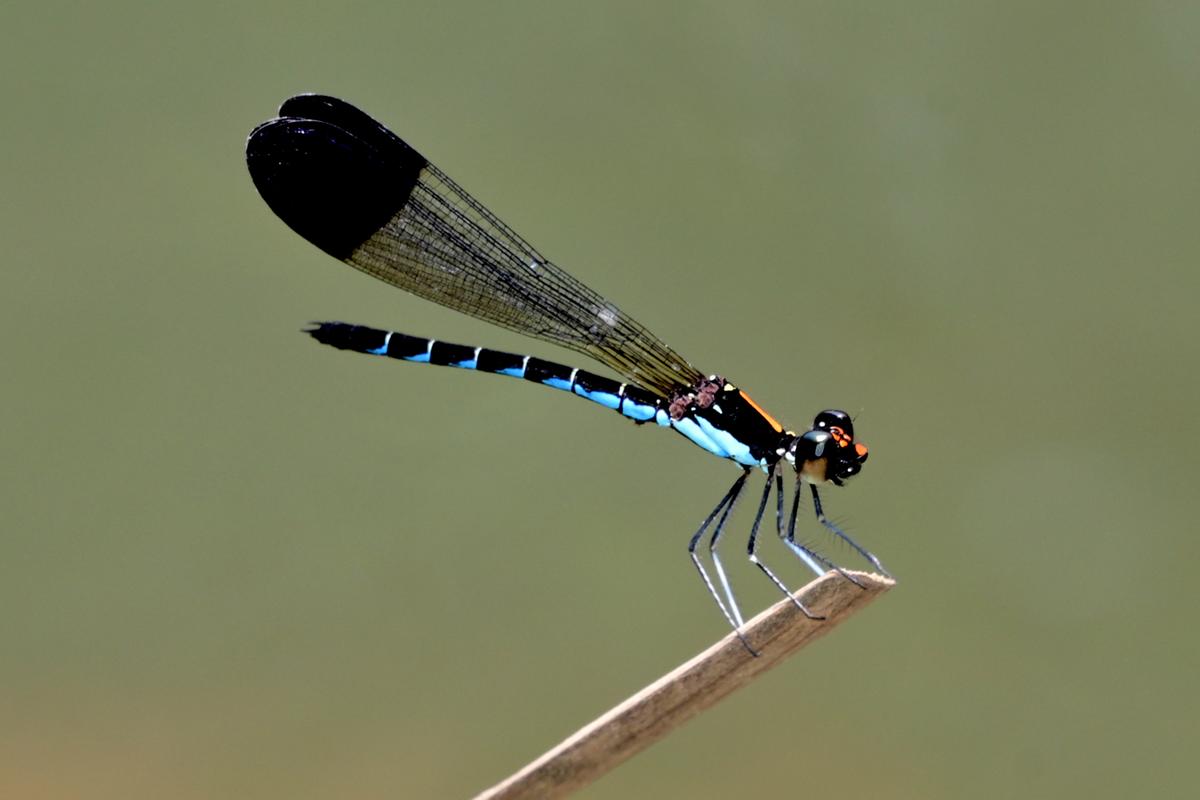
The stunning Calocypha laidlawi, also known as the Myristica sapphire, an endemic damselfly found in specialized habitats.
Specific taxonomic revisions include Phylloneura westernmanni now being recognized as Phylloneura rupestris (the cliffside bambootail), Melanoneura bilineata reclassified as Melanoneura agasthyamalaica (the Agasthyamalai bambootail), and Lyriothemis flava officially renamed as Lyriothemis abrahami (Abraham’s bloodtail).
The health of the region’s ecosystems was evident in the findings from various camps. For instance, locations such as Anchunazhikathode recorded over 46 species, while Pulininnakala and its vicinity boasted more than 80 species, a testament to the pristine condition of these natural habitats.
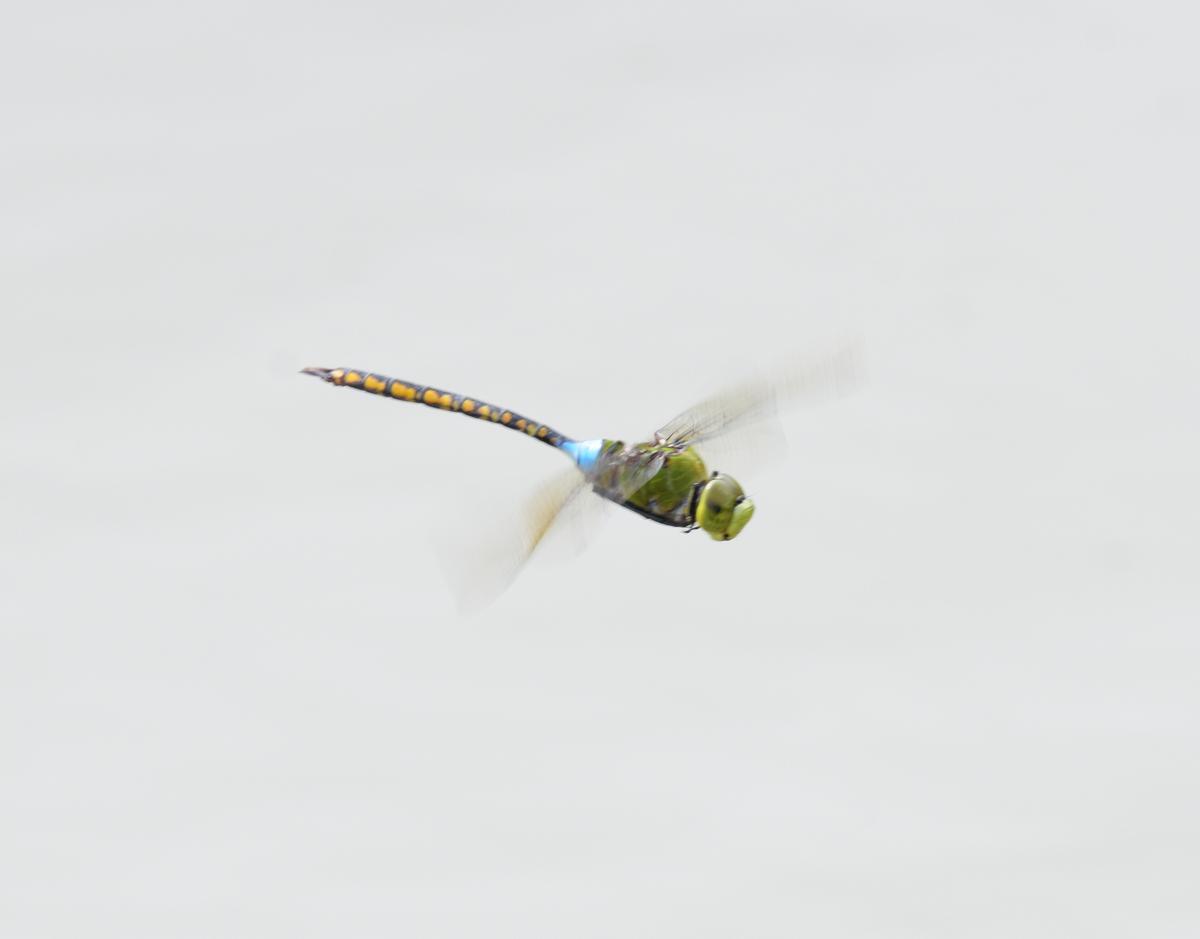
Another remarkable discovery, Anax indicus, commonly known as the Lesser Green Emperor.
The survey also revealed robust populations of stream-dwelling odonates, including the vibrant Euphaea fraseri (Malabar torrent dart) and Euphaea cardinalis (Travancore torrent dart). Notably, specialized species thriving in Myristica swamps were observed, such as the rare and stunning Calocypha laidlawi (Myristica sapphire), a damselfly unique to these specific habitats.
Further enriching the documented diversity were shade-loving damselflies, including Protosticta ponmudiensis (the Travancore reedtail) and the recently identified Protosticta armageddonia (the armageddon reedtail). Additionally, several bambootail species from the genera Esme and Caconeura were also recorded.
The survey also noted other captivating regional endemic species like Epithemis mariae and Gomphidia kodaguensis, alongside various species belonging to the genera Epophthalmia, Macromia, and Idionyx.
“The remarkable abundance of endemic odonate species uncovered during this survey is a clear testament to the exceptional ecological richness and the unspoiled quality of the region’s natural habitats,” emphasized Dr. Gopalan.
As odonates are incredibly sensitive to environmental shifts, their presence and diversity serve as vital biological indicators of ecosystem health, offering valuable insights into the condition of both water systems and forest environments.