
In a fascinating quest to connect with local heritage, a group of young history enthusiasts from Palakkad recently ventured to the iconic British-era Kanhirakadavu stone rail arch bridge, nestled near Kottekkad. Their mission: to bring to light the forgotten stories embedded within this remarkable structure.
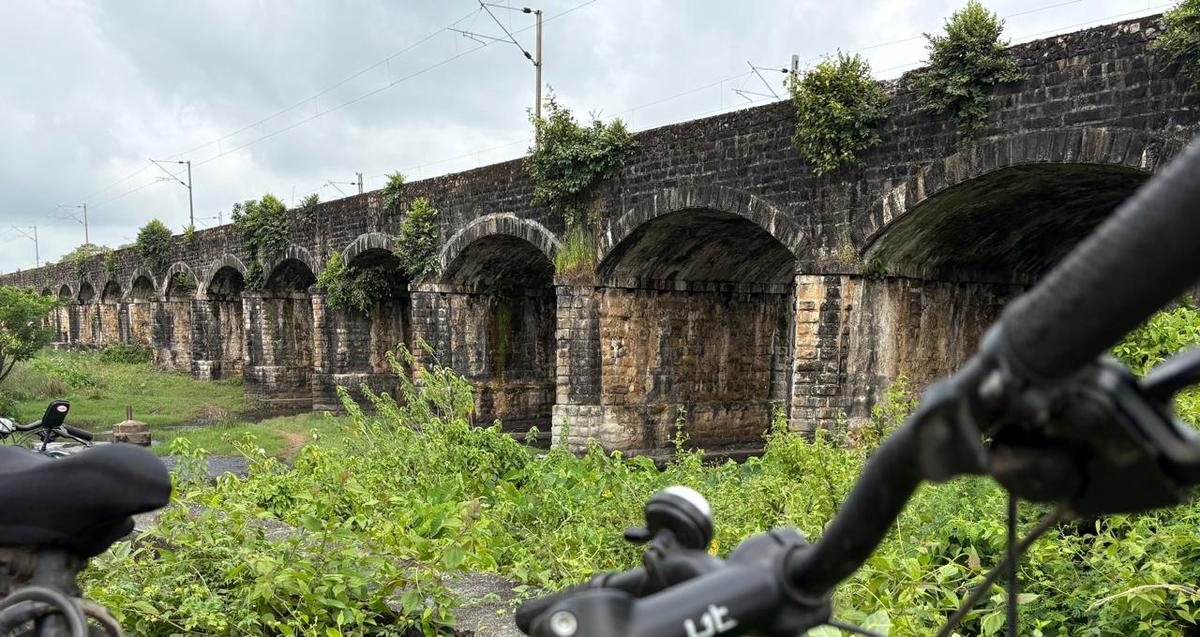
This 165-year-old marvel, gracefully arching over the Kalpathy river, stands as one of the nation’s most venerable railway bridges, brimming with historical significance. Yet, it remains largely shrouded in obscurity, a silent witness to countless trains thundering across its span daily between Palakkad and Coimbatore.
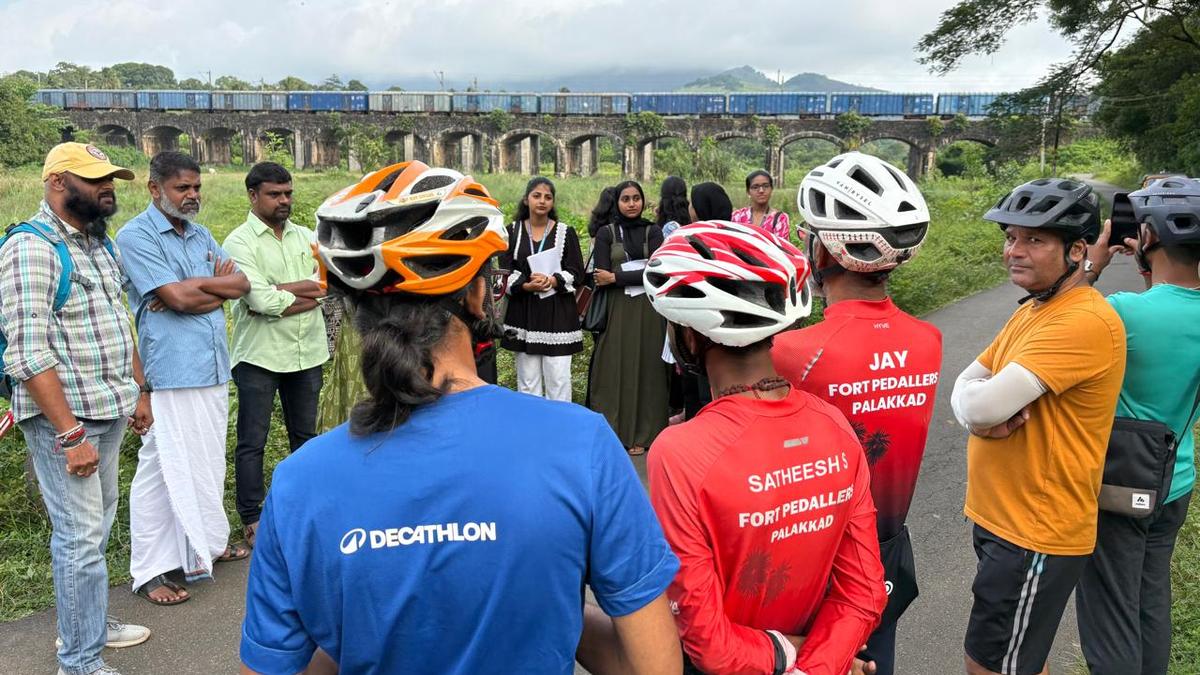
Approximately two dozen eager history enthusiasts gathered at the stone bridge, participating in the ‘Palghat History Tourism Circuit’ project. This collaborative initiative was spearheaded by the Palghat History Club and Palakkad Fort Pedallers, alongside key partners such as the Sahyadri Nature Organisation, Government Victoria College’s Centre for Studies in Local History, the Biodiversity Management Committee of Akathethara grama panchayat, and Decathlon.
Among the visitors were twelve history students from Victoria College, who absorbed every word as Boban Mattumantha, president of the Palghat History Club, and Lijo Panangadan, its secretary, unveiled the bridge’s intriguing past. They revealed its status as Kerala’s longest-standing rail arch bridge, a testament to enduring engineering and history.
A Link to the Freedom Struggle
“This impressive 15-arch stone bridge, with each arch extending 30 feet, was not just an engineering feat but also played a role in India’s freedom movement. During the intense 1942 Quit India Movement, brave freedom fighters reportedly attempted to damage it,” the historians explained.
Notably, the bridge is historically connected to the infamous Thiruvalathur bomb case of the Quit India Movement. In a daring act, five young men from Palakkad reportedly tried to derail a 22-wagon goods train, laden with arms from Madras, by removing crucial fish plates near this very stone arch bridge.
Although the sabotage attempt was unsuccessful, with the train passing unharmed, the British authorities reacted swiftly with raids and arrests. Subsequently, an explosion of stored explosives in a Thiruvalathur house led to T. Balakrishnan Nair of Polpully being identified as the prime accused in what became a significant historical event.
“There is a scarcity of information about this crucial bridge,” remarked Divya Thulasi, a history teacher from Victoria College who led the student team. “It is imperative that we unearth its full story and dedicate efforts to its conservation for future generations.”
Echoes from Old Newspapers
“Fascinatingly, newspaper archives reveal that the bridge was designed by an engineer named Keppel,” Mr. Mattumantha shared. “Its inauguration was particularly unique, as it was an English woman, assisted by a loco pilot, who ceremoniously drove the first train across its span.”
Jayaram Kootaplavil, secretary of Palakkad Fort Pedallers, and convener Dileep A.G. expertly guided the cycling contingent during the expedition.
The ‘Palghat History Tourism Circuit’ initiative is dedicated to shining a spotlight on Palakkad’s rich tapestry of history and heritage for a worldwide audience. It actively encourages community involvement and utilizes social media platforms to effectively showcase the region’s most significant structures, historical sites, past struggles, and cherished memories.