
I remember my grandfather’s hands shaking when I was very young, under ten. He had Parkinson’s disease, and his frailty, coupled with the unfamiliar tremor, deeply unsettled me even then.
Years later, a different kind of unease settled over many of us when the Indian men’s cricket team declined to shake hands with their Pakistani counterparts after two consecutive Asia Cup matches.
Our editorial highlighted that while the Pahalgam terror strike and Operation Sindoor formed a tense backdrop, a stronger protest against playing their western neighbor could have been made by simply not participating in those games. Yet, the teams played on, driven, as many believe, by powerful financial interests.
The Pakistani team’s actions were no better, with players miming a gun with their bats and gesturing at fighter planes being shot down. It was a childish display, akin to schoolyard taunts, played out on a global sports stage.
Traditionally, the handshake has served as a male ritual, signifying an agreement to ‘play the game’ in both business and personal interactions. It often involves a test of firmness and force, perceived by some as a measure of character. For women, however, a handshake isn’t always the default form of greeting.
In sports, a handshake carries profound symbolism. It represents a pact for fair play before a game and a silent acknowledgment of a good effort afterward. Historically, during face-to-face combat, men used it to signal that they were unarmed, a gesture of peaceful intent.
Yet, hands are capable of so much more than simply mimicking weapons in a defensive or aggressive stance. They can cradle a child, offer support on difficult paths, or lovingly prepare a meal. And, as we’ve seen with women in sports, hands can embrace on the field in a celebration of shared dreams, rather than the defeat of an opponent. Consider reading about how girls from small towns are transforming India’s cricket narrative.
Our world is rarely black and white; it exists in shades of grey. People are complex, and our decisions are almost never driven by a single motive. The cricketers involved in the controversy surely had their own justifications, beyond the jingoistic rhetoric echoing in their minds.
But our thoughts, actions, and emotions are intricately linked. If our minds are preoccupied with thoughts of conflict and our hearts with animosity, perhaps we can consciously shift our focus. Imagine the power of a mother comforting her child after a difficult experience, whether on a sports field or in life itself. Embracing such images of nurturing strength might just inspire us to extend a hand in genuine friendship.
Toolkit
Her Haq, a youth-led organization dedicated to menstrual hygiene management, public policy, and digital advocacy, is hosting its second summit on November 1st at Delhi’s Craft Museum. This year’s Haq Summit focuses on ‘Her right to roam,’ drawing inspiration from the book Why Loiter? and the team’s own experiences navigating Delhi’s streets. The organization has also established an award to recognize initiatives spearheaded by individuals aged 15-35.
Wordsworth
Gender minorities
This term refers to individuals who do not identify exclusively as female or male. Groups such as transgender people often have specific healthcare requirements, distinct physical, cultural, and socio-psychological experiences compared to the dominant genders. As politician-activist Apsara Reddy rightly states, “For gender minorities, whose existence is often questioned or ridiculed, the absence of inclusive, enforceable, and humane policy is not just a governance gap; it is a denial of dignity.”
In encouraging news, Karnataka has begun a census of gender minorities. Reporter Shilpa Elizabeth notes that this statewide survey, which started on September 15 across all 31 districts, offers a beacon of hope to a community that has long been marginalized and unseen.
Ouch!
Former U.S. President Donald Trump controversially stated:
‘Tylenol during pregnancy can be associated with an increased risk of autism, so taking Tylenol is not good…. For this reason they are strongly recommending that women limit Tylenol use during pregnancy unless medically necessary. For instance in cases with extremely high fever that you feel you can’t tough it out…’
Woman We Met
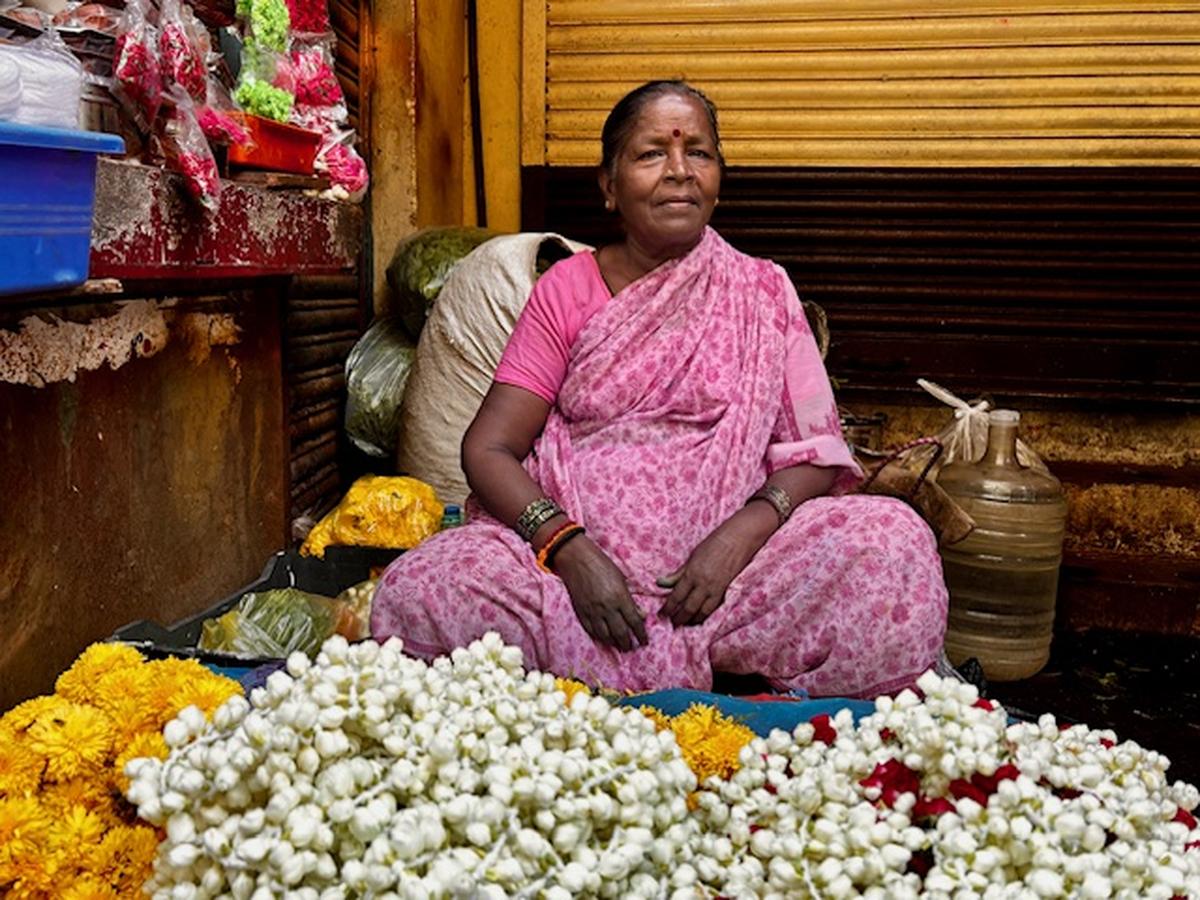
K. Santha
At 70 years old, K. Santha has spent five decades selling flowers at Chennai’s bustling Sowcarpet wholesale market. Her routine begins at 4 a.m., where she purchases flowers and meticulously crafts them into garlands until 10 a.m. Her loyal customers conduct their transactions in comfortable silence. Santha proudly refers to herself as the ‘Mr. Owner’ of her small, foot-long platform, adorned with coils of fragrant jasmine. She shares her home with her husband and daughter, while her two sons and other daughter have established their own households. Her greatest desire, she states simply, is for more money, a need she views as universal, transcending gender.