
The world of Ghost of Yōtei is truly unique. Five years after Ghost of Tsushima redefined the lyrical, mournful, and tactile possibilities of video game sound, Sucker Punch Productions returns to Japan’s northern frontier. This new game transitions from Tsushima’s windswept coasts to the shadowed slopes of Mount Yōtei. Much like its predecessor, the music within the game carries profound memory, offering soundscapes that feel weathered, reverent, and intricately woven into the rich, textured geography of its world. This beautiful atmosphere owes its touch to Japanese-American composer Toma Otowa, whose work on this sequel aimed to seamlessly bridge East and West.
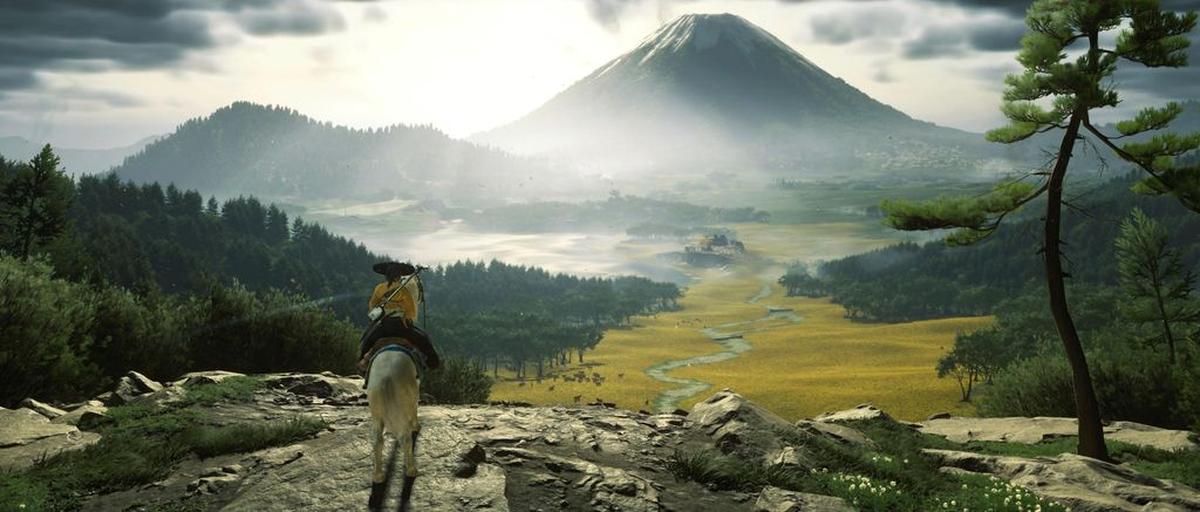
An in-game still from ‘Ghost of Yōtei’
The East, the West, and the Sound Between
“I was first contacted by Peter Scaturro at SIE (Sony Interactive Entertainment),” Otowa recalls. His journey to Yōtei began unexpectedly with the cartoonish chaos of Ratchet & Clank: Rift Apart, where he co-wrote alongside his mentor, Mark Mothersbaugh. “I owe him eternal thanks,” he states earnestly. However, what made Otowa’s collaboration with Sucker Punch seem almost fated was his personal history – a childhood spent in rural Japan followed by a teenage exchange program in Oklahoma. “Feudal Japan meets the Wild West,” he muses, finding the irony. “That’s basically my biography.” He laughs at the sheer serendipity of it. “I had no idea that 35 years later, these experiences would come to such a significant fruition. Life truly is strange that way.”
When the studio first reached out, Otowa initially assumed they sought a score deeply rooted in traditional Japanese instrumentation. However, the brief surprised him. “They wanted the feel of both worlds,” he explains. “So I had to start from scratch, pondering what that ‘East-meets-West’ concept even meant musically.”
Each week, he would connect with the Seattle-based sound team, sharing drafts and fresh ideas. “They provided constant feedback, and it evolved into a really enjoyable exchange between Seattle and Tokyo.” This collaborative process resulted in a score that sounds neither exclusively Japanese nor strictly Western, but rather something beautifully poised within that liminal space.
Despite its diverse influences, the Yōtei score never feels like mere imitation. When asked if he revisited iconic samurai-spaghetti western hybrids by masters like Akira Kurosawa or Sergio Leone, he shakes his head. “I deliberately avoided getting too heavily influenced. I hold segments of memories from their feel, but my intention was to recontextualize the sound entirely.”
He says the same of Tsushima’s music, composed by Ilan Eshkeri and Shigeru Umebayashi. “None of the motifs were directly from Tsushima, although I have immense respect for that game – it built the legend,” he remarks. “There was a tremendous amount of expectation on the soundtrack for Yōtei because the first game’s music was so widely loved and celebrated. I felt a lot of pressure,” he admits. “But I didn’t want to be intimidated. Sucker Punch and SIE made it clear they wanted to build something completely new, which gave me the comfort and confidence to reinvent the score’s style.”
The Way of the Shamisen
The protagonist of Yōtei is Atsu, a wandering onna-musha (female warrior), and her chosen instrument embodies the very spirit of the score. “The shamisen was incredibly important,” Otowa emphasizes. “The score features nearly two and a half hours of shamisen, masterfully performed by Yutaka Oyama. He did a wonderful job,” Otowa beams. “A significant portion of what you hear is improvisation. I would compose a basic melody, and he would improvise around it – sometimes in a battle-ready style, and other times completely freeform.” Each take was unique. Even within a single track like the breathtaking The Way of the Shamisen, a section might begin as written before dissolving into Oyama’s spontaneous musical gestures.
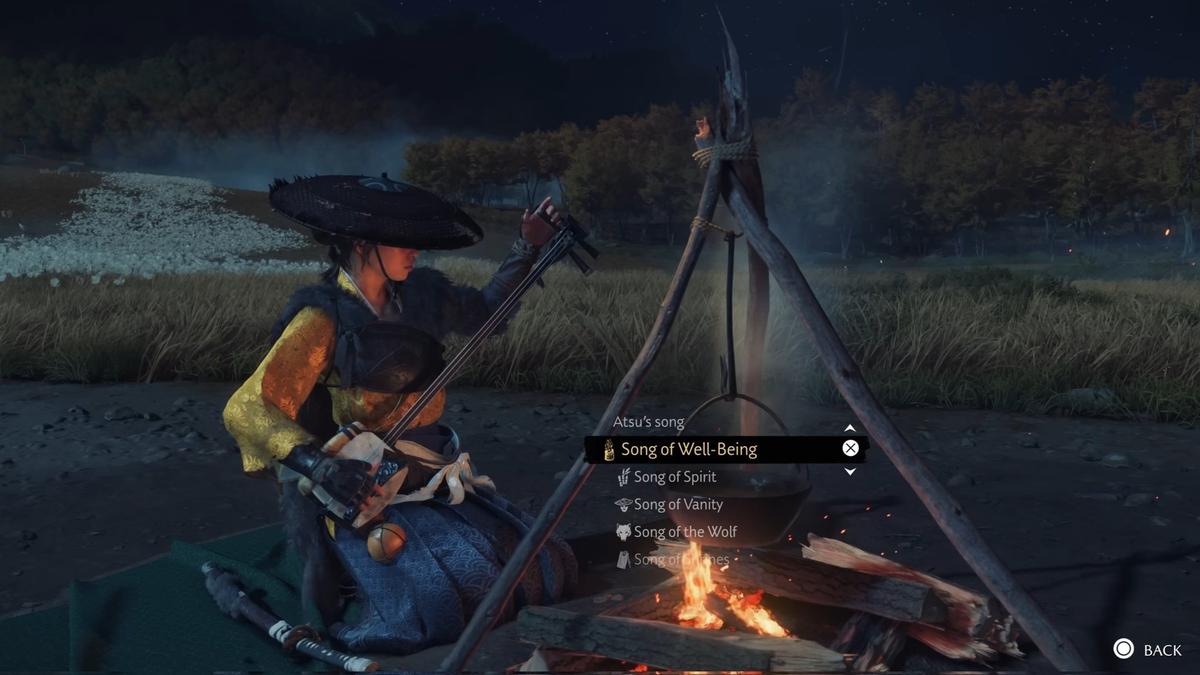
An in-game still from ‘Ghost of Yōtei’
The score also seamlessly incorporates the biwa, an instrument that Demon Slayer fans would instantly recognize for its distinctive, plucky twangs from the Infinity Castle. The harsher timbre of the biwa was chosen to represent the game’s primary antagonists, the Yōtei Six. “It possesses so many overtones,” Otowa explains. “It could sound very subtle, or powerfully chug away like a villain.” To counteract this darkness, he introduced a distinctly Western voice: the lap steel guitar, performed by Nashville musician Justin Johnson. “When I first heard his sound, I was instantly captivated,” Otowa recalls, laughing. “He is the Yōtei Six.” These two instruments, separated by centuries and continents, engage in a compelling conversation throughout the score, like mirrored shadows, and their interplay gifts Yōtei its stunning duality.
A Geography of Feeling
The landscapes of Yōtei are sculpted by wind, snow, and profound silence. Much of its world draws inspiration from the northern regions of Japan and the rich cultural heritage of the indigenous Ainu people. “Some members of the team actually traveled to Hokkaido and recorded a tonkori player,” Otowa reveals. While this instrument provided an authentic regional sound, Otowa’s own compositions remained more interpretive. “We aimed not to specify particular regions,” he clarifies. “It was more about what felt intrinsically right for the narrative.” This intuitive approach also guided the spatial design of the sound. “We were highly conscious that the music needed to be breathable,” he says. “It needed to evoke a sense of vastness and spaciousness, as if it were quietly accompanying you like small spirits in nature. I wanted it to reflect the secrecy and sacredness of the natural world.”
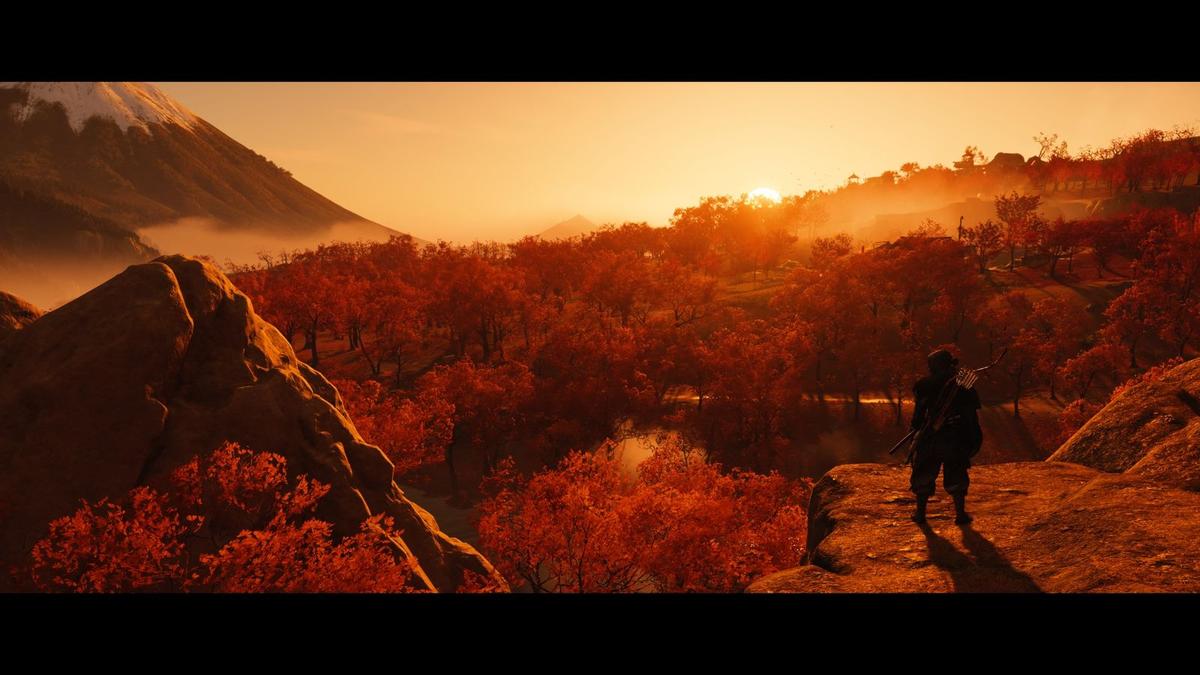
An in-game still captured in ‘Ghost of Yōtei’
A Ghost from the Past
The game’s emotional core resonates through Atsu’s poignant songs, performed by singer Claire Uchima, who also lent her voice to Ghost of Tsushima. “From our very first Zoom meeting, we connected instantly,” Otowa recounts. Uchima co-wrote the lyrics with her father, a respected scholar of traditional Japanese language. “The lyrics are modern yet possess an ancient quality,” he notes. “You can truly feel the historical period in her words.” Atsu’s music conveys a deep sense of grief without ever succumbing to surrender, a sentiment Uchima appeared to grasp intimately. “She simply understood the character. Atsu is withdrawn and burdened by the profoundest sorrow. Even without understanding Japanese, you can feel what Claire is singing,” Otowa remarks.
Between Worlds
Despite his pivotal role in one of PlayStation’s most anticipated games, Otowa remains remarkably humble. “I’d love to say I’m a hardcore gamer,” he laughs, “but I’m terrible. Too many buttons!” Still, he fully intends to play Yōtei eventually, preferably on the lowest difficulty setting.
When discussing his musical inspirations, he speaks of a living legend. “John Williams’ score for E.T. was what first made me want to become a composer,” he shares. “It was so beautiful, so sweeping.” That early spark led him through conservatory halls and film studios across the U.S., before Yōtei ultimately brought him back to the echoes of his own origins. “It compelled me to tap into my very DNA,” he reflects. “To blend what I had learned in the West with the sounds and culture I grew up around.”
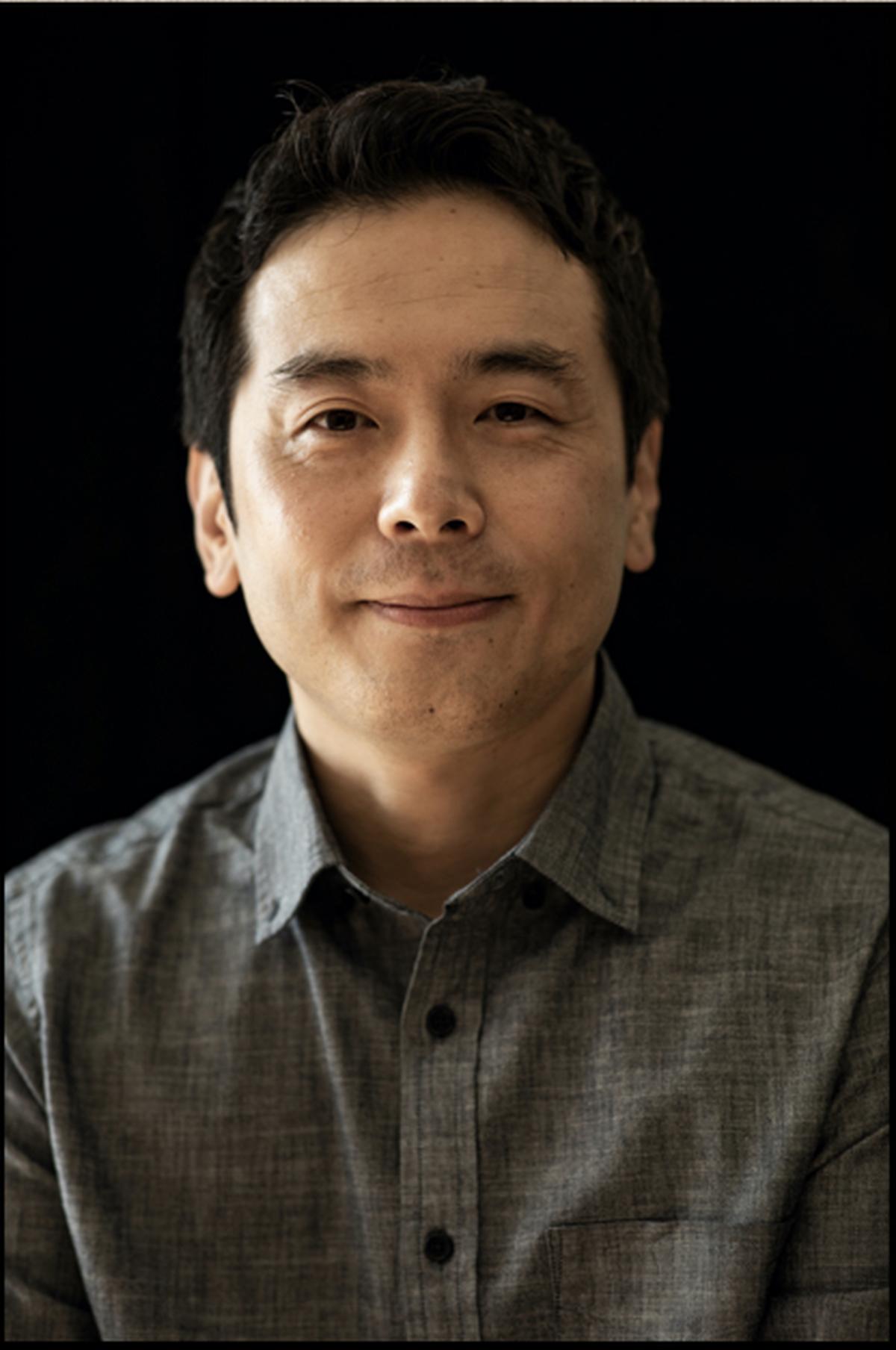
Toma Otowa
During the many months of composing for Yōtei, Otowa also made the professional decision to change his name from Wataru Hokoyama to Toma Otowa. “I wanted something easier to pronounce,” he chuckles. “People outside Japan would often mispronounce it. So I thought, let’s be kind to everyone.”
In Atsu’s story, there seems to be a subtle reflection of Otowa himself. Much like the onna-musha successor to Jin Sakai, who inherits a legendary mantle and must carve out her own rhythm within an already established narrative, Otowa carries the weight of a world still reverently echoing Tsushima’s music.
“When I compose as Toma, I feel a greater sense of liberation,” he says. “I can shed some of that ancestral pressure.” The new name, chosen after careful consultation with a specialist in Japanese naming meanings, signifies a fresh creative chapter. “It just feels friendly,” he smiles.