
Known affectionately as Zubeen da or Goldie da, Zubeen Garg was more than just an Assamese musician; he was a cultural phenomenon. His recent passing in Singapore left a void, but his legacy of over 40,000 songs, each a unique expression of emotion, continues to resonate. His remarkable vocal range, effortlessly moving from soaring highs to resonant lows, was a testament to his extraordinary talent.
The release of his album Maya saw its title track, ‘Maya Mathu Maya,’ quickly become a defining love anthem for an entire generation. No Bihu celebration was truly complete without the infectious rhythm of a Zubeen Garg hit. His artistry transcended linguistic barriers, allowing him to seamlessly navigate various musical styles and languages.
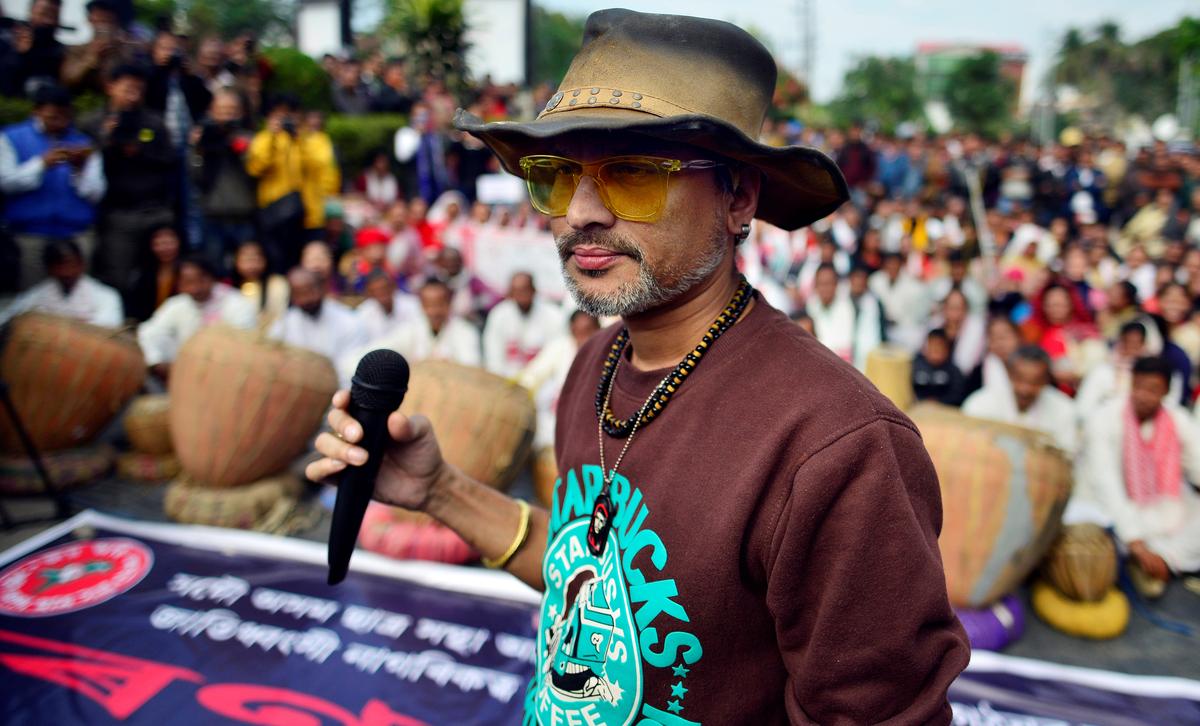
Zubeen Garg at a Citizenship Amendment Act protest in Assam | Photo Credit: RITU RAJ KONWAR
Beyond his musical genius, Zubeen da was a true maverick, utterly devoid of pretension. He effortlessly connected with people through his lyrics and melodies. Heartwarming videos of him teaching a parrot to say ‘kaka’ (brother in Assamese) captured his endearing simplicity. A passionate environmentalist, he frequently encouraged tree-planting. He proudly identified as a ‘people’s man’ and truly lived this philosophy, often making spontaneous visits to homes and sharing humble meals of dal and rice with genuine contentment.
Now, fellow musicians from Assam share their cherished memories and heartfelt tributes to Zubeen da.
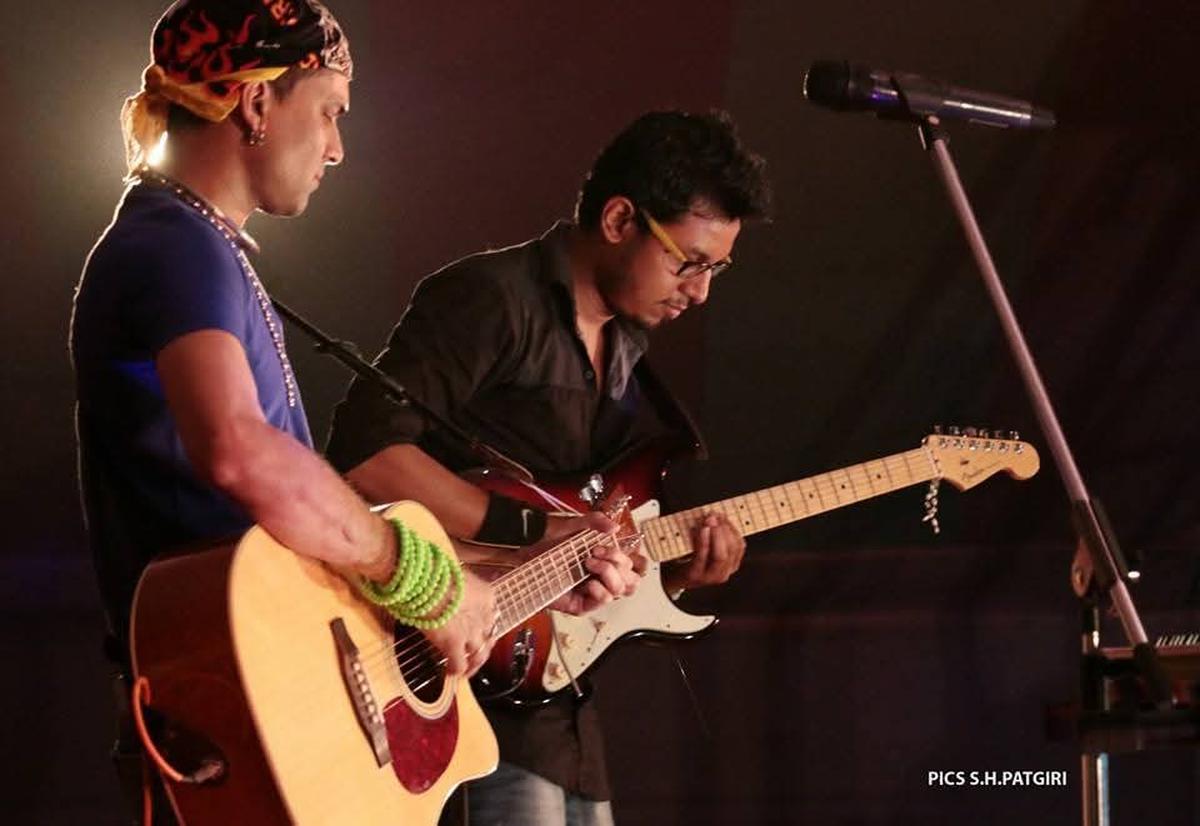
Kailash Sharma with Zubeen Garg | Photo Credit: Special Arrangement
Kailash Sharma, Guitarist
My memories with Zubeen da are truly countless. When I first picked up a guitar, the very first song I learned was ‘Mayabini,’ released in 2001. I attended B. Borooah College, just like him, and after mastering ‘Mayabini,’ I harbored a secret dream of one day performing alongside him. That dream materialized eleven years later, in 2011, when I finally shared a stage with him in Nagaon. I had performed with notable artists like Anupam, Zublee, and Srimanta before, but that particular night felt profoundly different.

Zubeen Garg was often seen comforting people in their grief | Photo Credit: RITU RAJ KONWAR
Following the concert, we shared a simple dinner at a roadside dhaba in Nelli. During that humble meal, Zubeen da offered high praise for my guitar work, specifically noting my exceptional performance of ‘Xanti Diya.’ He then extended an invitation, saying, ‘You have to play with me for Bihu. So stick around with us.’ That was October 2011, and I happily stayed, performing by his side for the next four unforgettable years.
Those four years were truly unforgettable. Zubeen da was incredibly encouraging and affectionate, treating every member of our team like family. He possessed a wonderfully lighthearted and jovial spirit, always ready with a joke. He even had a peculiar, almost childlike habit of holding a band member’s hand and cracking their knuckles. In Assamese, there’s a phrase, ‘free and frank,’ to describe someone who never holds back their thoughts, and that perfectly encapsulated Zubeen da, both in his conversations and his profound ideas.
However, as a musician, he was relentlessly demanding, pushing you to extract your absolute best. I recall a period working on ‘The Rock’ album at Kharguli studio. One evening, after an exhausting day, I had just settled down to sleep when my phone rang at 3 AM. It was Zubeen da. His only words were, ‘Come to the studio. Let’s record one song.’ I immediately hurried back with my guitar, and we continued playing until 7 AM. On another occasion, he called me at 10 PM for a recording, only for me to arrive and find him engrossed in a motor-racing movie. We all ended up staying, watching the film together, and then crashing on the studio floor – a scene that fondly reminded me of childhood holidays spent with cousins at our grandparents’ home. That was his magic: seamlessly blending intense work, passionate music, and profound camaraderie.
What I admired most about Zubeen da was his profound philosophy on life. He consistently spoke of his love for spending time with ordinary people. He would readily engage in conversations with a vegetable vendor, a rickshaw puller, or someone at a humble roadside tea stall. He treated everyone with equal respect and frequently championed messages of love and equality to the youth.

Shankuraj Konwar | Photo Credit: Special Arrangement
Shankuraj Konwar, Singer
My entire musical journey is undeniably shaped by one profound influence: Zubeen Garg. As a musician, I can say with absolute certainty that I would not be where I am today without his impact. His music wasn’t merely the soundtrack to my early years; it served as the fundamental cornerstone of my artistic growth and education.
My earliest memories of singing are inextricably linked to his remarkable songs. I would spend hours immersed in tracks like ‘Anamika’ and ‘Maya,’ meticulously trying to grasp the profound emotion and depth conveyed through his voice. It was through his beautiful melodies that I truly learned about rhythm, understood the power of a well-crafted lyric, and recognized the vital importance of infusing every single note with my soul.

Singer Zubeen Garg alongside Bodybuilder Mahadev Deka, collecting funds for flood victims in Assam in 2015 | Photo Credit: RITU RAJ KONWAR
Yet, his influence extended far beyond the realm of music itself. Zubeen da epitomized kindness, compassion, and unparalleled generosity. He consistently reminded us of the importance of selfless giving. His compositions frequently celebrated nature, love, and unity, fostering a sense of belonging to something much larger than our individual selves. For me, he was a soul driven by a purpose far grander than simply creating music; he inspired me to strive for excellence not only as an artist but, more importantly, as a human being.
The core values he championed and poured into his music – love, kindness, and compassion – are the very principles I endeavor to live by and express through my own art. His enduring legacy isn’t confined to the songs he performed, but extends to the countless artists he inspired and the innumerable lives he profoundly touched. He instilled in me the understanding that music transcends mere performance; it is a powerful conduit for connection, a direct bridge to the human heart.
I stand as a musician today solely because of Zubeen Garg, and I will forever be indebted for the invaluable gifts he bestowed upon me.

Girish (second from left) with the members of Girish and the Chronicles | Photo Credit: NBC
Girish Pradhan, Lead Singer, Girish and The Chronicles
Our band, Girish and The Chronicles, has had a deep connection with Assam from our very beginnings, and it’s truly painful to witness the profound impact of this loss on its people. I understand just how much Zubeen da meant to everyone. He was far more than simply a musician; he embodied their voice, their aspirations, and so much more. The overwhelming outpouring of grief and the sheer number of people who gathered to mourn him stand as a powerful testament to the immense love and respect he commanded. For those of us in the Northeast, it feels as though we’ve lost a true brother.
I’m incredibly grateful that we had the opportunity to share the stage with him on multiple occasions. Even though our interactions remained largely professional, it was always evident that he possessed an authentically genuine and remarkably grounded spirit.
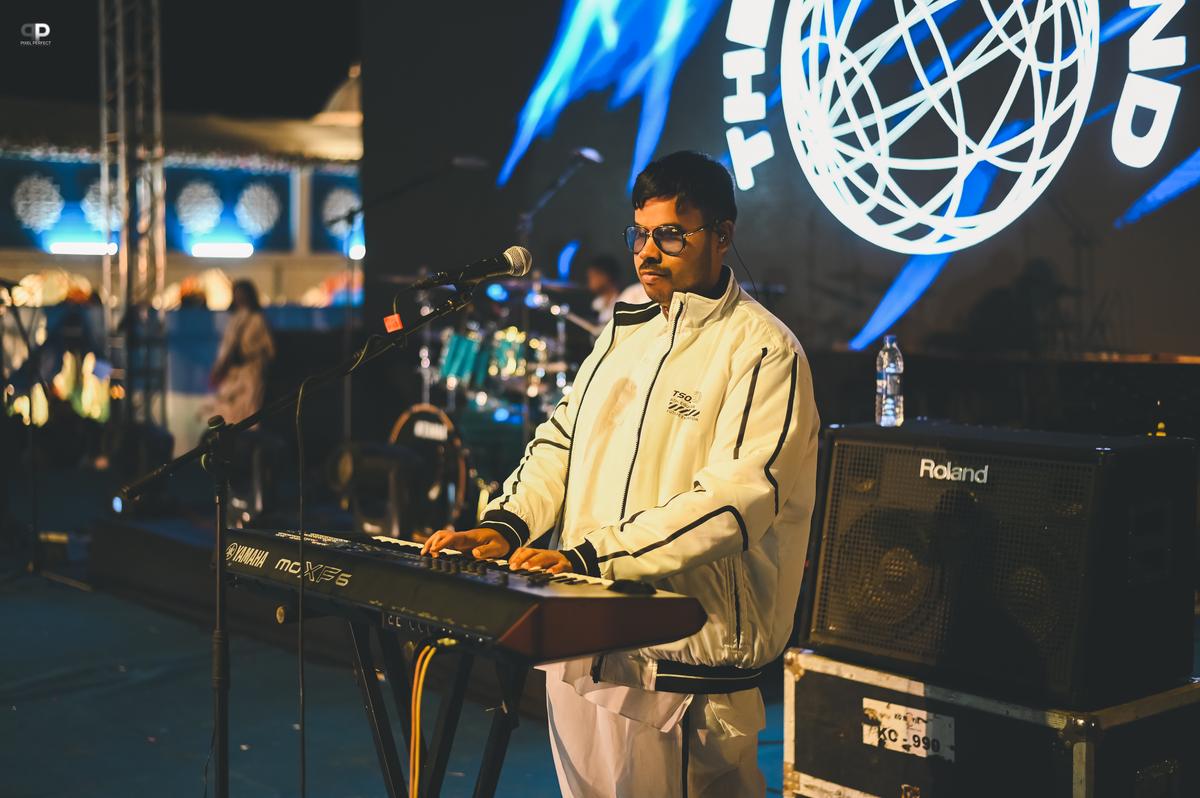
Writam Changkakoti | Photo Credit: Special Arrangement
Writam Changkakoti, Multi-instrumentalist and Music Teacher at The Cadenza Music Academy
Zubeen da isn’t just a name; he represents a profound emotion for everyone. He was a truly multifaceted, multi-genre musician—a prolific writer, composer, and singer. I was born the same year his debut album, ‘Maya,’ was released, though I discovered his music much later. Yet, even then, ‘Maya’ still felt incredibly current and resonant.
One of the most defining aspects of his music was undoubtedly his voice – it was uniquely captivating, almost as if he were singing directly to you. Sonically, he ushered in a revolutionary shift in Assamese music’s sound and arrangement, fundamentally reshaping public taste and ensuring his songs resonated deeply with both the young and the old.

Assam’s Zubeen Garg | Photo Credit: Special Arrangement
I had the privilege of meeting him on several occasions. Our first encounter was in 2002, during the launch of his album ‘Sishu’ (Child), where I, as a child, was chosen to unveil it. Later, in 2005, he personally launched my debut album, ‘Writam’s Jyoti.’ I even had the opportunity to record in his esteemed studio.
His melodies and compositions were truly unparalleled; remarkably, even his very first album retains its relevance today. His extensive body of work seamlessly traversed diverse genres and languages. Within Assamese music alone, he ventured across a vast spectrum—from traditional borgeet, vibrant bihu, and soulful lokageet, to contemporary love songs, all infused with lyrics that spoke of peace, unity, the innocence of children, and rich folk traditions.
His ability to explore a universal theme like love through such a multitude of genres was, in itself, a truly singular artistic achievement.

Zubeen Garg (center) with Neeraj Sridhar and Gorisha Nath | Photo Credit: Special Arrangement
Gorisha Nath, Female Lead Vocalist of Bombay Vikings
Zubeen da was a steady, inspiring presence throughout my life, just as he was for every Assamese person. His music resonated deeply with me from the moment his album ‘Onamika’ was released, instantly turning me into a lifelong admirer. I even had the incredible opportunity to perform with him on stage alongside my sister, Pritisha, around 2000-2001. Fresh out of school, we were overflowing with pride and pure exhilaration.
When he relocated to Mumbai, we became virtual neighbors in Sher-e-Punjab (Andheri East) from 2005 onward. We shared countless parties, created music together, and essentially lived like an extended family. Zubeen da often had wonderfully quirky culinary ideas—I distinctly remember him proudly presenting an egg curry made with cabbage! At another gathering, he spontaneously declared, ‘Oi Gorisha, ei gaantu gai dibi aah’ (Hey Gorisha, come and sing this song)—and just like that, his renowned song ‘Khiriki Melute’ was born.
Whenever I found myself in Assam and Zubeen da was performing, I made it an absolute priority to attend. I was among the fortunate few who enjoyed easy access to both him and his wife, Garima ba. During his concerts, he would frequently invite me onto the stage, where we would share the joy of singing ‘Jaane Kya Chahe Mann’ together.
Indeed, anyone who had the privilege of knowing Zubeen da undoubtedly holds a treasure trove of memories—and I, personally, have zillions.