
Imagine you’re in class, and your teacher is writing on the blackboard. Suddenly, you hear that terrible, ear-splitting SQQQQUUUEEEEEAAAAKKKKK! You instinctively cover your ears, trying to escape the grating sound. We’ve all been there, right? But have you ever stopped to think why some sounds are just plain annoying, while others actually cause us pain?
The reason is surprisingly straightforward: sounds with very high frequencies aren’t well-suited for human ears. Our ears are designed to pick up sounds within a specific range, roughly from 20 Hertz (Hz) to 20,000 Hertz (or 20 kHz). This range measures how many times sound vibrations occur per second. Anything below 20 Hz is called infrasonic – too low for us to consciously hear, though we might feel it as a rumble. On the other end, sounds above 20 kHz are ultrasonic. These high-frequency sounds can be incredibly sensitive to our ears and become quite painful if we’re exposed to them for too long.
Fascinating Fact!
How Do Our Incredible Ears Process Sound?
Sound, at its core, is a form of energy created by vibrations, and it always travels in waves. When these waves reach your outer ear, that fleshy part you can see – called the pinna – acts like a funnel, gathering the sound. The sound waves then journey through your ear canal until they gently bump into your eardrum, also known as the tympanic membrane.
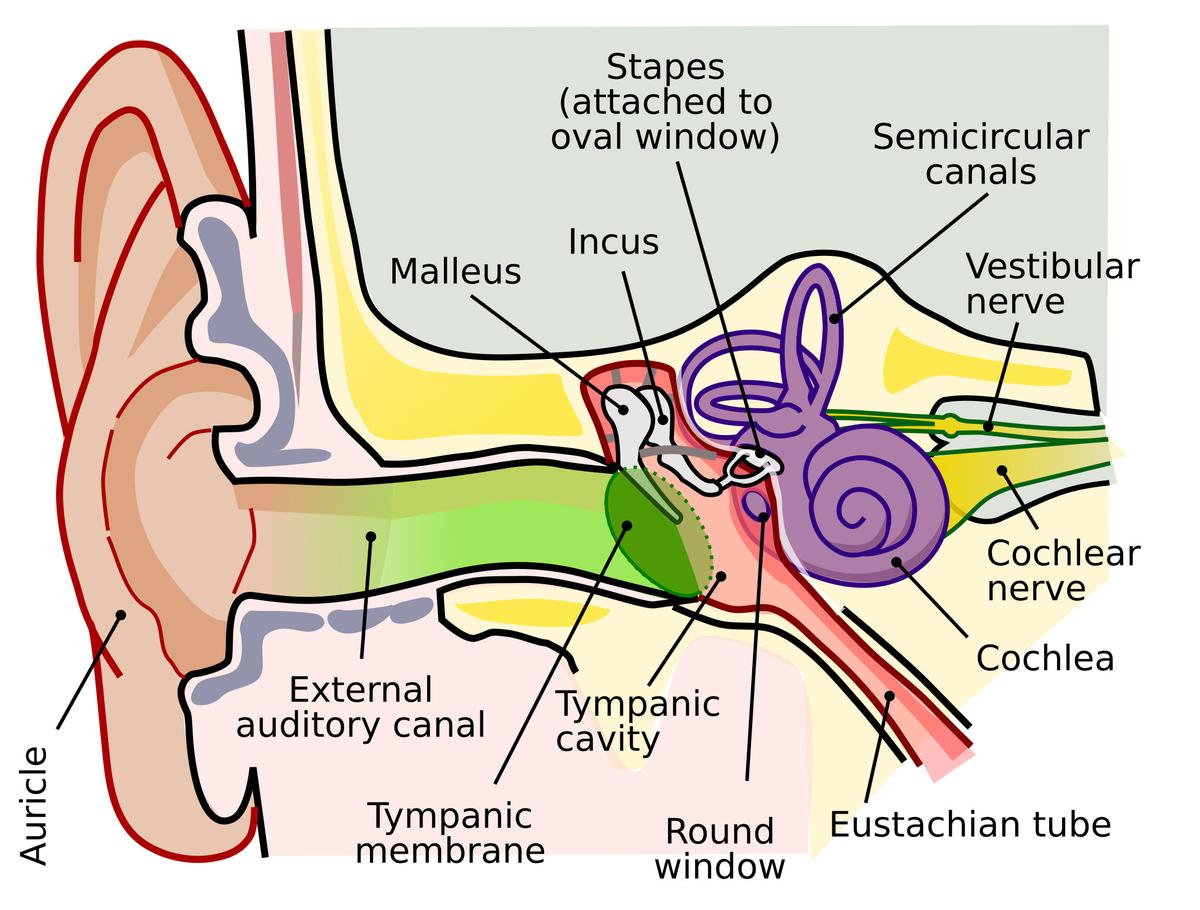
Once the sound waves hit your eardrum, it starts to vibrate. Think of it as a tiny drum converting air vibrations into mechanical movements. These vibrations are then transferred to three incredibly small bones in your middle ear: the ossicles, known as the Malleus (hammer), Incus (anvil), and Stapes (stirrup). These bones work together to amplify the vibrations, sending them towards the inner ear’s oval window. This is a critical point: if the initial sound vibrations are already intense, the amplification process can make them overwhelming, potentially causing discomfort or even damage to your delicate ear.
Continuing the journey, the amplified vibrations from the ossicles cause the fluid within the cochlea (a snail-shaped organ in your inner ear) to ripple. Inside this fluid-filled chamber are thousands of microscopic hair cells – our amazing sensory cells. These hair cells detect the fluid movements and transform them into electrical signals. Finally, these electrical messages are whisked away to your brain via the auditory nerves, allowing you to actually perceive and understand the sound.
Consider This:
So, those grating sounds like chalk squealing on a blackboard, clattering steel utensils, piercing sirens, or even a rusty door hinge creaking can all feel irritating because of how our ears process their frequencies and amplified intensity. Interestingly, this scientific principle is even used in devices like the LRAD (Long Range Acoustic Device), which can generate highly irritating or painful sounds to disperse crowds or deter threats like pirates on ships.