
HANOI — Central Vietnam is reeling from a catastrophic week of record-breaking floods, which have tragically claimed the lives of 40 people, authorities confirmed on Tuesday. The region now faces the daunting prospect of even more devastation as a powerful new storm looms on the horizon.
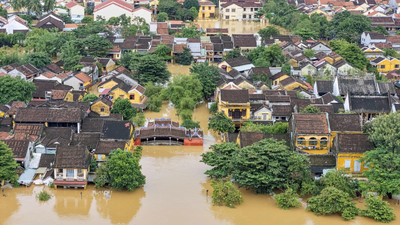
For days, Vietnam’s central provinces have been deluged by relentless, torrential rains. Streets transformed into raging canals, riverbanks overflowed, and many of the nation’s cherished historic sites now lie submerged. In one particularly intense 24-hour period, an astonishing 1.7 meters (5 feet 6 inches) of rain fell, shattering national rainfall records and exacerbating the crisis.
The environmental ministry’s disaster management agency reported that the confirmed fatalities span across Hue, Da Nang, Lam Dong, and Quang Tri provinces. Additionally, six individuals are still unaccounted for. This rising death toll reflects a grim increase from the 35 reported just on Sunday.
The national weather bureau issued a stark warning: the relentless extreme weather is far from over. Typhoon Kalmaegi is projected to make landfall in the early hours of Friday morning, threatening to unleash another wave of destructive forces.
In the UNESCO World Heritage city of Hoi An, where the ancient town is now submerged in muddy, waist-high water, residents express their despair. ‘It’s exhausting,’ lamented Tran Thi Ky, 57, whose home has been flooded three times in less than ten days. She shared her frustration with AFP, saying, ‘We are tired of flooding, but what can we do?’ ‘We brought all our furniture to high ground,’ she added, ‘but they are all wet anyway.’
While Vietnam typically experiences heavy rains between June and September, recent scientific findings indicate a concerning pattern: human-driven climate change is contributing to more frequent and destructive extreme weather events like these. Typically, Vietnam faces about ten typhoons or tropical storms annually, either directly or offshore. However, Typhoon Kalmaegi marks an alarming thirteenth storm for 2025, highlighting an intensified typhoon season.
Before reaching Vietnam, the typhoon is currently wreaking havoc across the central Philippines, where it has already tragically killed at least five people and forced hundreds of thousands to flee their homes. The national weather bureau predicts that Kalmaegi could strike Vietnam’s coast on Thursday with destructive winds reaching up to 166 kilometers (100 miles) per hour.
The aftermath of the past week’s extreme weather continues to plague the region, with numerous remote areas remaining cut off due to extensive landslides blocking critical roads. Further illustrating the scale of the damage, state media reported the collapse of approximately 15 meters of the ancient wall at the Hue Imperial Citadel, also known as the Dai Noi.
The disaster agency estimates that nearly 80,000 homes are flooded, over 10,000 hectares (25,000 acres) of vital crops have been destroyed, and more than 68,000 cattle have perished in the floods.