
LONDON – Britain’s top climate advisers have issued an unprecedented warning, urging the government to ready itself for a 2°C rise in global temperatures by 2050. They emphasize that current measures to combat extreme weather events are severely lacking.
This year, the UK, like many nations, has endured a series of unprecedented climate challenges, including four intense heatwaves, significantly low rainfall in several regions, and extended periods of drought.
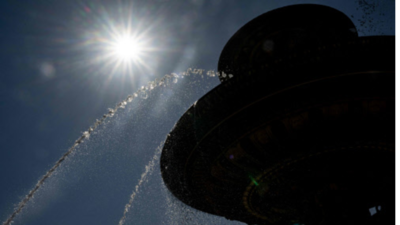
A visual representation of extreme weather due to global warming.
The Climate Change Committee (CCC), an independent body advising the government, projects that the duration of drought conditions in the UK could double if the 2°C warming threshold is met.
A report by the committee earlier this year already highlighted the UK’s severe lack of preparedness for the catastrophic impacts of climate change, pointing out critical deficiencies across vital sectors like agriculture and transport.
In a letter released this Wednesday, the CCC explicitly stated that ministers must prepare for the “weather extremes that will be experienced if global warming levels reach 2°C above pre-industrial levels by 2050.”
The committee further stressed, “We have to advise that the UK should be prepared for climate change beyond the long-term temperature goal of the Paris Agreement.”
The 2015 Paris Agreement saw nations commit to limiting global warming to “well below” 2°C, with an ambitious target of 1.5°C. However, scientists increasingly warn that the 1.5°C goal is slipping out of reach as human activities continue to accelerate climate change.
For years, experts have cautioned that exceeding a 2°C warming could render vast areas of our planet uninhabitable.
The CCC’s assessment is unequivocal: the UK remains ill-equipped to handle the climate shifts it is currently undergoing, let alone the more drastic changes anticipated in the decades ahead.
Should global warming reach 2°C, the likelihood of a major heatwave in any given year would jump from 40% to a staggering 80%. Additionally, sea levels are projected to rise by 15-25 cm.
In response, the committee recommends that the government prepares for a future defined by more intense and frequent heatwaves, widespread droughts, severe flooding, powerful storms, and escalating wildfire risks.
Key recommendations include adapting infrastructure, particularly ensuring that new residential properties are built to withstand significantly higher temperatures.
Traditionally, British homes are constructed to conserve warmth during colder months, and air conditioning is not a common feature in most houses, public buildings, or transport systems.
Experts note that this design flaw poses significant health risks, especially for older and vulnerable populations residing in inadequately adapted homes, as temperatures continue to climb.
Alarm Bells Ring for UK Government
“People across the UK are already feeling the effects of our changing climate, and it is our duty to prepare them,” stated Julia King, chair of the CCC’s adaptation committee.
She added, “We need the government to approach climate adaptation with the same level of urgency and commitment that we’ve seen applied to emission reduction.”
The CCC strongly advises using 2050 as a critical deadline for implementing essential changes, such as ambitious projects like new reservoir construction. This comes as ministers themselves caution about impending water shortages within the next ten years.
Recent analysis from the non-profit Energy and Climate Intelligence Unit revealed that 2025 saw the UK’s second-worst harvest on record, based on government data.
The organization emphasized that providing support to farmers for adapting to extreme weather conditions must be an “urgent priority for the government.”
Douglas Parr, chief scientist for Greenpeace UK, reacted to the advisory by stating that “alarm bells should be ringing in government.”
“The doubled probability of heatwaves, droughts, and wildfires will rapidly transform life in the UK,” Parr warned in his statement.
Coinciding with this, the United Nations issued its own urgent plea for drastic emissions reductions. Its meteorological agency disclosed that atmospheric carbon dioxide levels saw their largest recorded annual increase last year, highlighting the global scale of the crisis.