
Classical music isn’t just for concert halls! You’ve likely heard its timeless melodies in your favorite cartoons, epic movies, and even commercials, often without realizing it. But beyond the notes and instruments lie captivating stories – tales of drama, humor, and even the supernatural – that shaped these iconic works. Join us as we explore the fascinating true narratives behind some of Western classical music’s most unforgettable masterpieces.
A Ballet of Unforgettable Chaos
Igor Stravinsky, a groundbreaking figure in 20th-century music, was known for his complex rhythms and striking dissonances (a clash of musical notes that creates tension). One of his most famous works, the ballet ‘The Rite of Spring,’ shattered traditional norms not only in its score but also in its choreography and costumes. The ballet featured unconventional, disjointed dancing set to Stravinsky’s famously clashing music, creating a truly unique spectacle.
When ‘The Rite of Spring’ debuted on April 2, 1913, at the Théâtre des Champs-Élysées in Paris, the audience was completely unprepared. From the opening bassoon solo to the dancers’ spastic movements, everything about it was radically different. Many involved in the production feared it would provoke a strong reaction.
Their fears were confirmed! From the very first notes, the crowd erupted in shouts, making it impossible to hear the orchestra. The uproar quickly escalated into arguments, thrown objects, and even arrests among the audience, with reports suggesting over 40 people were taken into custody that night.
Yet, as the saying goes, “with great risk comes great reward.” Stravinsky’s audacious ballet, despite its tumultuous premiere, became a monumental success. While an immediate ovation is debated, ‘The Rite of Spring’ is now celebrated as a masterpiece and continues to be performed worldwide.
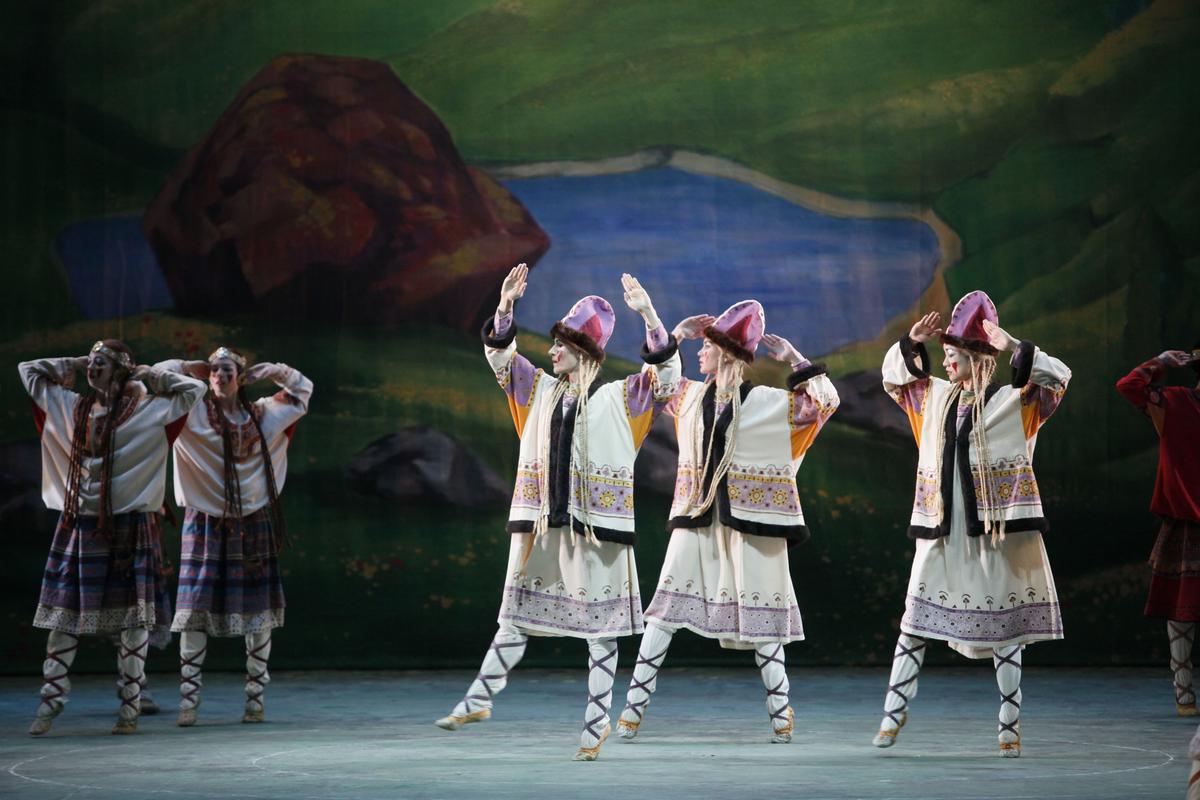
A scene from “The Rite of Spring” ballet at the Bolshoi Theater.
Mozart’s Playful Prank: The Bobblehead Soprano
Wolfgang Amadeus Mozart was known for his mischievous and playful sense of humor, which often found its way into his musical compositions. A prime example is his comic opera, “Così fan tutte” (meaning “Women are like that” in Italian), which premiered in Vienna in 1790.
Legend has it that Mozart wasn’t particularly fond of Adriana Ferrarese del Bene, the lead soprano playing Fiordiligi, during the opera’s premiere. While the exact reason for his disdain remains unknown, Mozart reportedly decided to use his music to highlight her peculiar stage habits. She had a tendency to dramatically drop her chin for low notes and fling her head back for high ones. So, in her aria “Come Scoglio” (“Like a Rock”), Mozart deliberately composed a series of extreme vocal leaps, forcing her head to “bob like a chicken” throughout the performance. One can only imagine the spectacle!
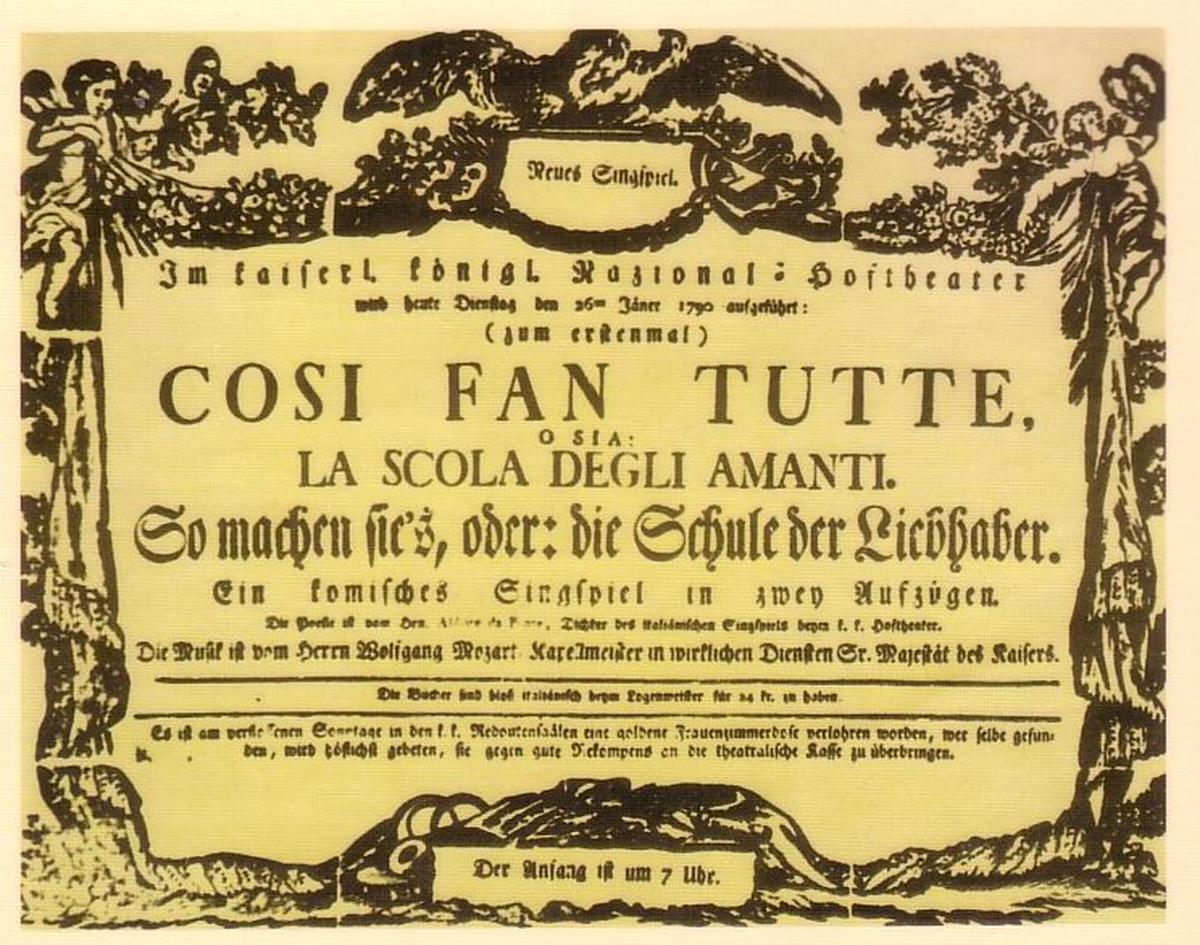
A poster announcing the first performance of Mozart’s “Così fan tutte.”
Haydn’s Startling “Surprise”
It wasn’t just Mozart who enjoyed a good musical prank! His predecessor, Franz Joseph Haydn, was also known for injecting humor into his compositions. A perfect example is his Symphony No. 94, famously known as the “Surprise Symphony,” which comes with a couple of amusing origin stories.
One popular theory suggests that Haydn, growing weary of audience members dozing off during his concerts, intentionally inserted a sudden, loud chord mid-symphony to jolt them awake! It’s said this unexpected crescendo was an impromptu addition. Another tale proposes that Haydn composed the “Surprise Symphony” to outshine his former student and rival composer, Ignaz Pleyel, whose concerts were happening concurrently.
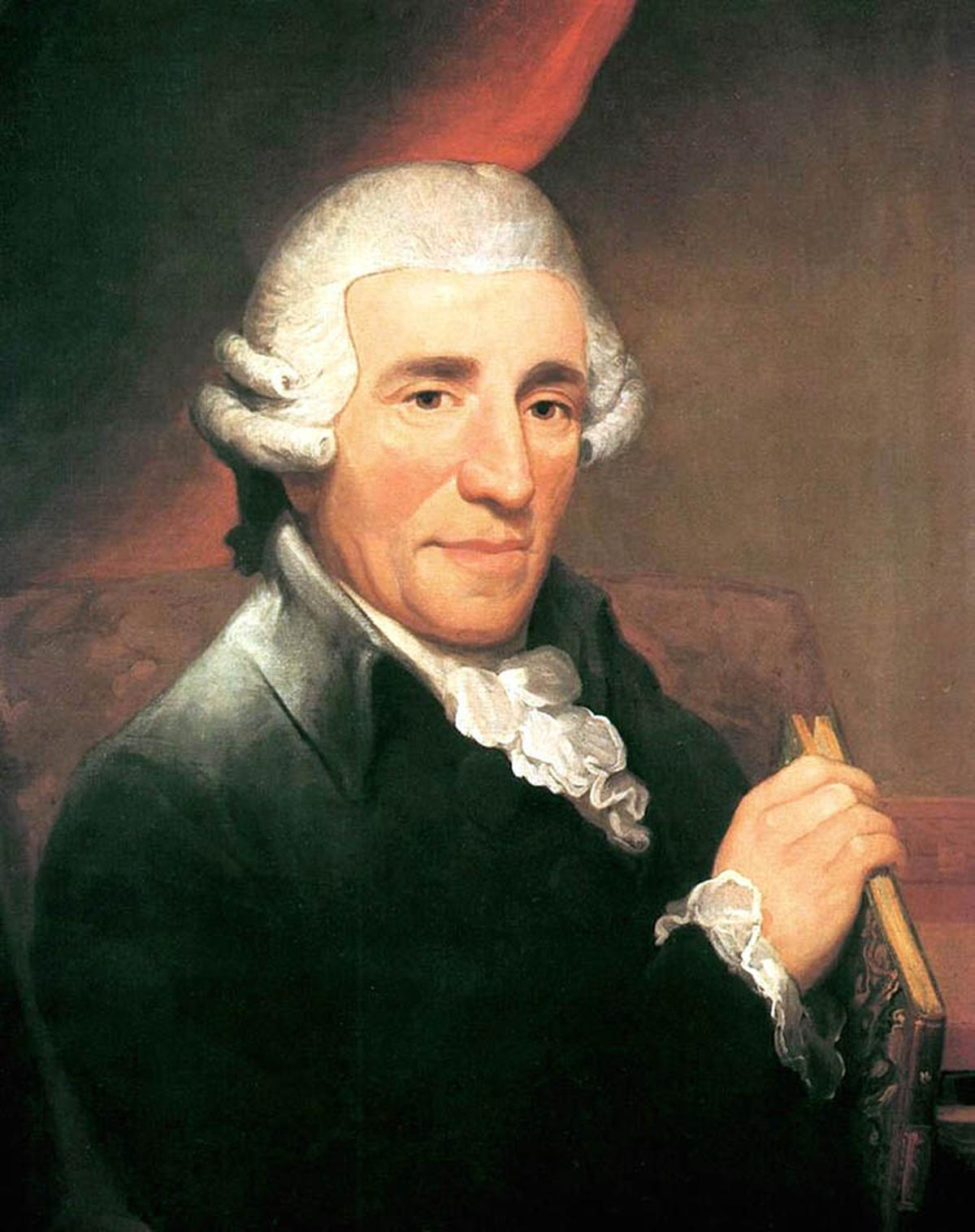
Franz Joseph Haydn, the brilliant mind behind the “Surprise Symphony.”
The Devil’s Trill: A Dream of Infernal Skill
Stories of pacts with the Devil for immense talent are common, but for Italian composer Giuseppe Tartini, the legend was deeply personal. He claimed that his incredibly challenging ‘Devil’s Trill Sonata’ was inspired by a vivid dream in which he taught the Devil to play violin, and in return, received a demonstration of such unparalleled virtuosity that it surpassed anything he could imagine.
Tartini himself recounted the experience:
“One night, in the year 1713, I dreamed I had made a pact with the devil for my soul. Everything went as I wished: my new servant anticipated my every desire. Among other things, I gave him my violin to see if he could play. How great was my astonishment on hearing a sonata so wonderful and so beautiful, played with such great art and intelligence, as I had never even conceived in my boldest flights of fantasy. I felt enraptured, transported, enchanted: my breath failed me, and I awoke. I immediately grasped my violin in order to retain, in part at least, the impression of my dream. In vain! The music which I at this time composed is indeed the best that I ever wrote, and I still call it the ‘Devil’s Trill’, but the difference between it and that which so moved me is so great that I would have destroyed my instrument and have said farewell to music forever if it had been possible for me to live without the enjoyment it affords me.”
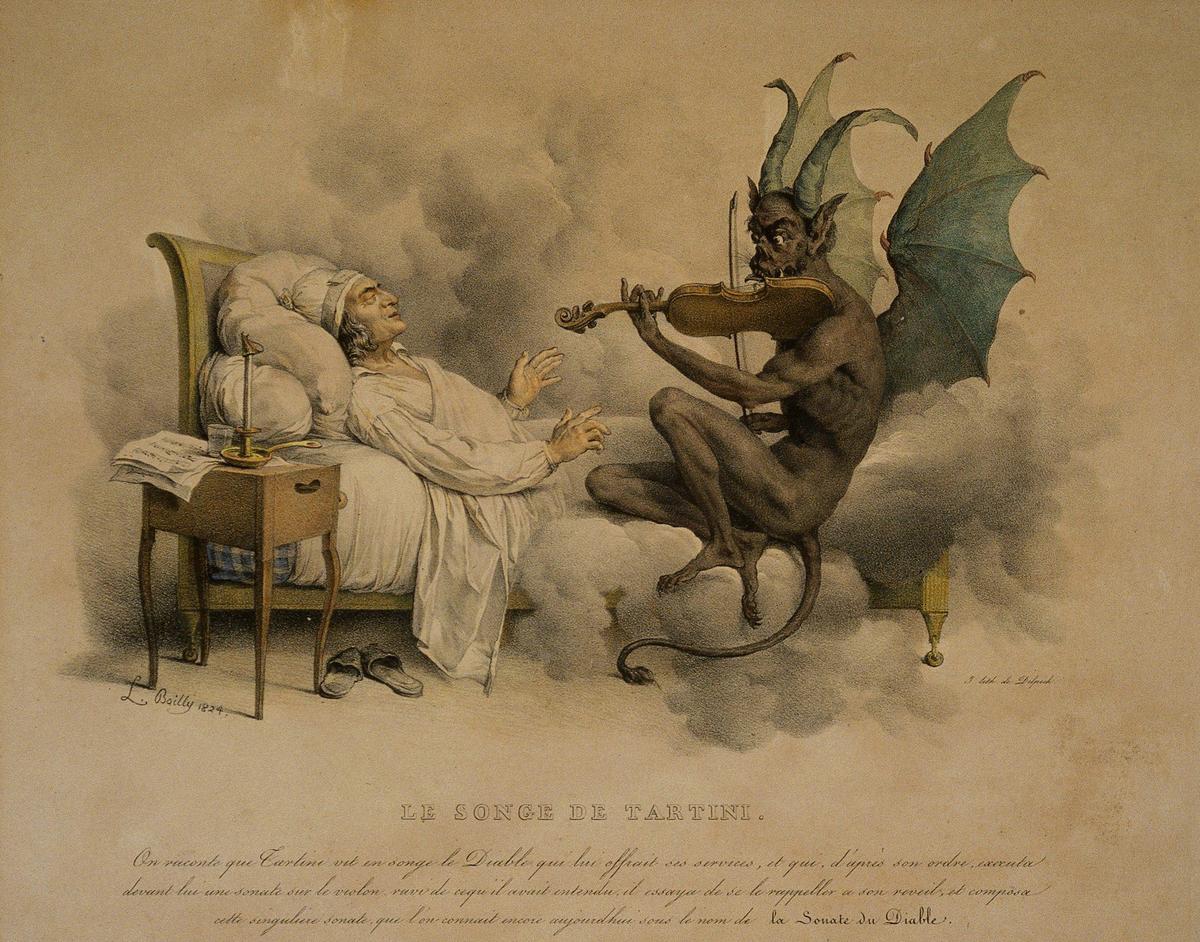
An artistic depiction of Tartini’s dream by Louis-Léopold Boilly (1824).