
In his essay titled ‘Teaching and Training’, the philosopher Gilbert Ryle discusses the student’s movement beyond rote and formulaic learning, using the following metaphor: “The cook’s pudding is a new one and piping hot, but its recipe was known to Mrs. Beeton in the days of Queen Victoria”.
Dominic Arun’s Lokah: Chapter 1 – Chandra, celebrated as India’s first female superhero film, powerfully showcases the maturation of new-wave Malayalam cinema on the global stage. This movie brilliantly reinvents the universal superhero narrative by infusing it with vibrant local flavors, setting a new standard for modern Indian superhero storytelling. It’s like a freshly baked, exciting new dish, crafted from timeless cinematic wisdom.

Kalyani Priyadarshan in a still from ‘Lokah: Chapter 1 – Chandra’
The film Lokah perfectly embodies the confidence and maturity currently flourishing within the Malayalam film industry. It stays true to the essence of recent Malayalam cinema, offering intimate emotions, intricate screenwriting, keen social commentary, and subtle humor. Yet, Lokah simultaneously unveils a fresh superhero universe that feels both ancient and utterly believable. Unlike many attempts that merely copy Western superhero styles, Lokah truly demonstrates how a superhero film can be creatively reimagined by embracing local folklore and placing it within the vibrant, multicultural urban landscape of contemporary India.
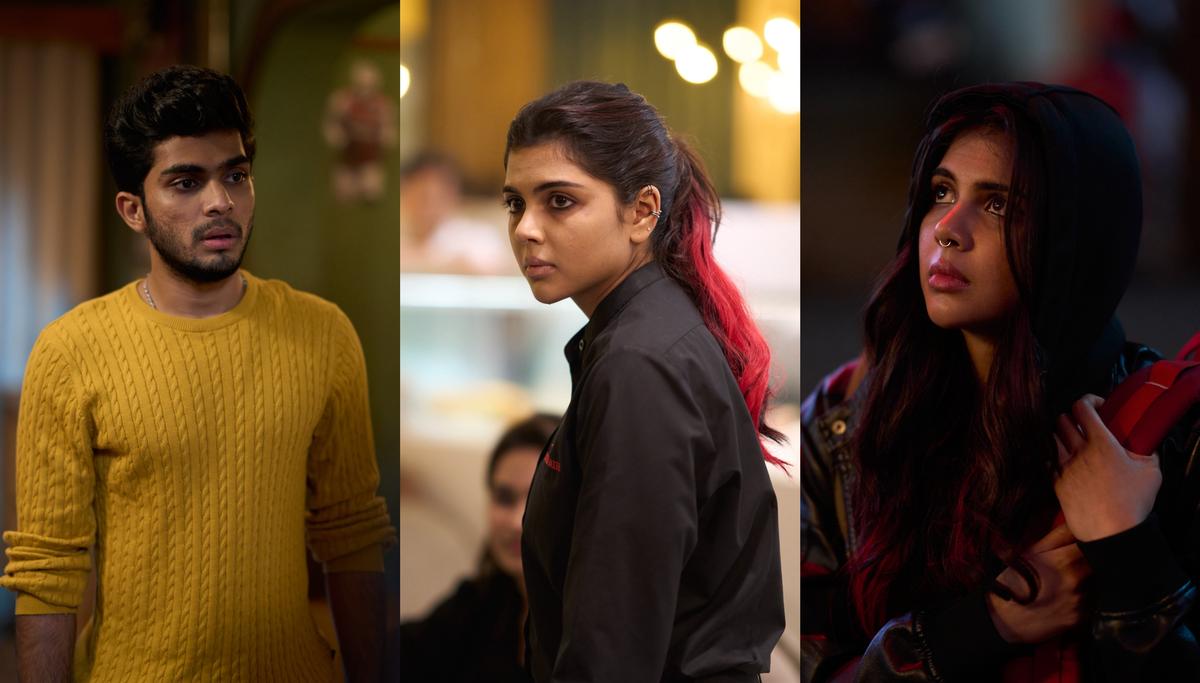
Naslen and Kalyani Priyadarshan in stills from ‘Lokah: Chapter 1 – Chandra’
The initial scenes of Lokah, despite being in Malayalam, felt strikingly familiar. We see an operative sent to retrieve a classified document from a war zone, who then cleverly evades an East Asian-looking agent. This opening sequence, with its costume design, choreography, and overall staging, could easily be mistaken for a Marvel production or a scene straight out of a Captain America film.
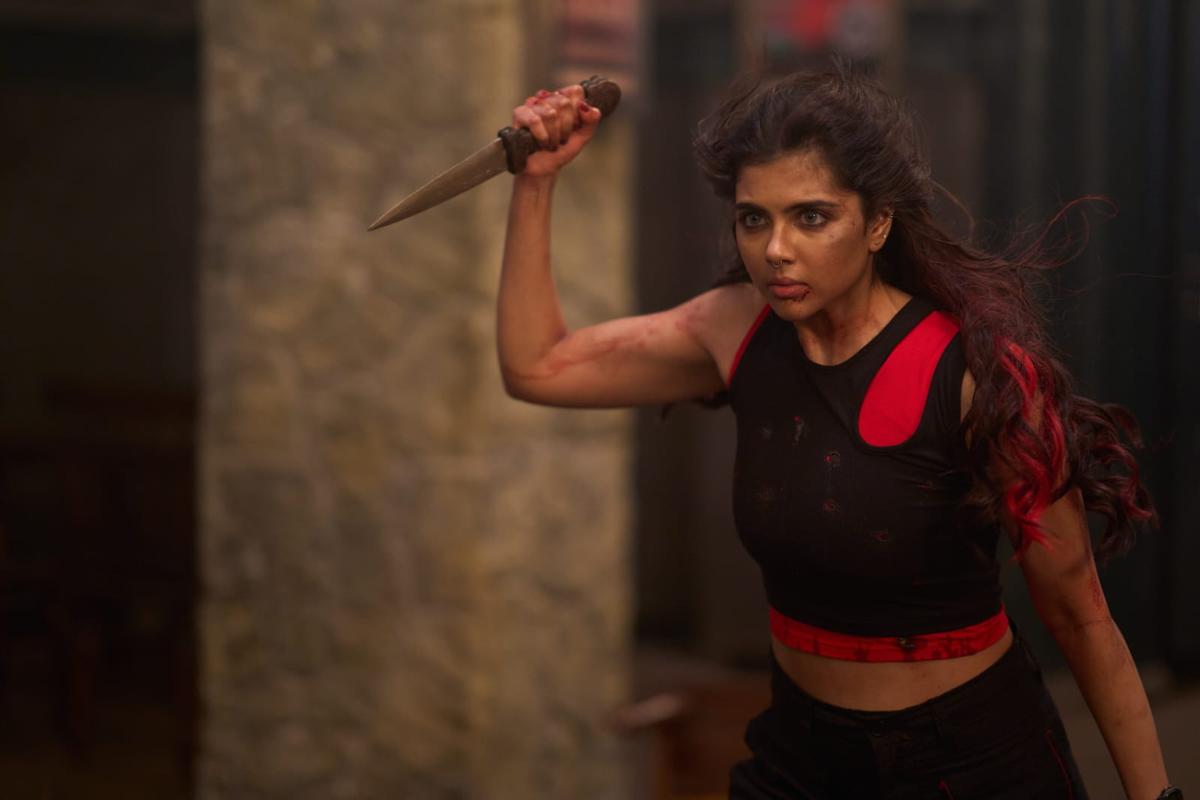
Kalyani Priyadarshan in ‘Lokah’
Initially, as critical viewers, our instinct was to be skeptical. However, the delightful surprise of another superhero film, Basil Joseph’s Minnal Murali (2021), starring Tovino Thomas, encouraged a more open perspective. Minnal Murali was uniquely refreshing because it seamlessly integrated the universal superhero archetype into the rich cultural fabric of Kerala, specifically amidst its paddy fields and coconut groves. Its strong relatability and deep immersion in ordinary rural life created an authentic narrative, demonstrating how a genre can be innovatively adapted without becoming a mere copy.
In a similar vein, Lokah rapidly dispelled any skepticism with its masterfully crafted storyline, drawing viewers into its meticulously embedded details. The narrative gracefully guides the audience through evolving plot points and scene transitions. What truly distinguishes this film is not just its female superhero lead, but also its clever reinterpretation of the classic vampire trope. By drawing upon Kerala’s rich traditional folklore, Lokah offers a fresh and culturally nuanced adaptation of the familiar Western vampire story.
Following its brisk, Marvel-like opening, Lokah deliberately eases its pace. It gradually immerses the young Malayali audience in relatable experiences of friendship and daily urban life. After establishing this sense of familiarity through humorous interactions and clever dialogue between Sunny and his friends, the film smoothly transitions back into the exciting and fantastical realm of the indigenous supernatural. This grounded approach is essential, as it makes the characters and their cultural contexts feel incredibly real. The effortless integration of mythology, themes of gender violence, and comic relief highlights a sophisticated screenplay where every dramatic element is thoughtfully interconnected.

A still from ‘Lokah’
The meticulous attention to detail in the screenplay is perfectly exemplified in the tea shop scene. Here, Officer Gowda and his team are seen at a roadside stall; everyone is enjoying tea except for Gowda. A subordinate casually mentions that Gowda is a teetotaler – a seemingly minor detail that later becomes crucial, explaining why Gowda can transform into a Yakshi while a severely injured Sunny cannot share the same destiny. Another brilliant detail is the recurring motif of a barking dog, subtly maintaining continuity across different timelines, such as Chandra’s origin story and the kidnapping scene where she’s left for dead near a railway line. The clever use of these seemingly small elements, like the dogs and their barks, for narrative coherence across timelines is truly ingenious.
From a technical filmmaking perspective, both the sound design and cinematography in Lokah are exceptionally advanced, creating an effect that is both impactful and understated. Far from the flashy overproduction often seen in big-budget films, Lokah achieves a sophisticated and organic visual depth. The film masterfully employs gothic imagery and motifs, utilizing shadow, reflection, and color play, which are beautifully balanced against a wealth of sharp exterior shots. Throughout, the clarity and vision of the camera work are remarkable. The action sequences are not merely gratuitous spectacle but are meticulously choreographed to be swift, rhythmic, and perfectly aligned with the emotional resonance of each moment.
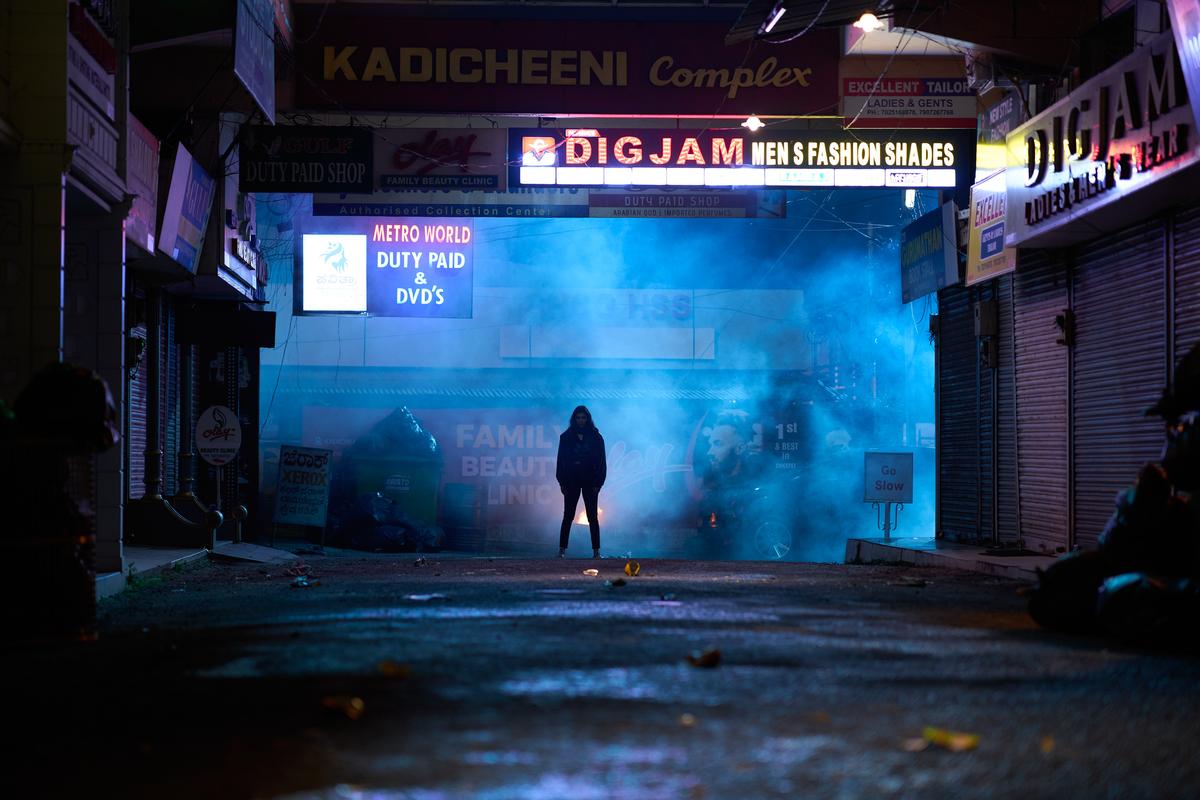
A still from ‘Lokah’
The film’s music is equally impressive—crisp, clean, and clear, providing another layer of its strength. Even at its loudest, the sound never overpowers; instead, it subtly pulls the audience deeper into the film’s unique atmosphere. The audio typically builds slowly and gradually before suddenly accelerating with immense power, much like a bullet train, yet it always retains its emotional core.
The universe of the film achieves believability through its thoughtful and organic development, building gradually over time. The first half particularly evokes the unsettling, slow-burn tension of a horror film. The feeling isn’t one of grand superhero theatrics, but rather an eerie, unsettling presence, like being watched.
Naturally, there are instances where the film invites comparisons to other works. For example, the anime series Hellsing, featuring a family that trains vampires to combat supernatural entities, comes to mind when we observe Chandra’s bond with the priest who captured her and his descendants, who then arm her to battle other Yakshis and demons. Western vampire lore undoubtedly serves as an inspiration. However, what might initially appear as imitation is, in reality, a deliberate and thoughtful indigenization. The vampire transforms into the Yakshi, the narrative relocates to Kerala’s lush forests and its marginalized forest communities, and Christian missionaries are recontextualized to interact with diverse religious beliefs. Far from erasing cultural distinctiveness, the film celebrates it.

Tovino Thomas in a still from the promo of ‘Lokah: Chapter 2’
Finally, examining the character of Chandra, portrayed by Kalyani Priyadarshan, her personal trauma isn’t merely a plot device but is deeply embedded in the film’s core. It’s visible in her every movement and expression; her stoic demeanor serves as both a facade and a defining trait, perfectly aligning with her otherworldly nature and unique abilities. However, a subtle irony exists: the film is promoted as India’s ‘first woman superhero film.’ While Chandra is undoubtedly the protagonist, the conclusion of the story clearly hints at a broader universe of heroes. The introduction of Tovino Thomas’s character, Michael, and Dulquer Salmaan’s late appearance as Charlie, suggest that upcoming installments might pivot towards an ensemble of heroes, predominantly male. It remains to be seen if Chandra will maintain her central role or if she will be sidelined once male superheroes enter the spotlight.