
Back in the day, I thought my original 3dfx Voodoo graphics card was revolutionary, delivering smooth 640×480 visuals in *GLQuake*. But a new, souped-up version reveals the incredible, untapped power hiding within this pioneering 3D hardware. This ‘hot-rodded’ card not only triples the memory from a meager 4MB to a mighty 12MB, but also incorporates an additional texture mapping unit, leading to breathtaking frame rate increases. It makes me wish I’d had access to such a beast back in 1997!
Today, these early 3D accelerators are fascinating pieces of retro technology, their rendering power dwarfed by modern GPUs. Yet, a passionate community of hobbyists actively dedicates itself to unlocking every last ounce of performance. We’ve previously marvelled at creations like a homemade 64MB 3dfx Voodoo4 4500, boasting twice the original memory, and Anthony Zxclxiv’s impressive recreation of the 3dfx Voodoo5 6000, a legendary card that sadly never made it to widespread release.
This latest marvel comes courtesy of YouTuber PixelPipes, who built a card following a blueprint by the ingenious retro graphics card designer, SDZ-Mods. Dubbed the Voodoo 4440H, it maintains the classic Voodoo form factor: a compact PCB fitting into a standard PCI slot, complete with VGA input and output ports. This setup, for those unfamiliar with the era, allowed users to connect their 2D graphics card to the Voodoo via a loop-back cable, enabling the Voodoo to handle the demanding 3D acceleration.
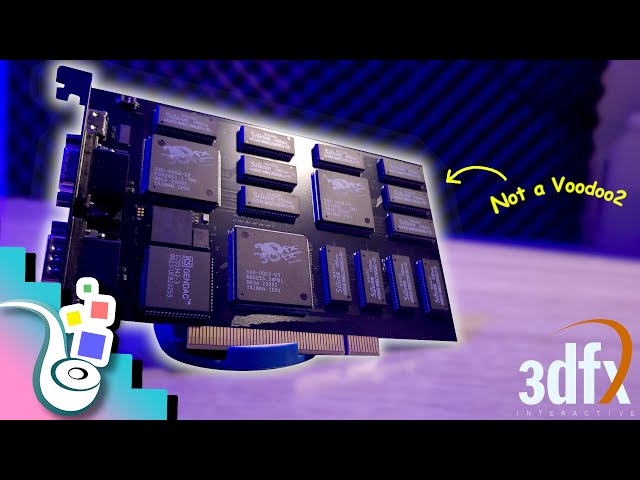
What truly sets this card apart is its chip configuration, which more closely resembles a 12MB 3dfx Voodoo2 than a first-generation Voodoo. It features two T-REX texture mapping units, a significant upgrade from the single unit found on standard Voodoo cards, alongside a generous 12MB of memory spread across both sides of the PCB. The video demonstrates the astonishing leap in performance and capabilities when tested in PixelPipes’ 700MHz Pentium III machine.
For instance, running *Unreal*, a game renowned for its optimal performance with 3dfx’s proprietary Glide API and its stunning reflective surfaces, the stock machine could only muster an average of 20.1 frames per second at 640×480 resolution. (It’s wild to think we considered that ‘smooth’ back then!) The Voodoo 4440H, however, boosts this to a significantly more fluid 32.2fps. The improvements in *GLQuake* are equally impressive, jumping from a standard 36.6fps to a silky-smooth 57.3fps on the modded card – just imagine the competitive edge this would have given us in those intense 90s death matches!
The increased memory capacity also unlocks the ability for the modded Voodoo card to render games at 800×600 resolution – a task previously impossible for this generation of hardware. Remarkably, it handles this challenge with aplomb, largely due to the added TMU chip. In testing, *GLQuake* runs at a respectable 35.5fps at this higher resolution, a performance nearly on par with the standard Voodoo card running at the lower 640×480 setting.
It’s truly inspiring to witness the innovative spirit applied to aging technology. If you share a fondness for the golden age of PC gaming, consider diving into the world of retro PC building. You might enjoy constructing your own period-correct Pentium MMX rig, much like the process outlined in guides dedicated to the craft.
Did you experience the magic of a 3dfx Voodoo card firsthand? We’d love to hear your nostalgic memories and gaming stories! Join our community to share your thoughts.