
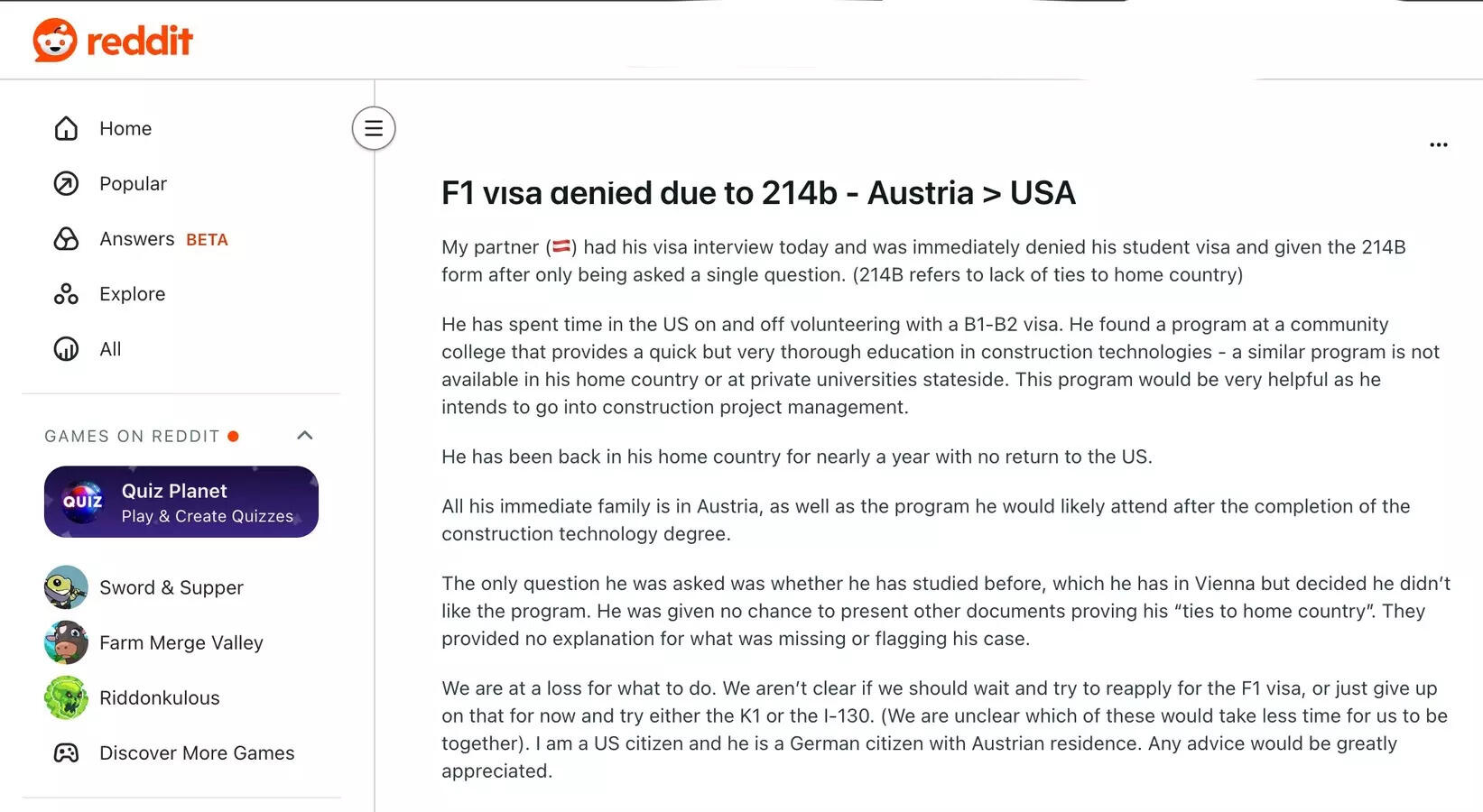
An Austrian student recently faced a heartbreaking F-1 visa refusal at a U.S. consulate, despite having a clear plan. He was accepted into a unique construction technologies program—unavailable in Austria—and intended to return home after graduation. Even though his entire immediate family resides in Austria and he’d previously visited the U.S. on a tourist visa, a single question about his prior studies led to a denial under Section 214(b) of the Immigration and Nationality Act (INA). The consular officer provided no further details or a chance to present additional evidence.
This scenario, unfortunately, is not uncommon. The complexities of Section 214(b) often remain unclear to many aspiring international students.
What is Section 214(b)?
Under Section 214(b) of the Immigration and Nationality Act, all non-immigrant visa applicants are automatically presumed to intend immigration. It’s up to the applicant to successfully demonstrate they do not have immigrant intent to the consular officer. For F-1 student visa applicants, this specifically means proving:
- You meet all academic and financial requirements for your chosen program.
- You genuinely intend to depart the United States upon completing your authorized studies.
Therefore, a denial under 214(b) indicates the officer believes one or both of these conditions were not met, most commonly that the applicant failed to demonstrate sufficient ties to their home country or a clear intent to return.
It’s crucial to understand that a 214(b) refusal is not permanent. You are permitted to reapply, but only if you can present new, stronger evidence or demonstrate a significant change in your circumstances.
Why Students Face 214(b) Refusals
Students frequently encounter 214(b) denials when the consular officer is unconvinced of their temporary intent. Common contributing factors include:
- Weak or insufficient economic or familial ties to your home country (e.g., no concrete job offer, property ownership, or a clear career path to return to).
- A chosen program that appears to have low value, is easily available in your home country, or is unlikely to be utilized there after graduation.
- A brief interview where you had limited opportunity to fully explain your intentions. Many applicants report being asked only one or two questions.
- Prior extended stays or multiple visits to the U.S. on non-student visas, which might raise doubts about your true temporary intent.
In the unfortunate case of the Austrian applicant, despite his program’s relevance to Austria and his family’s residence there, the very short interview and lack of opportunity to provide further evidence left the officer unconvinced.
What Students Should Do: Prepare and Potentially Reapply
Here are practical steps aspiring students can take to significantly reduce their risk of a 214(b) refusal:
- Strengthen your Home Country Ties: Gather compelling evidence of your genuine intent to return. This could include a job offer, significant family responsibilities, property ownership, or a well-defined career pathway in your home country after your studies. Document these connections clearly and comprehensively.
- Articulate Your Study and Post-Study Plans: Be prepared to clearly explain why you selected your specific academic program, how it aligns with your previous education or professional experience, and precisely how you plan to apply this knowledge and skill set in your home country upon completion. A vague or unconvincing motive will likely raise red flags.
- Thoroughly Prepare for the Interview: Practice delivering concise, confident answers to potential questions. Organize all your required documentation, including your I-20 form (for F-1), statements of financial support, academic transcripts, and robust proof of home country ties. Present yourself professionally and maintain a calm, composed demeanor.
- If Refused, Reapply Only with Substantial Changes: Understand that your previous refusal remains on record. Reapplying without genuinely new and stronger evidence of your intent to return is highly discouraged and likely to result in another denial. Only consider reapplying if your circumstances have significantly improved or changed—perhaps a new job offer, increased financial stability, or stronger family commitments.
- Seek Expert Guidance: If your situation is particularly complex (e.g., you have mixed residency, a history of visa changes, or an unconventional academic program), it’s highly advisable to consult with an experienced immigration advisor or competent legal counsel for personalized support.
Understanding Your Next Steps
The legal framework behind visa denials, though seemingly impersonal, has profound and often personal consequences for each student. For ambitious scholars, the considerable effort invested in selecting a course, securing admission, and preparing for the interview can be in vain if the consular officer determines their ties to their home country are insufficient.
Successfully navigating Section 214(b) isn’t merely about understanding legal jargon; it’s about meticulously crafting a credible and consistent narrative of your educational journey, your purpose in the U.S., and your unwavering intent to return home. When these elements align convincingly, your chances of approval significantly improve.
Conversely, when these elements are perceived as weak or inconsistent, even a single, seemingly innocuous question during the consulate interview can become an insurmountable barrier between you and your aspirations for an American education. If you find yourself at this critical juncture, your focus should be on strategizing how to present a robust and transparent case that not only satisfies legal requirements but also authentically reflects your true intentions.