
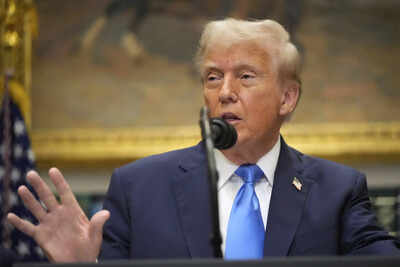
Former President Donald Trump ignited a significant controversy by proposing a hefty $100,000 fee for new H-1B visa applications. This move has squarely set the stage for a major legal showdown, questioning the boundaries of presidential power and impacting the future of a crucial immigration program.
This substantial surcharge directly targets employers who wish to bring in highly skilled foreign talent through the H-1B program, causing considerable apprehension across various sectors dependent on such expertise. Under this directive, the steep fee must be paid before the U.S. State Department processes any new H-1B visas, essentially preventing approved recipients from entering the country without prior payment. Although the administration clarified that the fee wouldn’t impact current visa holders or applications filed before September 21, the policy has still drawn strong condemnation from businesses and immigrant rights groups, who believe it may be illegal.
What is the H-1B Program, and How Do Current Fees Compare?
Created in 1990, the H-1B visa program allows U.S. companies to hire foreign professionals for specialized positions such as engineering, medical research, finance, consulting, healthcare, and academia. These visas typically last between three and six years. The program allocates 65,000 visas each year, with an extra 20,000 reserved for individuals with advanced degrees.
Currently, companies sponsoring H-1B workers face fees typically ranging from $2,000 to $5,000, varying based on factors like company size. These costs generally cover about $1,000 in filing fees, a $500 fraud prevention fee, and optional fees for faster processing. Additional legal expenses can easily push the total cost into the thousands. Trump’s proposed $100,000 fee dramatically dwarfs these established costs, signaling a radical departure from previous policy.
Is the Fee Legal? Examining Presidential Authority
The legal basis for Trump’s proclamation remains highly contentious. Federal immigration statutes allow U.S. Citizenship and Immigration Services (USCIS) to collect fees, but only to cover the administrative expenses incurred. Legal experts argue that the existing fee system was specifically authorized by Congress and has undergone regular adjustments via formal regulations. This strongly suggests that a president may not have the independent authority to impose such a substantial new surcharge without legislative approval.
In defense of his proclamation, Trump invoked his authority to restrict foreign nationals deemed detrimental to U.S. interests. This power was previously affirmed by the Supreme Court in the 2018 Trump v. Hawaii case, which concerned a travel ban on several Muslim-majority nations. However, legal experts highlight a crucial distinction: the national security arguments used in the travel ban case are fundamentally different from the economic justifications offered for the $100,000 H-1B fee. This difference, according to reports, could significantly lessen the courts’ willingness to defer to the president’s actions in this particular situation.
Anticipating Lawsuits and Industry Reactions
Unsurprisingly, numerous immigrant advocacy organizations and business associations have vociferously criticized the fee as unlawful, with many preparing to challenge it in court. Potential lawsuits are expected to contend that the president overstepped his statutory authority by enforcing such a fee, and that the $100,000 amount itself is excessively arbitrary, thus failing to meet established legal benchmarks. Further legal arguments could target procedural missteps, such as federal agencies allegedly failing to accurately calculate costs or solicit public feedback, as mandated by regulatory procedures.
Adding to the controversy are unresolved questions regarding the fee’s applicability when existing H-1B visa holders change employers, and the practicalities of how such large payments would be collected. These ambiguities could further bolster claims that the policy is arbitrary and fundamentally undermines the comprehensive legal framework established by Congress for immigration.
Beyond the Fee: Proposed Shifts in H-1B Selection
In conjunction with the controversial fee, the administration has also put forth a proposal to completely reform the H-1B visa selection process. Currently, more than 85,000 annual applicants compete in a random lottery for these visas. The new proposal aims to prioritize higher-income workers, with the stated goal of preventing American workers from being replaced by lower-wage foreign labor. This significant change, announced soon after the fee, introduces yet another layer of uncertainty and complexity to the future of the H-1B program.
As these significant legal battles unfold, industries and immigrant communities alike are keenly observing how the courts will ultimately interpret the extent of presidential authority and the constraints on executive power when it comes to shaping critical immigration policies.