
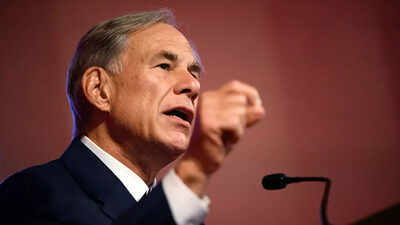
In a bold move that has ignited debate across the state, Texas Governor Greg Abbott recently declared his administration’s focus on what he terms the “promotion of leftist ideologies” within the state’s higher education system. Through a social media statement, Governor Abbott emphasized his intent to “target professors who are more focused on pushing leftist ideologies rather than preparing students to lead our nation.” This directive closely followed the high-profile removal of psychology professor Art Markman from his senior vice provost role at the University of Texas at Austin. Markman cited “ideological differences” as the reason for his dismissal, though specific details remain scarce.
New Legislation Tightens Grip on University Governance and Free Speech
The landscape of public college governance in Texas has been dramatically reshaped by two new state laws. Effective September 1st, these legislative changes have curtailed the traditional authority of faculty in academic decision-making, instead channeling control towards politically appointed individuals. A notable addition is the establishment of a higher education ombudsman, a role designed to oversee complaints within the system. Further demonstrating the state’s intensified scrutiny, the Texas Legislature later convened special committees in both houses. Their mandate: to probe “bias, discourse, and freedom of speech” across all public academic institutions. Lieutenant Governor Dan Patrick controversially connected these inquiries to the death of conservative activist Charlie Kirk, asserting that Kirk was “assassinated for simply expressing his First Amendment rights.”
Campus Free Speech Under Legal Scrutiny
These legislative changes have not gone unchallenged. Student organizations within the University of Texas system have initiated lawsuits against another law enacted by Governor Abbott, which imposes a curfew on protected speech and expressive activities on campuses, restricting them between 10 p.m. and 8 a.m. The Foundation for Individual Rights and Expression (FIRE), advocating for the students, vehemently labeled this law as “blatantly unconstitutional.” In a significant development, a federal judge has issued a temporary injunction, preventing the University of Texas System from enforcing this contentious law as the legal proceedings unfold.
Faculty Alarmed by UT-Austin’s New Curriculum Task Force
Adding to the climate of apprehension, UT-Austin faculty members have voiced strong concerns regarding a recently formed “Core Curriculum Task Force.” This body is tasked with overhauling the university’s general education curriculum. Alarmingly, all 18 members of this influential panel were directly appointed by the university’s leadership, bypassing traditional faculty selection processes. Faculty members conveyed to The Guardian (as reported by Higher Ed Dive) their serious fears that this initiative could lead to the disbandment of entire academic departments, particularly those dedicated to ethnic and regional studies, which notably lack representation on the new task force.
A Wave of Firings Rocks Texas Higher Education
The dismissal of Art Markman is not an isolated incident; it’s part of a broader pattern of faculty removals across Texas. At Texas A&M University, a children’s literature professor was terminated after a state lawmaker publicized a video of the professor discussing gender identity. This incident also led to the removal of both the department head and dean involved. The controversy culminated in the resignation of Texas A&M President Mark Welsh just a week later. Similarly, at Texas State University, history professor Tom Alter was fired following his participation in an online socialist forum where he discussed class organization and made hypothetical references to overthrowing the U.S. Texas State President Kelly Damphousse characterized Alter’s actions as “serious professional and personal misconduct,” including inciting violence. Despite a judicial order for his reinstatement and due process, Alter was subsequently dismissed again after a university review. He has since confirmed his intention to pursue further legal action against the university, signaling continued battles over academic freedom in the state.