
Tencent has officially responded to Sony’s copyright infringement lawsuit, vehemently denying the PlayStation parent company’s claim that its open-world survival title, Light of Motiram, infringes on Horizon game copyrights. Sony, in its July lawsuit, had provocatively labeled Light of Motiram a “slavish clone” of its beloved Horizon series. Now, Tencent has fired back, accusing Sony of an audacious attempt to “monopolise” well-established genre conventions, and is advocating for the immediate dismissal of the legal action.
In a court filing, Tencent robustly rejected the allegations of copyright infringement, characterizing the supposed similarities between Light of Motiram and the Horizon games as nothing more than “time-honored tropes.” These, they argued, are widespread narrative and gameplay elements found in countless other titles released both before and after the acclaimed Horizon Zero Dawn.
Tencent asserted in its filing: “At bottom, Sony’s effort is not aimed at fighting off piracy, plagiarism, or any genuine threat to intellectual property. It is an improper attempt to fence off a well-trodden corner of popular culture and declare it Sony’s exclusive domain.”
Sony Accused of Seeking ‘Monopoly’ Over Genre
The company specifically criticized Sony’s assertion that Horizon Zero Dawn’s post-apocalyptic setting was uniquely original, unlike any other fictional world that came before or after its release. Tencent called this claim “startling” and even “contradicted” by Sony’s own development studio, Guerrilla Games. Tencent highlighted that a multitude of video games throughout history have incorporated the very same features that Sony is now attempting to claim exclusive ownership over through its lawsuit.
Tencent further elaborated: “Sony’s Complaint tellingly ignores these facts. Instead, it tries to transform ubiquitous genre ingredients into proprietary assets. By suing over an unreleased project that merely employs the same time-honored tropes embraced by scores of other games released both before and after Horizon—like Enslaved, The Legend of Zelda: Breath of the Wild, Far Cry: Primal, Far Cry: New Dawn, Outer Wilds, Biomutant, and many more—Sony seeks an impermissible monopoly on genre conventions.”
Tencent’s Response to Horizon License Offer
In its initial lawsuit, Sony had claimed that Tencent approached it in 2024 with an offer to collaborate on a new “Horizon” mobile game, which Sony ultimately declined. Tencent countered this point by stating that no agreement on licensing terms was ever reached, and crucially, none of its executives or employees were even present at the alleged meeting.
The firm argued: “But even if the pitch meeting between Sony and other Tencent entities could somehow be attributed to Tencent Holdings, Sony has failed to make a prima facie showing that any actions at this meeting caused harm to Sony.”
It added: “Nothing that occurred at the San Francisco meeting—i.e., a request to a ‘license in the Horizon intellectual property’—is alleged to be an act of copyright or trademark infringement.”
Tencent Seeks Lawsuit Dismissal on Legal Grounds
Tencent is actively seeking a dismissal of Sony’s lawsuit, asserting on legal grounds that the PlayStation owner had sued the wrong parties. Tencent argues that the named defendants – Tencent America, Proxima Beta US, and Tencent Holdings – were not involved in the actual development or publishing of Light of Motiram.
Tencent clarified that Light of Motiram is, in fact, being produced by affiliated firms: Polaris Quest / Aurora Studios, a Chinese developer operating under Tencent Technology (Shanghai) Co. Ltd, and Proxima Beta PTE Ltd., a Singapore-based firm that conducts business as ‘Tencent Games’ and/or ‘Level Infinite.’ Furthermore, Tencent highlighted that Light of Motiram is not slated for release until Q4 2027. Therefore, the alleged copyright infringement has not yet occurred and, as the company argued, “may in fact never occur.”
Sony’s lawsuit, filed in July, accused Light of Motiram of directly copying several key elements from Guerrilla Games’ Horizon Zero Dawn and its sequel, Horizon Forbidden West. Sony contended that Tencent’s upcoming survival game could potentially confuse customers and sought both monetary damages and an injunction to prevent the game’s release.
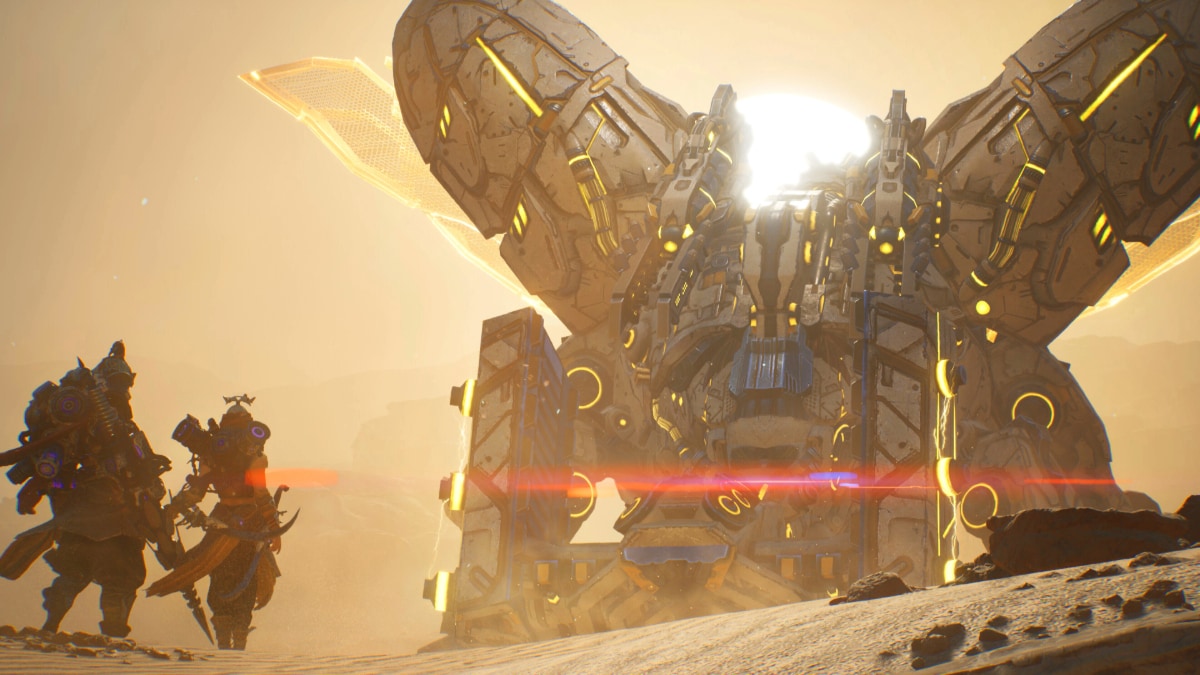
When Light of Motiram was first announced with a trailer in November 2024, it immediately drew comparisons to the Horizon franchise. This was largely due to its distinct post-apocalyptic setting, the presence of a red-haired female protagonist, and the inclusion of tameable mechanical creatures. Following Sony’s legal action, reports emerged that Tencent subsequently modified Light of Motiram’s Steam page, removing images and text that had been flagged as being inspired by the Horizon games.