
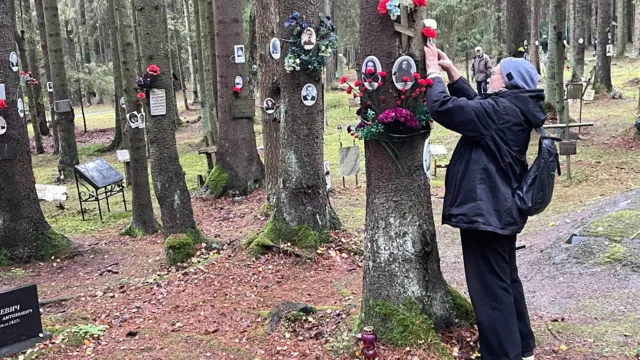
In a somber wood on the outskirts of St. Petersburg, names are being read aloud – each one representing a life lost to Joseph Stalin’s brutal purges. Annual Remembrance Day ceremonies bring solemnity to the Levashovo Wasteland, where an estimated 20,000 to 45,000 victims of political repression are buried in mass graves. Portraits of those executed are displayed on trees, a stark reminder of Russia’s repressive history.
However, the narrative surrounding this past is shifting. Russian authorities now emphasize Stalin’s role as a wartime leader, downplaying his crimes against his own people. This shift coincides with a tightening grip on dissent, particularly concerning the war in Ukraine. Critics of the Kremlin, once labeled “enemies of the people” in Stalin’s era, are now increasingly designated as “foreign agents,” a label the authorities claim protects Russia from external threats.
The current objectives of the Russian state are clear: victory abroad and conformity at home. Anyone who publicly questions or doubts the official narrative surrounding the war in Ukraine risks becoming a target.
Meanwhile, in St. Petersburg, 18-year-old music student Diana Loginova, known as Naoko and the lead singer of the band Stoptime, finds herself in legal trouble. Her band’s improvised street concerts, featuring songs by exiled Russian artists critical of the Kremlin, have drawn attention from authorities.
Diana was arrested and spent 13 days in jail for allegedly “organizing a mass public gathering of citizens resulting in a violation of public order.” The authorities claim these concerts, which attracted large crowds of young people, obstructed pedestrian access to a Metro station. One particular song, “You’re a Soldier” by Monetochka, a designated “foreign agent,” led to Diana being fined for “discrediting the Russian armed forces.” The song’s lyrics, speaking of being “on the other side” of any war, have resonated with many.
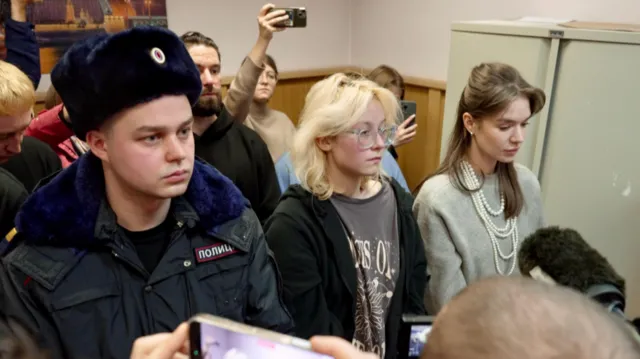
Diana’s boyfriend and bandmate, guitarist Alexander Orlov, was also arrested. In a poignant moment outside the courthouse, he proposed to Diana, using a tissue for a ring, and she accepted. “All we were doing was bringing the music we like to a mass audience. The power of music is very important,” Diana told the BBC, expressing surprise at the accusations.
Despite the ongoing legal battles, supporters like Alla and Sasha continue to rally behind Diana, underscoring the bravery of those who speak out. “It’s people like Diana who are the brave ones,” Sasha commented, reflecting on the fear that grips much of Russian society. “We’re cowards. Some people are heroes. Others just follow behind.”
Ludmila Vasilyeva, an 84-year-old survivor of the Siege of Leningrad, also found herself fined for discrediting the Russian army after peacefully protesting the war in Ukraine. Unfazed and unafraid, Ludmila believes that those in power are more fearful than the public. “Why should I be scared?” she asked. “I speak the truth. And they know that.” Her sentiment highlights a quiet resistance that persists even amidst increasing authoritarianism.
The struggle for freedom of expression continues in Russia, with young musicians and older activists alike facing repercussions for speaking out against the war and challenging the official narrative. The power of music and the courage of individuals like Diana Loginova and Ludmila Vasilyeva serve as vital reminders of the enduring human spirit in the face of adversity.