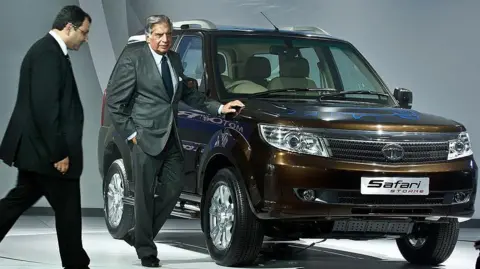
A year after the passing of Ratan Tata, a figure who transformed the Tata Group into a modern, technologically advanced global enterprise, the conglomerate is grappling with a multitude of crises. This vast Indian business empire, known for its ownership of iconic British brands like Jaguar Land Rover and Tetley Tea, and for its role in manufacturing iPhones for Apple in India, is once again experiencing internal divisions.
For months, a boardroom power struggle among trustees has revealed internal fractures. These disputes have become so significant that the government has intervened to prevent a recurrence of the highly publicized legal battle that enveloped the Tata empire in 2016, when its former chairman, Cyrus Mistry, was removed.
While an unofficial truce was reportedly brokered by ministers in Delhi weeks ago, recent reports suggest that Mehli Mistry, a close associate of Ratan Tata and a trustee of the Tata Trusts, has been dismissed from his position. The BBC has not yet been able to independently verify this information.
Professor Mircea Raianu from the University of Maryland, an expert on the corporation’s history, characterizes the current conflict as a “resurfacing of unresolved business.” This highlights a fundamental question about leadership and control within Tata: how much influence should the majority shareholders, the philanthropic Tata Trusts (which own 66% of Tata Sons), exert over business decisions?
The Tata Group’s unique structure, where the philanthropic Tata Trusts hold controlling shares of the unlisted holding company, Tata Sons, has provided tax and regulatory benefits and enabled charitable activities. However, experts note that this dual non-profit and commercial objective can also lead to governance challenges.
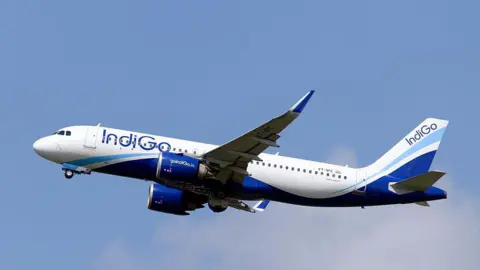
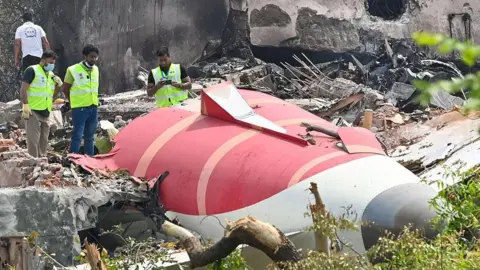
These internal conflicts are occurring at a critical juncture for the Tatas. The group is facing considerable business headwinds as it seeks to expand into new strategic areas like semiconductors and electric vehicles. Simultaneously, it is working to revitalize Air India, the national carrier it acquired from the government in 2021, especially in the wake of a tragic crash earlier this year.
So, what has led to this situation?
The Tatas have refrained from public statements regarding the discord. However, reports indicate that disagreements among trustees center on issues such as board nominations, approval of funding, and the potential public listing of Tata Sons. Tata Sons, the parent company for 26 publicly listed Tata firms, holds a market capitalization of approximately $328 billion.
A source close to the Tata Group, speaking anonymously, revealed that a key aspect of the dispute involves some trustees’ desire for greater involvement in strategic decision-making at Tata Sons and in the selection of board nominees. Tata Trusts currently holds three seats on the Tata Sons board.
“The nominees from Tata Trusts have veto power over major company decisions, but their role is understood to be supervisory rather than assertive,” the source explained. “However, some trustees now wish to have more influence over commercial decisions.”
Another significant point of contention is the SP Group’s aspiration to take Tata Sons public. As the largest minority shareholder with an 18% stake, the SP Group has been actively advocating for this move, but most Tata trustees reportedly oppose it.
“There is a concern that a public listing would diminish the trust’s decision-making autonomy and long-term perspective, exposing Tata Sons to quarterly market pressures,” the source added. “This is particularly relevant given the nascent stage of many new businesses within the group.”
Conversely, the SP Group has described its plan for a public listing as a “moral and social imperative,” believing it would enhance shareholder value and improve transparency and governance.
Neither Tata Sons nor Tata Trusts have provided detailed responses to the BBC’s inquiries. Professor Raianu suggests that this ongoing conflict underscores a significant dilemma for the group.
He notes that a public listing would deviate from a trend observed among major US and European conglomerates, many of which are increasingly adopting foundation ownership models to ensure stability and sustainability – ironically, often citing the Tata Group as an example.
“However,” Professor Raianu adds, “private or closely held companies are indeed subjected to less external scrutiny, which can exacerbate conflicts and damage reputation.”
This internal strife has already sparked governance concerns and impacted the reputation of one of India’s oldest and most respected business houses, according to publicist Dilip Cherian, who previously worked with former Tata Sons chairman Cyrus Mistry.
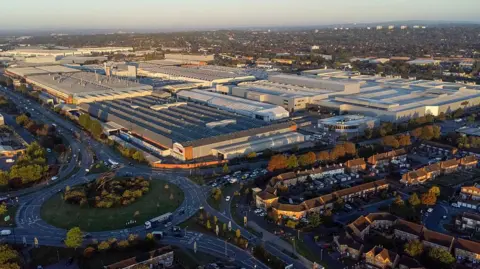
“This situation adds to the series of recent blows to the Tata image,” Mr Cherian stated, referencing the devastating Air India crash earlier this year and a cyberattack on a key Jaguar Land Rover unit that led to a five-week shutdown of its factories and contributed to a 70-year low in UK car production in September.
Furthermore, Tata Consultancy Services (TCS), the group’s flagship software outsourcing company which generates nearly half of its revenue, has faced its own set of challenges, including significant layoffs and the recent termination of a $1 billion contract by retailer Marks & Spencer.
“These boardroom battles create additional confusion,” Mr Cherian observed. “Investors will not only feel anxious about share performance but will also question the identity of their partners at Tata.”
Amidst this turmoil, N Chandrasekaran, the chairman of Tata Sons, has reportedly had his tenure extended.
“While the chairman can continue his work, as this conflict is between trustees rather than the board itself, it nonetheless serves as an unnecessary distraction,” commented the source close to Tata Sons.
However, the Tatas are no strangers to navigating crises. The group experienced significant internal battles in the 1990s when Ratan Tata took over and sought to modernize its operational structure. The conflict following Mistry’s removal several years ago also remains fresh in public memory.
Professor Raianu points out a key difference in the current situation:
“Previously, underperforming companies were supported by TCS, ensuring continuity. Before TCS, Tata Steel played that role.”
Currently, with TCS’s business model in flux and its revenue contribution under pressure, a similar stabilizing force for the group has yet to emerge. This makes it more challenging for the conglomerate to manage internal divisions.
“While this situation is undoubtedly destabilizing and potentially destructive in the short term,” Professor Raianu concludes, “it is possible that a new, more transparent, and accountable structure will emerge once the situation stabilizes.”