
Music has an incredible ability to resonate with human experiences, finding its way into every facet of life, even during the tumultuous periods of war. Just as poetry offers a lens into wartime emotions, classical music has also played a profound role in shaping narratives of conflict. These compositions served various purposes: some brought comfort, others celebrated victories or fueled propaganda, and many resurfaced from history as powerful symbols of resistance. Join us as we explore some extraordinary classical pieces that captured and transformed the emotional landscape of wartime.
1812 Overture – The one that used cannons.
Pyotr Ilyich Tchaikovsky’s 1812 Overture, Op. 49, stands as a monumental fusion of war and music. Commissioned to celebrate Russia’s victory over Napoleon’s forces in the grueling 1812 Russian campaign, Tchaikovsky faced the immense task of encapsulating the sheer scale of the conflict. The invasion, a turning point in the Napoleonic Wars, was marked by intense and bloody battles. Tchaikovsky sought to create a piece that was nothing short of epic, conveying the energy, pride, and fierce struggle of the Russian people. He achieved this by incorporating the full might of the orchestra, culminating in a spectacular sonic experience that famously includes real cannons (a staggering 16 shots!), booming cathedral bells, powerful brass, thunderous percussion, and expressive strings and woodwinds. The overture meticulously narrates the historical event, from its solemn opening with a hymn played by cellos and violas to its breathtaking finale, which features the majestic Russian imperial anthem, ‘God Save the Tsar’.
Fun Fact:
Tchaikovsky hated the song, considered it noisy and without serious merits.
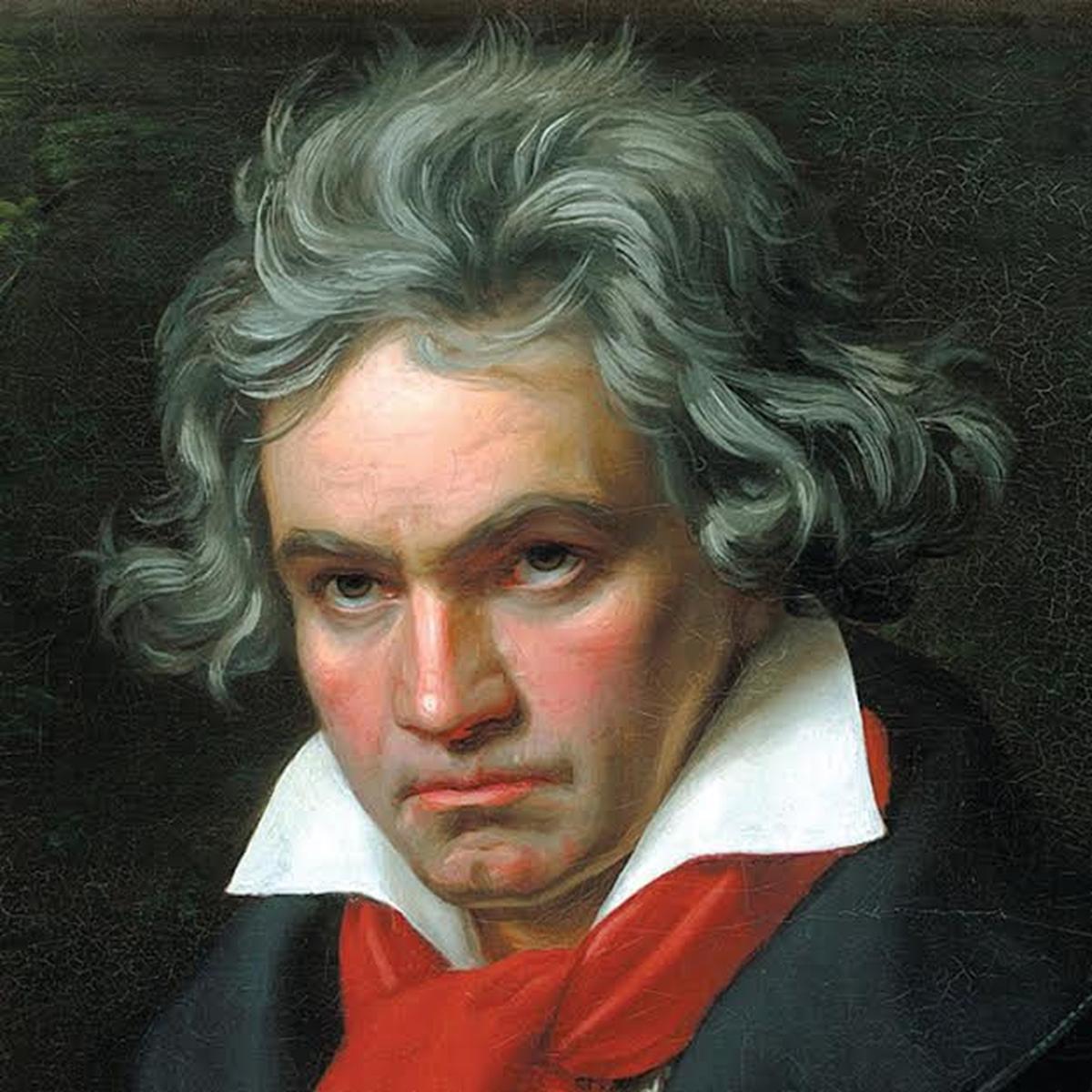
Ludwig van Beethoven | Photo Credit: The Hindu
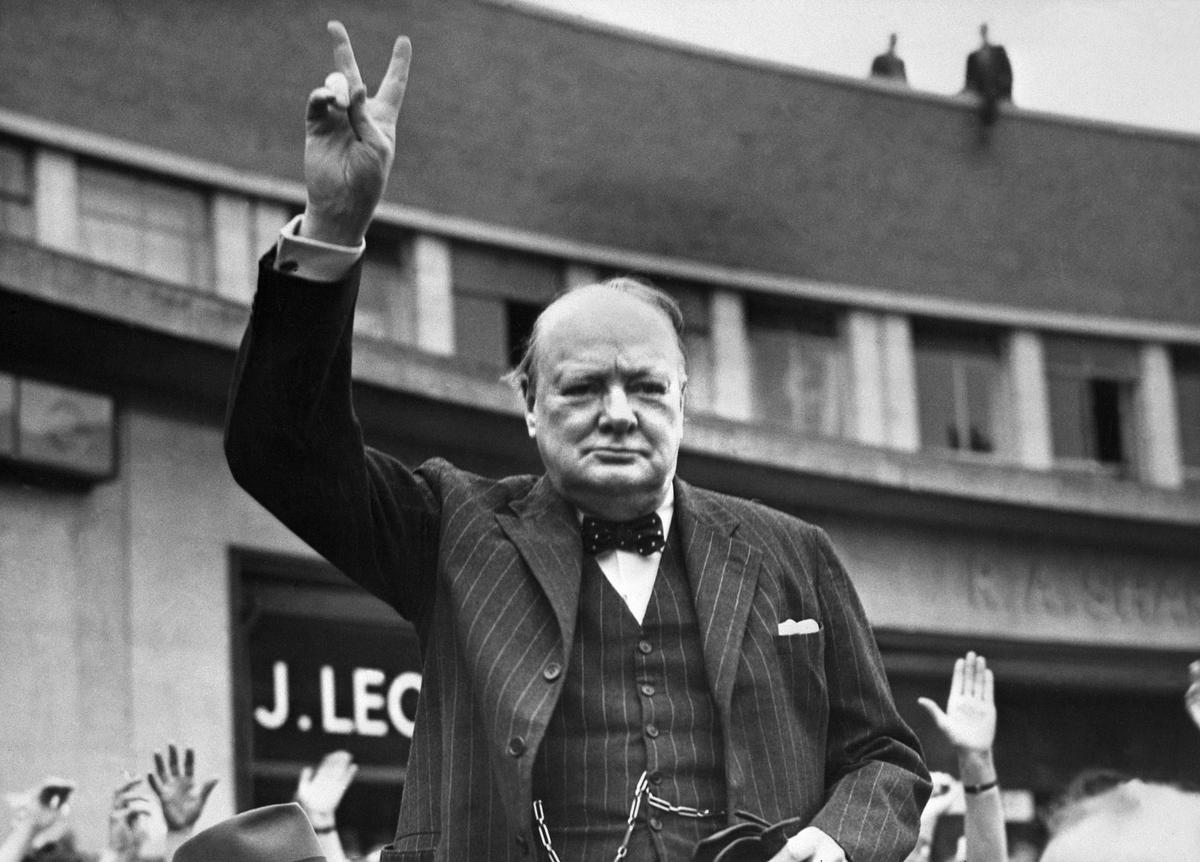
Britain’s Sir Winston Churchill flashing the V-sign for victory. | Photo Credit: AFP
5th Symphony – The one the radio wouldn’t shut up about.
During the World Wars, radio emerged as an indispensable tool for communication, especially in military operations during World War II. It was during this period that Ludwig van Beethoven’s Symphony No. 5 gained an unexpected prominence, particularly in Britain, where it became a powerful symbol of victory. The iconic opening motif of the symphony’s first movement—four distinct notes (short-short-short-long)—mirrored the Morse code for the letter ‘V’ (dot-dot-dot-dash). The Allied forces ingeniously adopted this, and the BBC frequently played this musical pattern before news broadcasts as a subtle yet potent message of ‘victory’. For a populace enduring the horrors of war, hearing Beethoven’s Fifth on the radio offered a profound sense of hope, solidarity, comfort, and resistance, as everyone longed for an end to the destruction. It’s a striking historical irony that a composition by a German master became a cornerstone of Allied propaganda. This symphony was consistently used by the Allied powers to highlight their successes against the Axis, eventually earning the nickname ‘Victory Symphony’ in the post-war era.
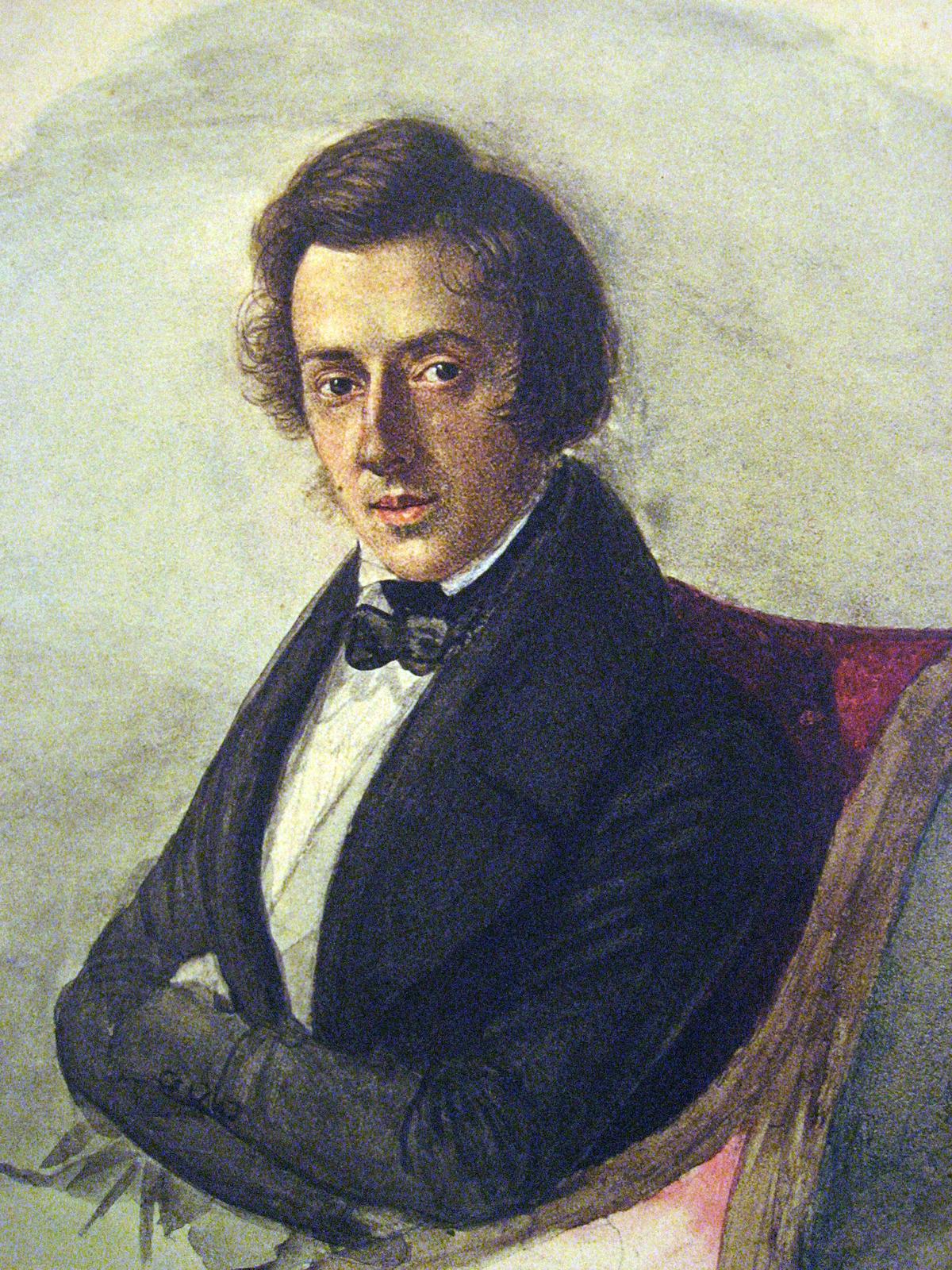
Frédéric François Chopin | Photo Credit: The Hindu
Polonaise Militaire – the one that’s quite absolutely ‘military’
In Poland, Frédéric Chopin’s ‘Military’ Polonaise also resonated deeply, becoming a beloved radio staple. His Polonaise in A Major, Op. 40, No. 1, composed in 1838 as a solo piano piece, is renowned for its powerful, march-like intensity, evoking a grand sense of procession. The polonaise, a traditional Polish ballroom dance, is inherently celebratory and rhythmic. This particular composition bursts with energy, its loud, jubilant, and fast tempo immediately conjuring the martial spirit of Polish knights. It quickly became a potent symbol of national pride in Poland, reflecting the country’s long and often painful history of invasions and oppression. While all of Chopin’s polonaises carry patriotic undertones, this piece took on even greater significance in 1939. During Germany’s invasion of Poland, it was broadcast daily on Polskie Radio, the national broadcaster, serving as a rallying cry for the Polish people. Indeed, German authorities went as far as to ban performances of Chopin’s works during the war, recognizing their powerful ability to inspire Polish nationalism and a fervent desire for freedom.
Fun fact:
Chopin wrote his first ever polonaise when he was only 7 years old!
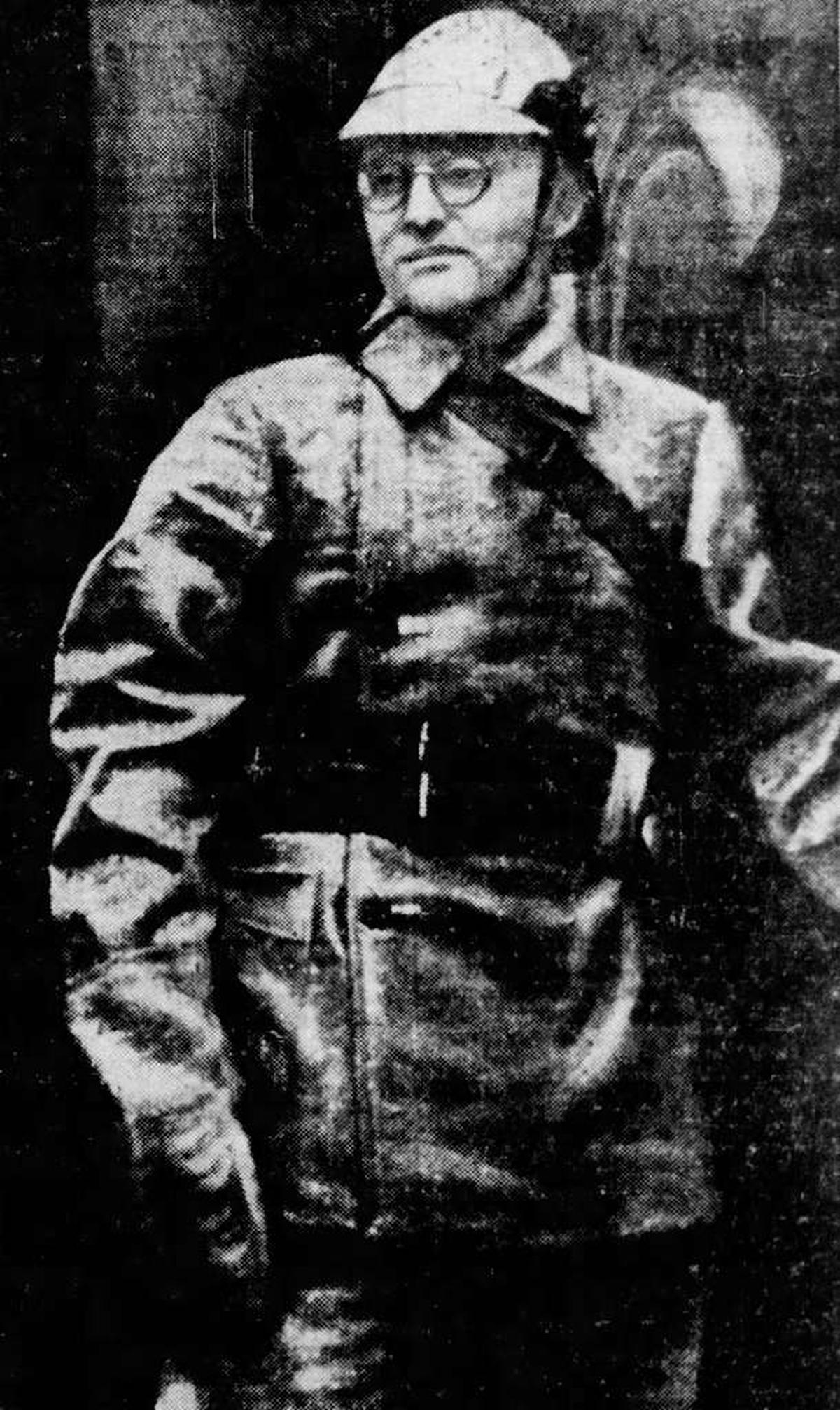
Dmitri Shostakovich standing in his firefighter’s uniform during the beginning of the German siege of Leningrad in 1941. | Photo Credit: Picryl
Leningrad Symphony – the one that was real-time revolutionary.
Leningrad, now known as St. Petersburg and Russia’s second-largest city, endured a brutal and prolonged siege during World War II. For nearly two and a half agonizing years, the city was held captive, plunging its inhabitants into a devastating famine. Amidst these darkest hours, composer Dmitri Shostakovich remained in Leningrad, bravely serving as a volunteer firefighter. Witnessing the horrors of war firsthand, he channeled the city’s emotional perseverance, desperation, and unwavering will to survive into his Symphony No. 7 in C Major, Op. 60. This powerful work premiered in 1942 while Leningrad was still under siege. The famine had taken such a toll that many musicians in the performing ensembles and orchestras tragically perished during rehearsals. Yet, despite these profound losses, the symphony was performed across various Soviet cities, becoming an enduring symbol of strength and resilience, and a poignant musical memoir of grief. A notable feature is its recurring, haunting drumbeat that steadily intensifies, vividly capturing the encroaching reality of the invasion in real-time.
Träumerei – the one that dreamed and marked the end.
Among all the compositions discussed, Robert Schumann’s Träumerei holds a uniquely humanistic and transitional significance in the context of war. Composed in 1838, ‘Träumerei’ (‘Dreaming’) is the seventh piece from his piano cycle Kinderszenen, Op. 15 (Scenes from Childhood). True to its name, this melody offers a sense of healing, akin to a comforting dream. Listening to Träumerei evokes a nostalgic journey, and in the aftermath of widespread wartime destruction, such emotional solace was desperately needed. In 1945, as World War II drew to a close, ‘Träumerei’ was chosen to accompany moments of silence, serving as a poignant remembrance for the war’s victims. Its themes of loss and memory resonated deeply, and its profound emotional weight has ensured its continued power to move hearts, making it a frequent selection for memorial ceremonies to this day.

Musical history is endless. | Photo Credit: Pexels
Each of these powerful compositions carries a profound story, reminding us of music’s incredible strength and significance to humanity. They vividly portray various facets of war, refusing to gloss over its brutality. Whether expressing celebration or sorrow, these classical masterpieces allow us to feel the raw impact and enduring consequences of conflict. Music transcends darkness, offering a conduit for deep emotions. It delivers sentiments that emerge from the heart of war, planting seeds of hope, memory, and vital lessons within us – emotions capable of transforming even the most desolate landscapes.