
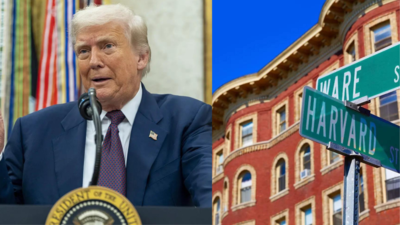
In a significant move highlighting escalating tensions between student press freedom and federal immigration policies, the Harvard Crimson, Harvard University’s influential student newspaper, recently joined 43 other college newspapers. They filed an amicus brief supporting Stanford University’s ongoing lawsuit challenging the Trump administration’s controversial targeting of noncitizens for political expression.
The core of the case originated with Stanford’s student newspaper, The Daily, which initiated legal action against the administration in August. The lawsuit contested efforts to deport or revoke visas of noncitizens who had voiced pro-Palestine political opinions. The Daily argued that these actions, purportedly justified under executive powers of the Immigration and Nationality Act, directly undermined First Amendment protections by deterring lawfully present noncitizens from actively participating in campus discourse.
A Chilling Effect on Campus Journalism
According to the August 6, 2025 complaint, these federal policies have had a tangible impact. Several noncitizens reportedly asked The Daily to remove their names, quotes, or photographs from published articles. Others completely ceased engaging with the paper, while current and former staff writers requested the withdrawal of their opinion pieces. The amicus brief, spearheaded by the Student Press Law Center (SPLC), underscored how such policies have stifled international student contributions and hampered the ability of student newspapers to report on critical political issues.
“Student journalists — especially noncitizen students — are reporting declining participation, increased self-censorship, and withdrawal from public discourse,” wrote SPLC lawyer Matthew S.L. Cate in the 25-page filing. He emphasized that these consequences inflict harm not only on individual students but also on the broader educational and democratic mission of the student press.
The brief garnered support from the flagship papers of seven Ivy League institutions, along with 11 other student publications. It also cited instances from universities like Michigan and North Carolina, where publications removed content or author names due to fears of federal retaliation. The Harvard Crimson itself noted a concerning rise in requests for content takedowns this spring, indicating the widespread reach of these federal directives.
Harvard Crimson Emphasizes the Stakes
McKenna E. McKrell ’26, President of The Crimson, articulated the profound importance of safeguarding international students’ involvement in campus journalism. “Freedom of speech is vital to The Crimson’s work as a student newspaper. Our international staff members are essential contributors to this work and deserve the very same speech protections their peers are afforded,” she stated.
The Trump administration’s crackdown on international students intensified during the spring, leading to the revocation of over 6,000 visas by August, including 12 at Harvard that were subsequently reinstated. The Department of Homeland Security also attempted to prevent Harvard from enrolling international students by revoking its sponsorship through the Student and Exchange Visitor Program. However, Harvard successfully challenged this measure in federal court, securing a temporary halt to the administration’s ban on international students holding Harvard-sponsored visas.
High-Profile Cases Fuel Public Concerns
The amicus brief further highlighted individual cases that exacerbated the climate of apprehension on campuses. Mahmoud Khalil, a Columbia University graduate and pro-Palestine activist, was detained in March. Similarly, Rumesya Ozturk, a Tufts University graduate student, was arrested near campus after co-authoring a pro-Palestine opinion piece in The Tufts Daily. Both individuals continue to face potential deportation.
The SPLC contended that these incidents have precipitated “a crisis of unprecedented scale” within student newsrooms nationwide. They observed that international students have become hesitant to submit opinion pieces on sensitive subjects and are increasingly unwilling to speak on the record. Cate reiterated that “current policies that drive international students away or compel them to self-censor have stripped campus media of the diverse voices necessary to provide the public with a full and accurate understanding of their communities.”
Legal Battle Ahead
The federal government, for its part, maintains that The Daily lacks legal standing, characterizing its claims as resting on “speculative injuries to its staff or interviewees.” It argues that presidential authority over immigration should take precedence over First Amendment considerations. Meanwhile, Stanford is pushing for summary judgment, seeking a court decision without the need for a full trial.
As this pivotal case progresses, the collective involvement of Harvard Crimson and dozens of other student newspapers underscores a united front in defense of campus journalism and the fundamental rights of international students. The eventual outcome holds the potential to establish significant precedents for how universities, student journalists, and noncitizen contributors navigate the complex interplay of free speech and immigration law.
Navigating complex global policies requires careful planning. Explore options and secure your overseas future with expert guidance.