
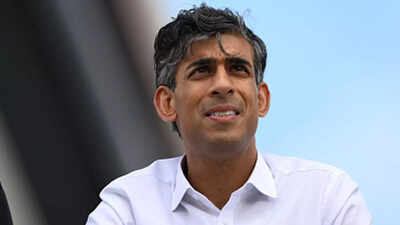
Rishi Sunak, seen here, is stepping into his new role. (Getty Images)
Rishi Sunak, the former Prime Minister of the UK, is embarking on a significant new venture, taking on advisory positions at two prominent artificial intelligence companies: Microsoft and Anthropic. This move underscores his deepening engagement with the rapidly evolving tech sector, shifting his focus to influencing the future of AI from within the private industry.
During his premiership from 2022 to 2024, Sunak was a vocal proponent for the UK establishing itself as a global leader in AI safety and regulation. He proactively organized international summits and engaged directly with top executives from leading firms like OpenAI, Google DeepMind, and Anthropic. This consistent engagement highlights his enduring interest in advancing technological development responsibly and establishing robust governance frameworks.
A Strong Academic Foundation in Philosophy, Politics, and Economics
Sunak’s academic journey began at Lincoln College, Oxford, where he pursued a degree in Philosophy, Politics, and Economics (PPE), graduating with first-class honors. He furthered his education at Stanford University in California, where he earned an MBA as a Fulbright Scholar. This interdisciplinary academic background provided a comprehensive foundation for his subsequent career in finance and politics, perfectly positioning him for his current advisory roles in AI.
It was also at Oxford that Sunak began his political career by joining the Conservative Party. His PPE degree, a popular choice among many British politicians, is renowned for fostering analytical thinking combined with a deep understanding of political systems and ethical philosophy—skills highly relevant to the complex ethical considerations of AI development.
Career Trajectory and Ascent in Politics
Before his political ascent, Sunak built a substantial career in the financial sector. He worked as an analyst at Goldman Sachs and later became a partner at prestigious hedge funds, including The Children’s Investment Fund Management and Theleme Partners. This extensive financial experience profoundly shaped his approach to economic policy during his time in public office.
In 2015, Sunak was elected as the Member of Parliament (MP) for Richmond. He steadily rose through the ranks, serving in various junior ministerial roles before being appointed Chancellor of the Exchequer in 2020. As Chancellor, he spearheaded the government’s economic response to the Covid-19 pandemic, implementing critical initiatives such as the furlough scheme and the popular ‘Eat Out to Help Out’ program.
Following his resignation from the chancellorship in 2022, he briefly returned to the backbenches before assuming the role of Prime Minister later that year. His tenure as Prime Minister primarily centered on restoring economic stability and tackling key national challenges like inflation and lengthy NHS waiting lists.
Unwavering Focus on AI Safety and Regulation
Throughout his time as Prime Minister, Sunak consistently prioritized AI safety and regulation. He convened high-level summits with major tech companies, fostering discussions around ethical AI development and its societal implications. Reports from official government sources confirm his ambition to establish the UK as a global leader in AI governance.
His new advisory roles at Microsoft and Anthropic are a direct continuation of this dedicated focus. Both companies are at the vanguard of AI research and development; Microsoft is making substantial investments in integrating AI across its vast product ecosystem, while Anthropic is specifically committed to advancing AI safety and alignment research.
Shaping AI’s Future: Role and Influence
Sunak’s transition to the private sector indicates a continued and potentially significant influence on AI policy and its future development. Insights from industry experts suggest that his proven ability to engage with top executives and policymakers will be a valuable asset in navigating the intricate challenges of AI regulation in the coming years.
His distinctive academic and professional background, which spans economics, politics, and technology, equips him with a comprehensive perspective to offer valuable insights as AI technologies continue their rapid evolution.