
Delhi recently hosted the release of Gayanacharya Pandit Narayanrao Vyas Smriti Granth, a profound book featuring essays from fellow musicians, devoted admirers, and family members. This comprehensive volume, meticulously compiled by the legendary vocalist’s son, Vidyadhar Vyas, and his wife, music scholar Suneera Kasliwal Vyas, offers a deep dive into the captivating life and extraordinary artistry of the Gwalior gharana stalwart. The launch event was proudly presented by the Vyas Academy of Indian Music, an institution co-founded by Pt. Narayanrao Vyas and his brother Pt. Shankarrao Vyas in 1937, and currently under the stewardship of Vidyadhar Vyas.
Tracing its origins to the late 18th century, the distinctive Gwalior gharana ‘gayaki’ (vocal style) was pioneered by Ustad Nathan Peer Baksh and gained widespread recognition through his talented grandsons, Hassu Khan, Haddu Khan, and Nathu Khan. While Haddu Khan’s son, Ustad Rehimat Khan, was an exceptional vocalist — even influencing Ustad Abdul Karim Khan, the founder of the Kirana gharana — he regrettably left Gwalior without leaving significant disciples. However, the gharana’s invaluable heritage was sustained by Nathu Khan’s son, Ustad Nissar Hussain Khan. Ustad Nissar Hussain Khan also departed the Gwalior court during the rule of Madhavrao Scindia I (1886-1925), finding a home with his disciple Pt. Shankarrao Pandit. Through generations, including Krishnarao Shankar Pandit, Lakshman Pandit, and Meeta Pandit, this lineage has diligently preserved a vital branch of the Gwalior gayaki.
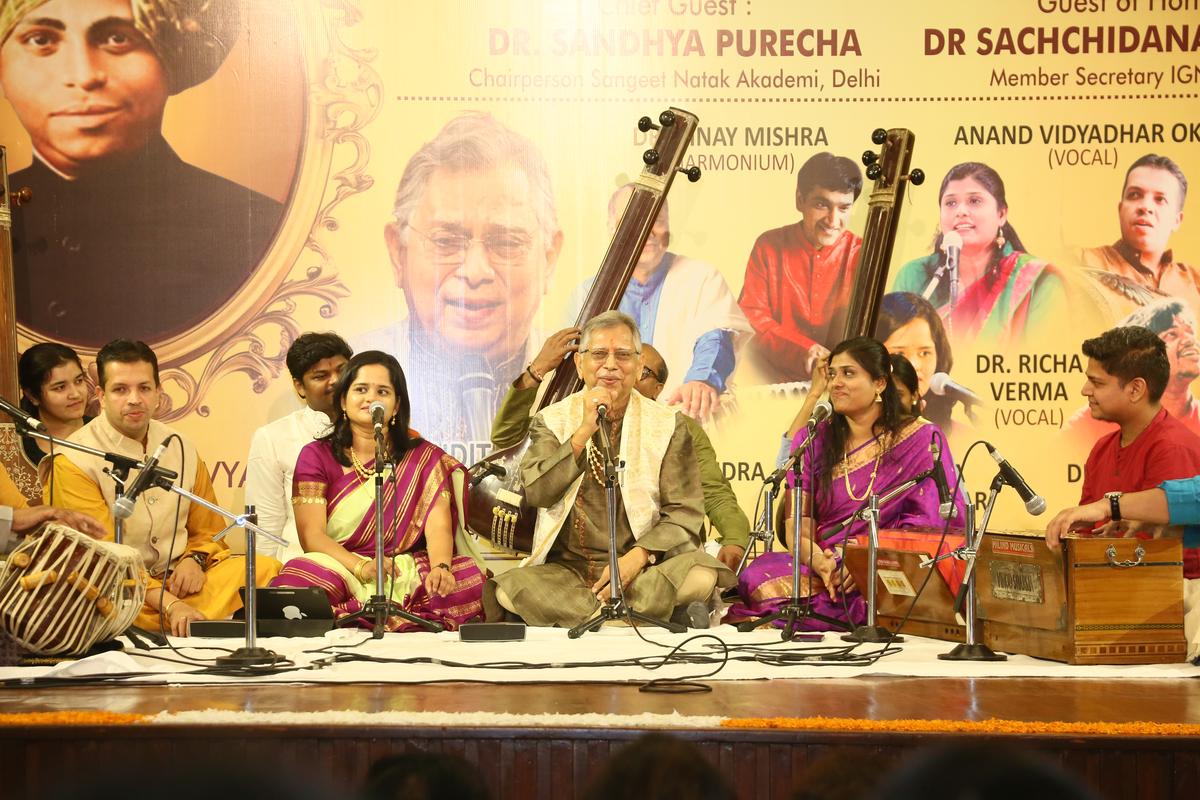
Vidyadhar Vyas performing at the event. | Photo Credit: Special Arrangement
What truly sets the Gwalior gharana apart, often revered as the origin of many other musical traditions, is its remarkable ability to disseminate across various regions. Numerous torchbearers of the Gwalior gayaki tirelessly worked to popularize its distinct style, cementing its reputation as a highly cherished gharana by both aspiring students and eager audiences. Interestingly, many accomplished musicians from other gharanas can often trace their foundational training back to the Gwalior style. Notable examples include Ustad Inayat Khan, the founder of the Rampur Sahaswan gharana, who was both Haddu Khan’s son-in-law and disciple, and Ustad Bande Ali Khan beenkar, a figure associated with the Kirana gharana. Similarly, Ustad Banne Khan, who later settled in Punjab, also carried forth the teachings of Haddu Khan.
The Gwalior vocal tradition found fertile ground in Maharashtra, largely through the efforts of Pt. Balakrishna Buwa Chalkaranjikar from Miraj. He was a direct disciple of Vasudeo Joshi, who in turn was a shagird (student) of Haddu Khan. Pt. Balakrishna Buwa Chalkaranjikar went on to mentor numerous artists, including the esteemed Vishnu Digambar Paluskar, who would later become the guru of Pt. Narayanrao Vyas. Consequently, Maharashtra today boasts a larger community of Gwalior gharana singers than any other Indian state.
Pt. Narayanrao Vyas was a visionary vocalist, whose artistic philosophy and technical mastery profoundly transcended his era. Following the footsteps of his guru, Vishnu Digambar Paluskar, Narayanrao skillfully employed bhajans (devotional songs) as a medium to make complex ragas more accessible to the masses. He was among the earliest musicians to wholeheartedly embrace recording technology, and his innovative three-minute records earned him widespread recognition. A testament to his pioneering spirit, his 1929 recording of Raag Adana received a gold medal from the Gramophone Company for becoming the highest-selling record. This was no minor feat. Faced with the challenge of compressing his performances into mere three-minute slots, Pt. Narayanrao Vyas recognized the need to ingeniously present every facet of the Gwalior gayaki within such a tight timeframe. He dedicated six months to rigorous practice, meticulously refining his ability to perfectly capture the raga’s bhava (emotion), tayyari (preparation/intricacy), and laya (rhythm) control. Through sheer dedication, he achieved this monumental success.
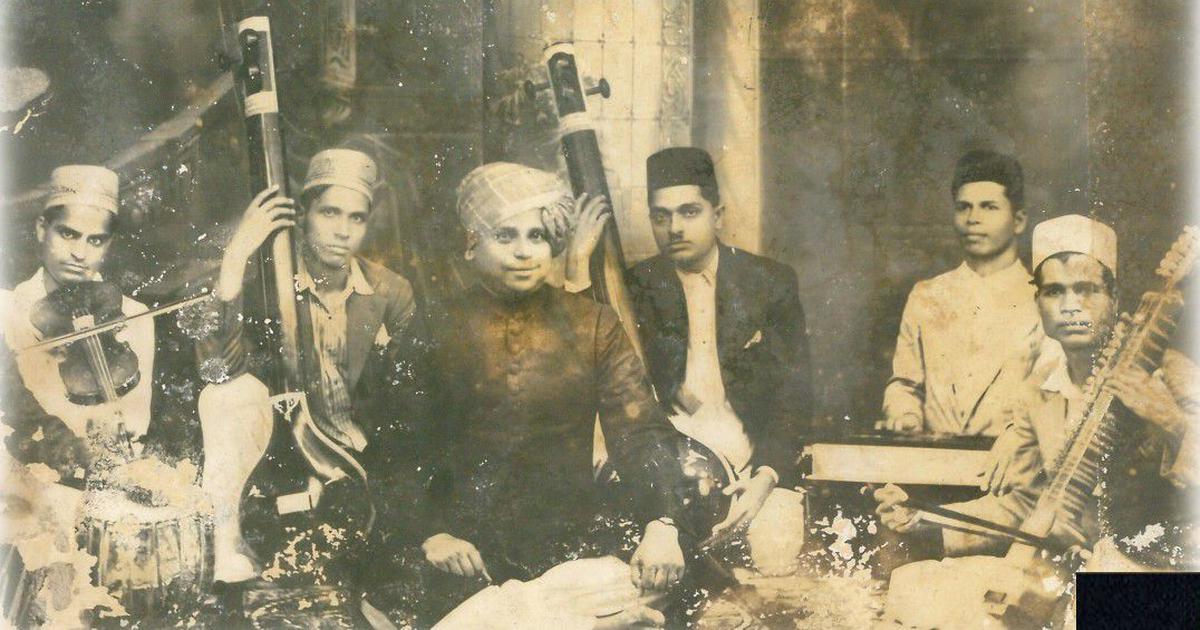
Vocal jugalbandis, now a common feature in the world of classical music, were pioneered by Pt. Narayanrao Vyas. | Photo Credit: Courtesy: Vidyadhar Vyas
Driven by a conviction that classical music deserved a wider audience, Pt. Narayanrao extended his artistry beyond traditional concert halls, venturing into films and theatre. He even composed memorable music for cinematic productions like Ram Rajya (1943).
A true trailblazer, Pt. Narayanrao is credited with pioneering vocal jugalbandis (duets), a performance format now ubiquitous in classical music. This popular trend was ignited by his highly successful concert with his guru-bhai (fellow student under the same guru), Pt. Vinayakrao Patwardhan, in Mumbai in 1960. Beyond his musical innovations, he was also celebrated for his distinctive fashion sense, often donning a regal turban in place of a simple cap, paired with impeccably tailored jackets.
Ultimately, this remarkable book stands as a fitting tribute to a truly groundbreaking musician. Through its insightful articles and evocative photographs, it transports readers back in time, meticulously tracing the rich evolution of the Gwalior gayaki and underscoring its timeless and enduring appeal.