
The Myanmar military has announced the capture of KK Park, a notorious cyber scam compound situated near Myawaddy on the Thai border. This complex has been widely recognized as a major center for online fraud, money laundering, and human trafficking, extorting billions of dollars from victims globally. Thousands of individuals, often lured with promises of lucrative employment, were reportedly held captive and forced to participate in these illicit activities.
The military, which has faced scrutiny for its alleged ties to these criminal enterprises, now claims to have secured the area as part of its broader efforts to reassert control in regions affected by the ongoing civil conflict. Myawaddy is a crucial trade route connecting Myanmar and Thailand.
In recent months, the military junta has made advances against insurgent groups, aiming to consolidate its authority ahead of planned elections in December. Despite these gains, significant portions of the country remain outside the junta’s control following the 2021 military coup. Opposition groups have dismissed the upcoming elections as a sham.
KK Park’s development began in early 2020 through a lease agreement between the Karen National Union (KNU), an ethnic armed group controlling the region, and Hong Kong-listed Huanya International. Evidence suggests potential connections between Huanya International and the prominent Chinese underworld figure Wan Kuok Koi, also known as Broken Tooth, who is believed to have invested in similar scam operations along the border.
Escapees from KK Park have described a harsh environment where thousands, many from African nations, were subjected to grueling work hours, torture, and violence if they failed to meet performance targets.
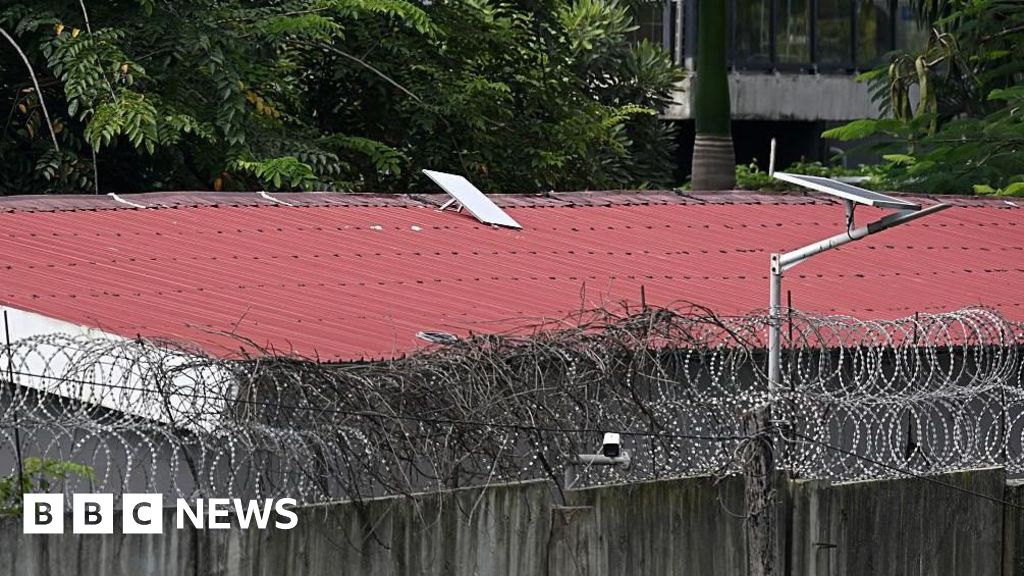
The junta’s information ministry stated that its forces had “cleared” KK Park, freeing over 2,000 workers and seizing 30 Starlink satellite terminals, which are commonly used by scam centers in the region. The ministry attributed the occupation of the park to the Karen National Union and local defense forces opposing the junta.
This action is seen as partly a response to pressure from China, which has urged both the Myanmar junta and Thailand to crack down on illegal activities run by Chinese syndicates. Earlier this year, a significant number of Chinese nationals involved in these scams were repatriated following Thailand’s withdrawal of power and fuel supplies to the compounds.
However, KK Park is just one of an estimated 30 similar compounds along the border, many of which continue to operate under the protection of militia groups allied with the junta. These groups have played a key role in the military’s efforts to reclaim territory from resistance forces.
The military’s increased control over the main road connecting Myawaddy to the rest of Myanmar aligns with its strategic objectives for the upcoming elections. The capture of Lay Kay Kaw, a town established with Japanese funding in 2015, is also considered a significant development, potentially more impactful for the KNU than the takeover of KK Park, which provided some revenue to the group but primarily benefited pro-junta militias.
Sources suggest that scam operations may still be ongoing within parts of KK Park, and that the military’s intervention could be influenced by intelligence from Beijing regarding Chinese nationals involved in these schemes. China is reportedly seeking the repatriation of its citizens involved in these illicit activities for prosecution.