
Kangding Ray’s music exists in a captivating realm, bridging the gap between raw electronic power and a soulful, almost living quality. His compositions feel meticulously crafted yet possess an undeniable organic pulse, as if digital circuits have learned to breathe.
David Letellier, known professionally as Kangding Ray, is a Berlin-based electronic artist behind the acclaimed original score for Oliver Laxe’s film, Sirāt. This cinematic work debuted at the 78th Cannes Film Festival, immersing audiences in the story of a father and son traversing the Moroccan deserts in pursuit of their lost daughter/sister. The film dramatically opens with an intense rave amidst the dunes, setting the stage for a surreal road trip where the protagonists encounter a group of enigmatic ravers, still chasing the echoes of that initial desert rhythm.
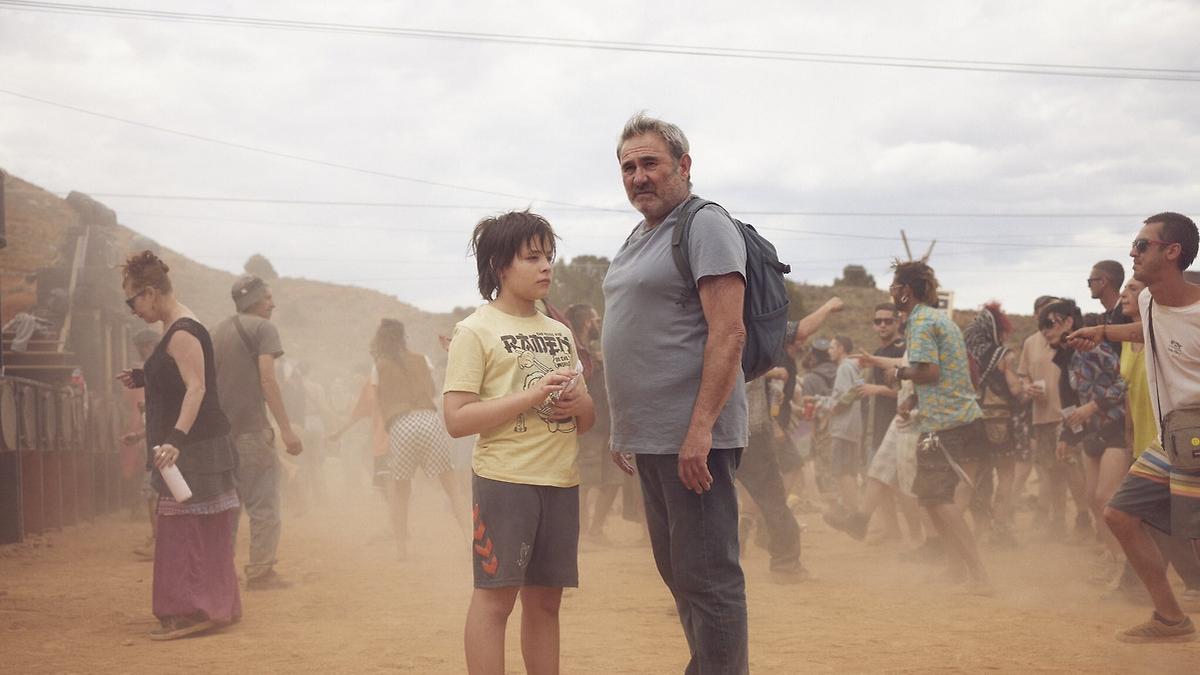
A poignant still from Oliver Laxe’s ‘Sirāt’. Credit: Neon.
Sirāt captivated critics, earning the Cannes Jury Prize alongside Mascha Schilinski’s Sound of Falling. Kangding Ray’s score was independently celebrated with the Cannes Soundtrack Award, praised for its seamless evolution from raw techno to ambient, spiritual textures. This dynamic sonic journey masterfully underscores the film’s narrative transition from a high-energy desert rave to a profound road trip. The film’s accolades continued as it was chosen as Spain’s official entry for the 2026 Oscars.
Filmmaker Oliver Laxe sought a composer who could treat sound as a transcendental landscape, and Kangding Ray was his choice for Sirāt. Their collaborative process transformed techno into a luminous, almost dissolving auditory experience. Ray recalls, “Oliver considered several musicians, but I felt a strong, direct connection to his vision. After reading the script, I grasped the project’s ambition. Despite initial doubts, my trust grew from seeing his previous work and immersing myself in his artistic world; it truly resonated with me.” Their initial project discussions evolved into a harmonious ritual of shared listening sessions in Berlin. “We just listened to music,” Ray explains, “aiming to establish a common language, a way to communicate creatively.”
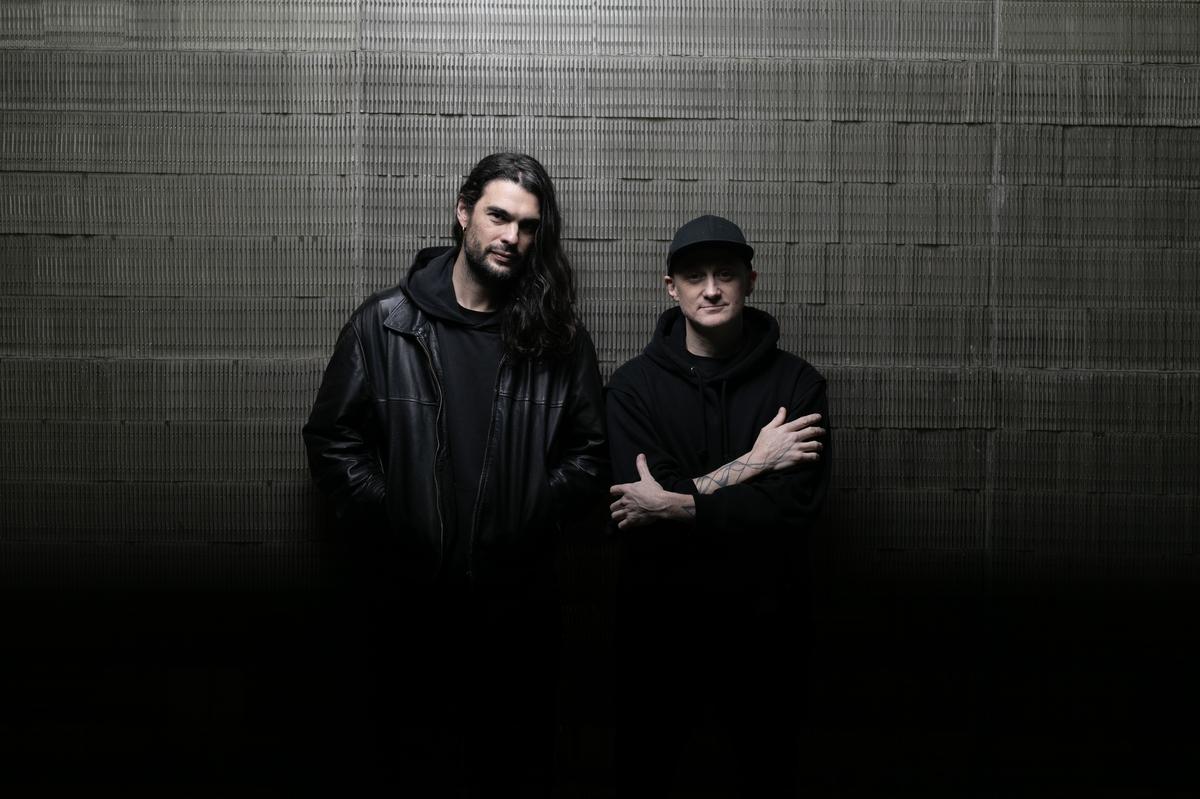
Oliver Laxe with David Letellier, also known as Kangding Ray. Credit: Special Arrangement.
In crafting Sirāt‘s soundscape, Ray envisioned “a slow dematerialization of techno.” The film begins with a recognizable, pulsing four-on-the-floor beat, which gradually evaporates into ethereal sonic vapor by the film’s conclusion. Ray notes, “Oliver’s reference playlist included Amber Decay and Blank Empire, providing a techno foundation. However, the score extends beyond pure techno, evolving into a more ambient, psychedelic, and spiritual sound as the film progresses.”
Ray emphasized maintaining a cohesive sonic identity, transforming the core musical elements throughout the film. “I aimed for homogeneity, using the same foundational sound,” he explains. “When I invest so much time and effort, I want to fully realize the vision and create a coherent work, not mere background music. This coherence was crucial between the techno and ambient sections. So, I began to deconstruct the techno — stripping away the beats and atomizing them into swirling particles.”
For the film’s opening rave sequence, which spanned three days, Ray collaborated with various collectives to create an almost living, breathing spectacle. He humorously notes, “The wildest moments at raves are truly ineffable. That’s the essence of rave culture. Normally, cameras are forbidden, so filming a rave is, in itself, quite sacrilegious.”
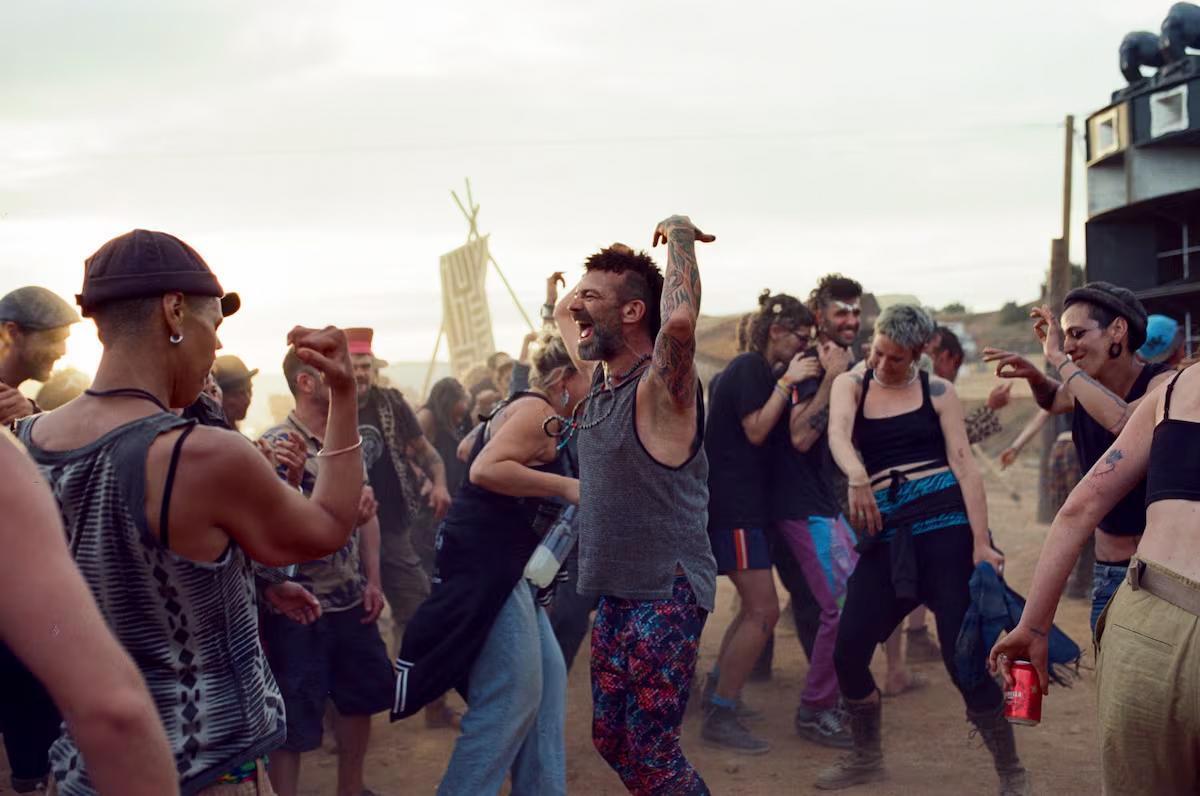
Another evocative still from Oliver Laxe’s ‘Sirāt’. Credit: Neon.
Ray vividly recalls the final day of filming the rave: “I was playing a long set, and both the ravers and the film crew began dancing together. It was quite wild.” Oliver, sensing the intrusion, eventually asked the crew to stop filming. “It was beautiful,” Ray reflects, “to show that decency, to halt and grant them some privacy, to just let them be.”
Ray’s personal introduction to rave culture unfolded later in his life, primarily through Berlin’s renowned club scene, distinct from the illicit outdoor gatherings of early British raves. “My initial experiences were more urban,” he shares. “I gradually immersed myself in it during my career, beginning with intense performances at venues like Berghain in Berlin. This exposed me to the concept of truly immersive dance experiences.”
He vividly remembers a transformative moment far from Europe: “The Labyrinth Festival in Japan, 2011. A massive sound system pulsed within a forest, through the rain, ceaselessly. In a sense, this embodies the film’s core message: to keep dancing, no matter the circumstances, to conquer death and pain through movement, and to celebrate life itself.”
Ray acknowledges the deep political origins of rave culture. “As a teenager in the ’90s,” he states, “the most compelling musical movements inherently embraced anti-capitalist and anti-fascist ideals. This wasn’t exclusive to rave; it permeated nearly all youth culture. Unfortunately, much of that foundational spirit has faded over time.”
He further elaborated that the spirit of resistance permeated every musical genre of that era. “Bands like Rage Against the Machine openly addressed police brutality and American imperialism,” he pointed out. “Within rave culture, communities actively forged spaces of freedom where societal norms stifled it. It was a compelling clash: a youth yearning for liberty against an older generation seeking to restrain them. This blend of political awareness with the raw energy of youth seeking celebration was truly remarkable.”
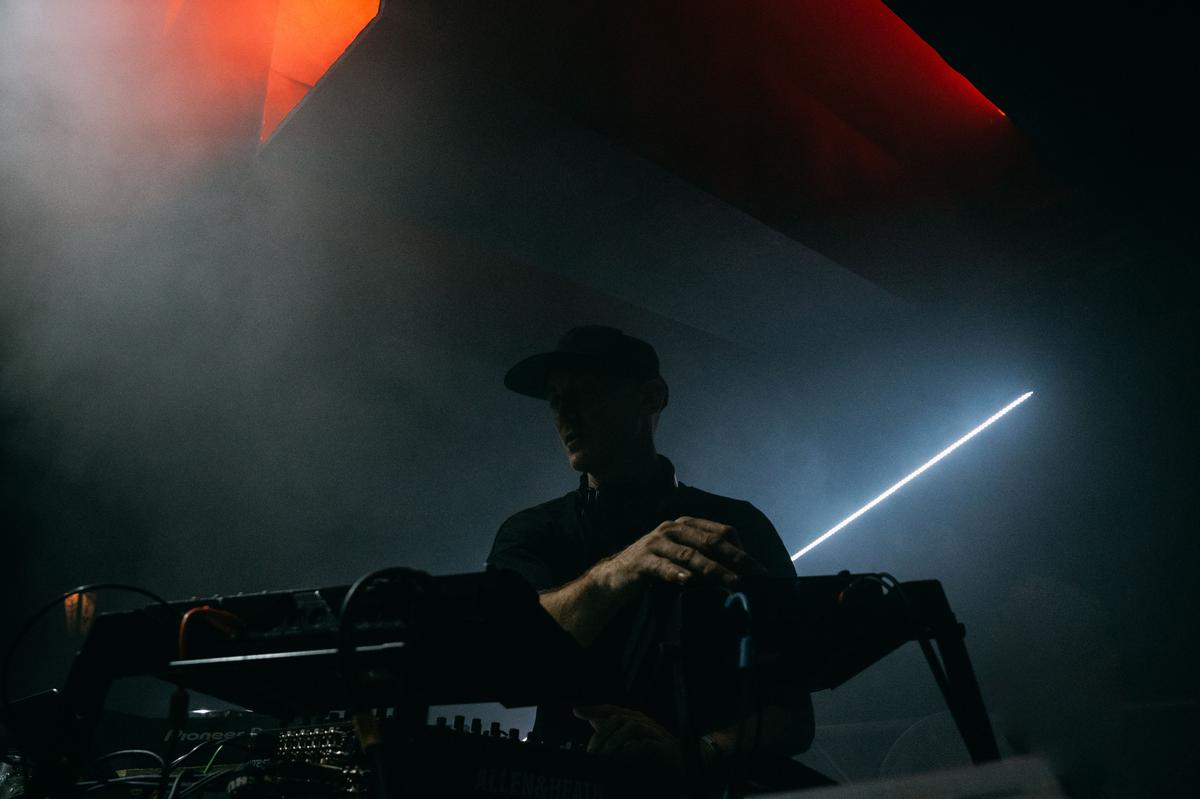
Kangding Ray immersed in a performance. Credit: Special Arrangement.
Ray’s deep appreciation for sound began long before his electronic career. “I didn’t start with an electronic background,” he reveals. “I played in a rock band, drawn more to noise and industrial music, like Nine Inch Nails. Becoming a musician wasn’t my initial plan; I was actually an architect.” He expresses profound admiration for Trent Reznor of NIN: “I’m a massive Nine Inch Nails fan and have always followed his work closely.” He even casually mentioned listening to their recent Tron: Ares soundtrack while cooking, an anecdote that perfectly encapsulates the way intense, raw sounds seamlessly blend into the everyday life of a dedicated raver.
Remarkably, architecture continued to influence him. “Upon moving to Berlin, I encountered many artists who blurred disciplinary lines,” he recounts. “Working with Carsten Nicolai (Alva Noto) was pivotal; he became a mentor, illustrating how architecture, art, and music are interconnected. Everything became a single continuum, applying the same conceptual framework to a building, a sculpture, a film score, or a techno album.” His debut record, a serendipitous release, irrevocably changed his life’s direction. “Life had other plans,” he reflects. “I had to leave architecture to pursue music. It wasn’t a path I consciously chose, but one that chose me.”
Across two decades, Kangding Ray’s distinctive sound has evolved from intricate minimalism to a more emotionally resonant style. “My initial three albums were ambient and delicate,” he states. “However, I gradually gravitated towards the raw energy of techno, finding it offered greater emotional connection. Around 2011, I sought a holistic approach, moving beyond pure experimentation to bridge the gap between club and museum spaces, encompassing everything in between.” Today, his iconic black snapback is almost an extension of his persona, a visual signature as inseparable from his act as his music.
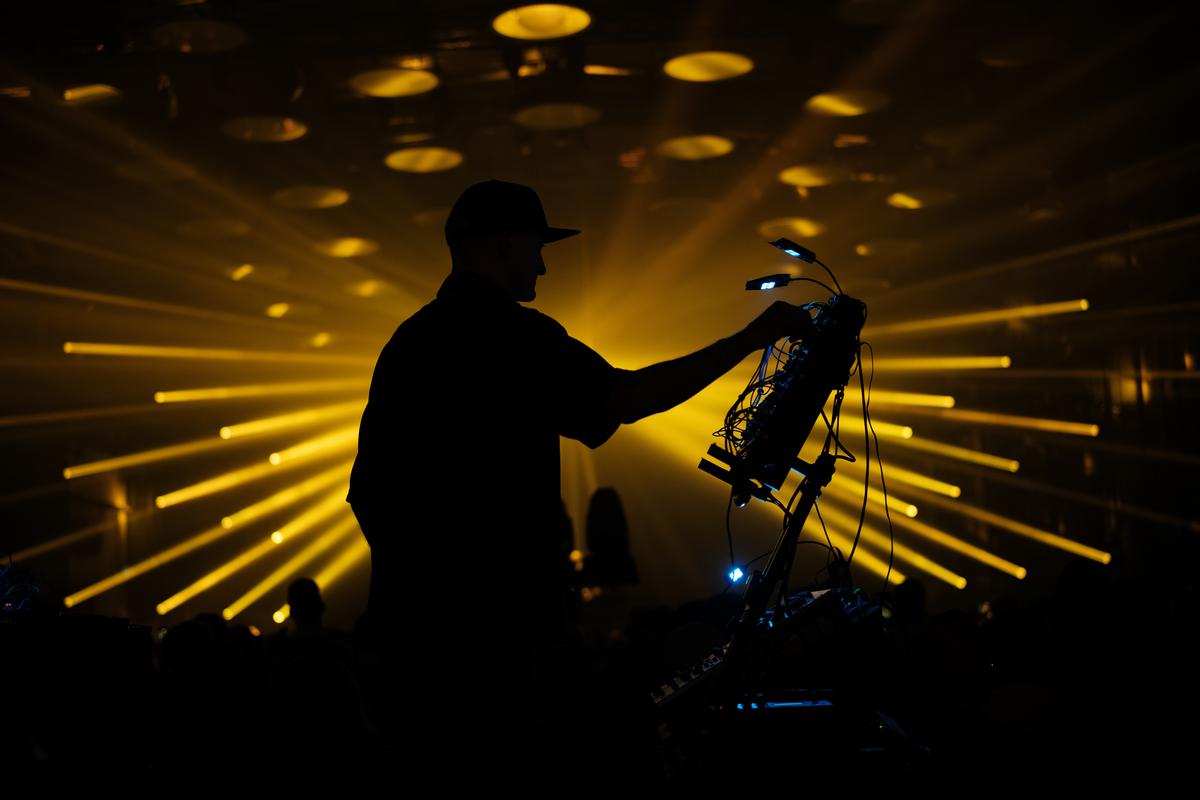
Kangding Ray delivering a captivating live performance. Credit: Special Arrangement.
Ray recognizes a shared artistic spirit with several electronic musicians, including some who initially drew me to his work. “I know both Jon Hopkins and Nils Frahm,” he notes. “We’ve performed together, spent time together, and I certainly consider them contemporaries. While our individual sounds are distinct, there are clear conceptual overlaps. Even with differing approaches, we connect with the emotional core of music in similar ways.”
His victory at the Cannes Soundtrack Award for Sirāt marked a historic moment, making him the first composer to be celebrated for a score so profoundly rooted in techno and rave. “I was completely surprised,” he recalls. “I received the call at an airport. I never imagined they would recognize a score like this. But it’s incredibly validating; it opens new doors and signals that this genre of music can be embraced within such a prestigious context. Being at the forefront of such a shift is a truly wonderful feeling.”
When discussing composers who influenced him, Ray highlights a distinguished lineage of electronic pioneers. “Eduard Artemiev, known for his work with Andrei Tarkovsky, was a true pioneer in bringing electronic music into arthouse cinema,” he states. “Vangelis’ iconic Yamaha CS-80 synth pads in Blade Runner resonate deeply with me even today. More contemporary influences include Oliver Coates for Aftersun, Ben Frost, and Geoff Barrow for Ex Machina; all are powerful references in my work.”
Looking ahead, Ray is already envisioning future collaborations. “I would absolutely love to work with Coralie Fargeat, known for The Substance,” he shares with a smile. “I met her in Cannes, and she’s truly amazing. Collaborating with the Safdie Brothers or Andrea Arnold — they craft such powerfully emotional films. My ambition is to continue working on more radical, independent projects.”