
The Nobel Peace Prize, awarded annually to individuals and organizations making extraordinary contributions to global peace, stands as one of the world’s most prestigious honors. While the laureates’ vision, dedication, and unique circumstances drive their achievements, the profound influence of their education in shaping these leaders is often underestimated.
As the annual Nobel Peace Prize announcement approaches, attention naturally turns to the remarkable individuals whose efforts have profoundly impacted diplomacy, human rights, and global conflict resolution. Ivy League universities, celebrated for their academic excellence, commitment to leadership development, and expansive global networks, have played a pivotal role in preparing many of these influential figures. From presidents to grassroots activists, these institutions have consistently provided the intellectual foundation and unparalleled opportunities that empower Nobel Peace Prize winners to leave an indelible mark on the world.
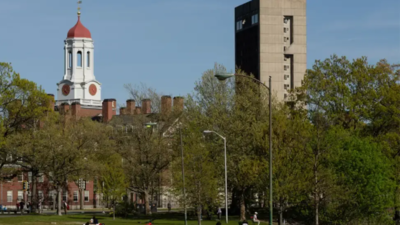
Harvard University
Harvard University has long served as a crucible for aspiring leaders in diplomacy and peace advocacy. Its distinguished alumni and faculty include Nobel laureates such as Ralph Bunche (1950), the first African American recipient, honored for his mediation of the Arab-Israeli conflict; Henry Kissinger (1973), recognized for his international diplomatic efforts; Al Gore (2007), for his pioneering work in environmental activism; and Theodore Roosevelt (1906), celebrated for his peacemaking role in the Russo-Japanese War. Harvard’s robust curriculum, with a strong focus on global governance, law, political science, and international relations, cultivates the knowledge, critical analytical skills, and ethical grounding essential for effective conflict resolution. Beyond its rigorous academics, the university’s vast networks and numerous forums offer invaluable connections that often extend into high-level diplomacy and international policymaking, significantly amplifying the impact of its graduates on global peace initiatives.
Columbia University
Columbia University has nurtured an impressive cohort of Nobel Peace laureates, including Nicholas Murray Butler (1931), Barack Obama (2009), Liu Xiaobo (2010), and Leymah Gbowee (2011). Columbia’s innovative interdisciplinary programs, particularly in international affairs, human rights, law, and journalism, are meticulously designed to equip students with critical thinking abilities and a strong ethical framework. The university’s vibrant intellectual and activist community actively encourages students to engage with pressing global issues, while dedicated faculty mentorship, world-class research centers, and extensive international networks provide a powerful platform to translate groundbreaking ideas into tangible action. Columbia’s holistic approach empowers its graduates to emerge as influential leaders who champion advocacy, diplomacy, and social change on the world stage.
Princeton University
Princeton University’s enduring legacy in shaping influential leaders is perfectly exemplified by Woodrow Wilson, a Princeton alumnus and former university president, who received the Nobel Peace Prize in 1919 for his pivotal work in establishing the League of Nations. Princeton emphasizes rigorous academic inquiry across politics, history, and public policy, seamlessly combined with leadership opportunities that foster ethical decision-making and a strong sense of civic responsibility. Small, intimate seminars, personalized faculty mentorship, and active engagement in public service provide students with both the sophisticated analytical tools and the moral grounding necessary to profoundly influence global peace efforts. Princeton’s unwavering commitment to leadership development ensures that its graduates are exceptionally well-prepared to navigate and address complex international challenges.
Other Ivy League Institutions
While institutions like Yale, the University of Pennsylvania, Cornell, Dartmouth, and Brown may not have produced as many direct Nobel Peace laureates, they have made substantial and indispensable contributions to related fields. From pioneering advancements in human rights and international law to innovative approaches in conflict resolution and global health, these universities continue to shape leaders who advance peace in diverse and impactful ways. Their comprehensive programs in public policy, ethics, international studies, and civic engagement collectively ensure that students across the entire Ivy League are thoroughly equipped to tackle pressing global challenges and confidently assume leadership roles in critical peacebuilding initiatives worldwide.
The Ivy League Impact on Peacebuilding
Across all these elite institutions, several common and powerful themes consistently emerge: an unwavering commitment to leadership development, extensive international engagement, rigorous ethical reasoning, and unparalleled academic rigor. Ivy League universities cultivate environments that actively encourage spirited debate, collaborative problem-solving, and critical thinking, enabling students to deeply understand complex geopolitical dynamics and the crucial human dimensions of conflict. Their robust alumni networks further amplify this influence, seamlessly connecting graduates to invaluable opportunities in diplomacy, prominent international organizations, and influential global advocacy. The result is a powerful multiplier effect: individuals educated at these distinguished universities carry forward the core values, essential knowledge, and far-reaching connections necessary to profoundly shape the world’s peace and security landscape for generations to come.