
Hurricane Melissa, a formidable Category 4 storm, is currently making its way towards eastern Cuba, anticipated to make landfall early Wednesday, October 29, 2025. This powerful system has already left a trail of destruction across Jamaica, ranking as one of the strongest Atlantic hurricanes ever recorded.
Cuban authorities have swiftly moved to evacuate over 700,000 residents, as reported by the official newspaper Granma. Forecasters warn that Melissa, a Category 4 menace, is poised to inflict catastrophic damage on Santiago de Cuba and surrounding regions.
Hurricane warnings are active for Cuba’s Granma, Santiago de Cuba, Guantanamo, Holguin, and Las Tunas provinces, alongside the southeastern and central Bahamas. Meanwhile, Bermuda remains under a hurricane watch, closely monitoring the storm’s progression.
As of Tuesday night, October 28, 2025, Hurricane Melissa was sustaining intense winds of 215 kilometers per hour (134 mph), advancing northeast at a speed of 15 kilometers per hour (9 mph), as confirmed by the U.S. National Hurricane Center in Miami.
According to Michael Brennan, director of the U.S. National Hurricane Center, Melissa was centered approximately 175 kilometers southwest of Guantánamo, Cuba, and was projected to traverse the island overnight. Experts anticipate a dangerous storm surge of up to 3.6 meters (12 feet) and rainfall totals reaching up to 51 centimeters (20 inches) in parts of eastern Cuba, significantly increasing the risk of widespread landslides.
This impending disaster threatens to exacerbate Cuba’s already precarious economic situation, a nation already struggling with persistent power outages, critical fuel scarcities, and widespread food shortages.
In a televised address, President Miguel Díaz-Canel acknowledged the immense task ahead, stating, ‘There will be a lot of work to do. We know there will be a lot of damage.’ He reassured the public that ‘no one is left behind and no resources are spared to protect the lives of the population,’ while also issuing a stern warning not to ‘underestimate the power of Melissa, the strongest ever to hit national territory.’
In anticipation of the storm, educational institutions across Cuban provinces, from Guantánamo in the east to Camagüey near the island’s center, had already halted classes on Monday, October 27.
While Cuba braced for impact, Jamaican officials were already mobilizing to conduct damage assessments across their island on Wednesday, October 29, following Melissa’s initial assault.
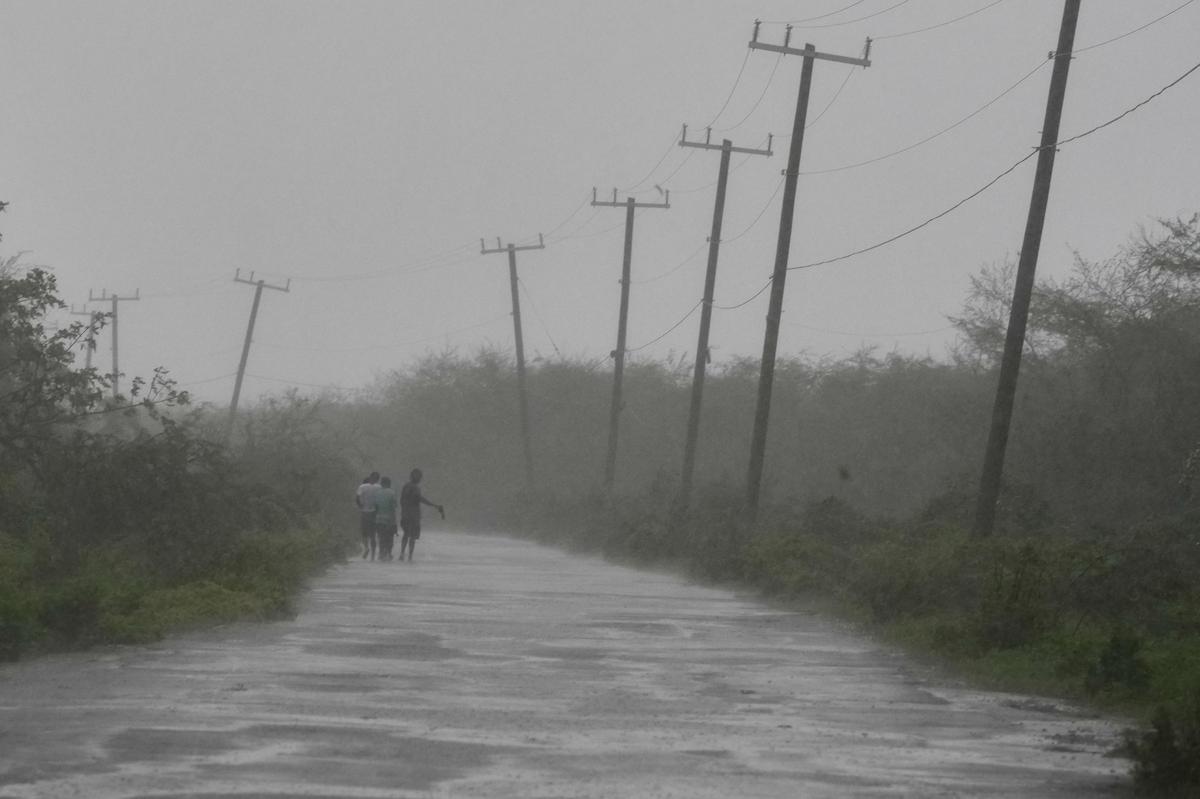
Residents navigate a street in Rocky Point, Jamaica, amidst Hurricane Melissa on October 28, 2025. (Photo Credit: AP)
Desmond McKenzie, Deputy Chairman of Jamaica’s Disaster Risk Management Council, confirmed widespread destruction in Clarendon, located in southern Jamaica, and in the southwestern parish of St. Elizabeth, which was reported to be ‘under water.’
By late Tuesday, October 28, over half a million Jamaicans were plunged into darkness due to widespread power outages. Officials noted that much of the island suffered from fallen trees, collapsed power lines, and severe flooding.
The Jamaican government expressed intentions to restore full operations at all airports by Thursday, October 30, to facilitate the swift delivery of crucial emergency relief aid.
Tragically, Hurricane Melissa has already been linked to seven fatalities across the Caribbean: three in Jamaica, three in Haiti, and one in the Dominican Republic, where an additional person is still unaccounted for.