
As the plane descended towards North Goa’s Manohar International Airport (Mopa), a lush green landscape unfolded, promising an escape from urban concrete. Portuguese-inspired architecture and Mario Miranda’s whimsical ‘Under the Coconut Tree’ artwork greeted arrivals. The drive revealed endless stretches of tropical foliage and hills, quintessential North Goan scenery – a perfect prelude to the ‘Malhar and the Sea’ music festival.
While Goa is renowned for its lively folk songs, unique Konkani arts, and the soulful Fado inherited from its Portuguese era, it also boasts a profound connection to Hindustani classical music. Breaking common misconceptions, this region has nurtured stalwarts like Mogubai Kurdikar, Kishori Amonkar, Kesarbai Kerkar, Dinanath Mangeshkar, and Jitendra Abhisheki, with annual festivals still celebrating their legacies.
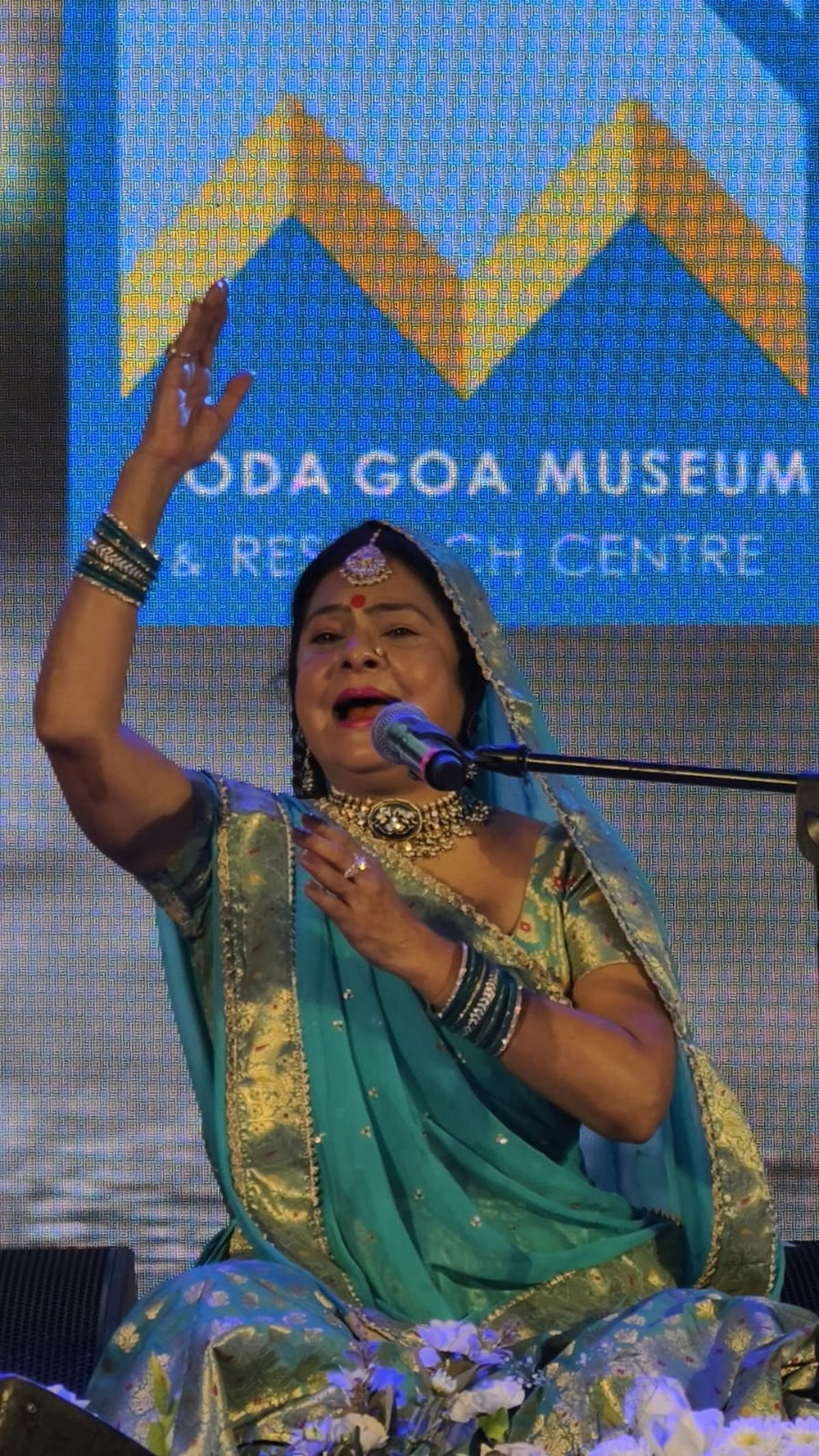
Folk queen Malini Awasthi captivated the audience with her powerful voice. Photo Credit: Special Arrangement
Kishori Amonkar, the iconic vocalist, proudly embraced her Goan heritage, believing her Konkani and Marathi roots profoundly influenced her unique artistry. Similarly, Jitendra Abhisheki wove Goa’s linguistic and poetic essence into his classical compositions through collaborations with local poet-laureate Bakibab Borkar. The mention of Kesarbai Kerkar, from Keri village, evokes her celebrated khayal ‘Maan na kariye’ in Raag Gaud Malhar – highlighting the deep connection between Goa’s monsoon and the Malhar ragas. Thus, the festival’s name, ‘Malhar and the Sea,’ was truly fitting.
Now in its second year, the festival mirrored Goa’s diverse cultural spirit, presenting a seamless blend of classical, folk, Fado, and ghazal performances. These curated evenings, especially at the stunning ITC Grand Goa by Arossim Beach, have become cherished opportunities for newcomers to immerse themselves in India’s rich artistic traditions.
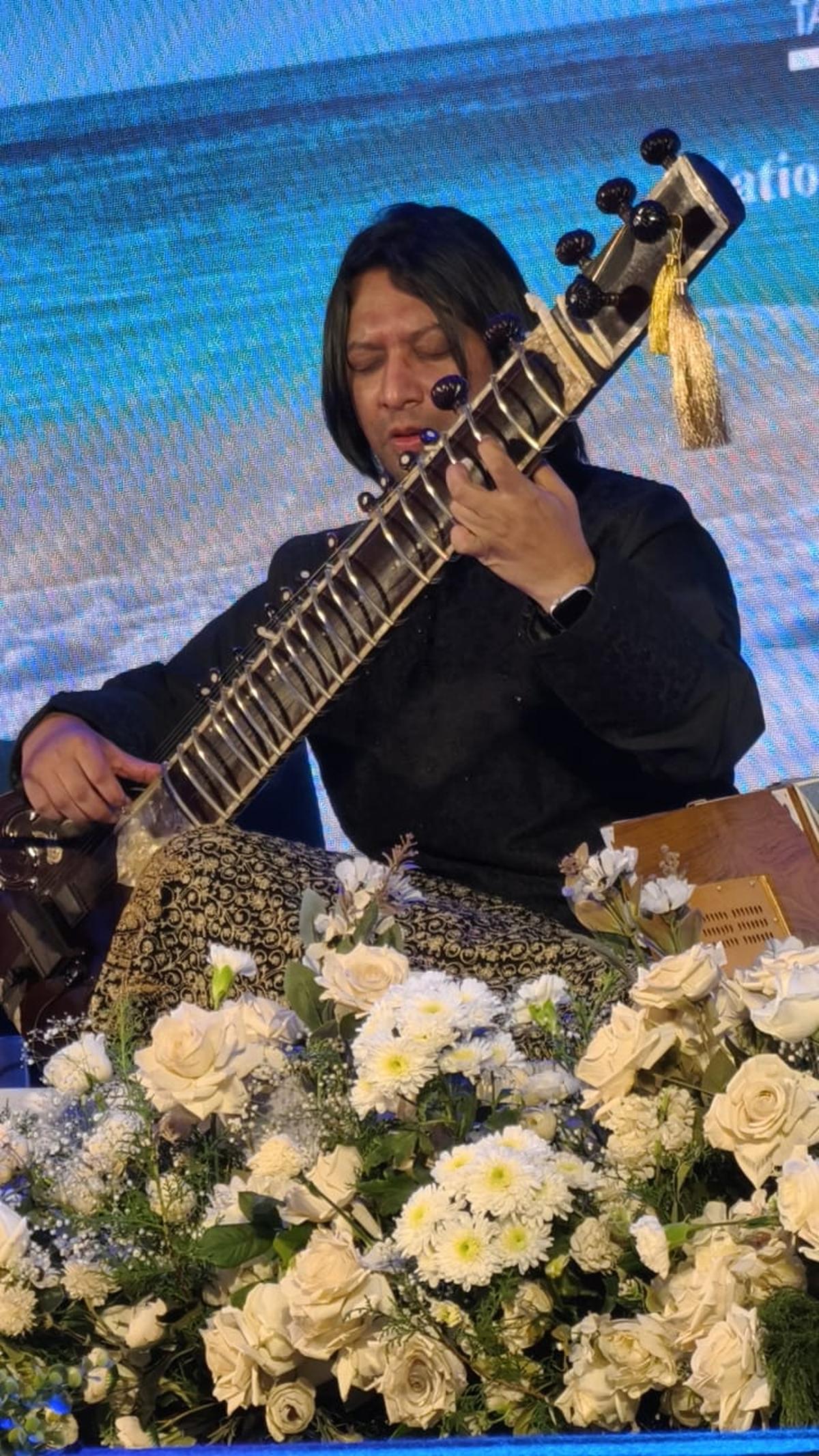
The festival provided a platform for emerging artists, with Shakir Khan, son of Ustad Shahid Parvez Khan, resonating deeply with the audience. Photo Credit: Special Arrangement
Omer Haider, Managing Director of Showhouse Events and the visionary behind this festival, explained its core mission: ‘The idea was to demonstrate to attendees, including international visitors, that Goa’s allure extends far beyond its sun-drenched beaches, sand, and Feni.’
Omer further elaborated, ‘While classical musicians were the highlight, we aimed for an informal setting to make the music approachable and the atmosphere welcoming. This not only allows artists to infuse new creative energy but also brilliantly introduces classical traditions to a wider audience.’
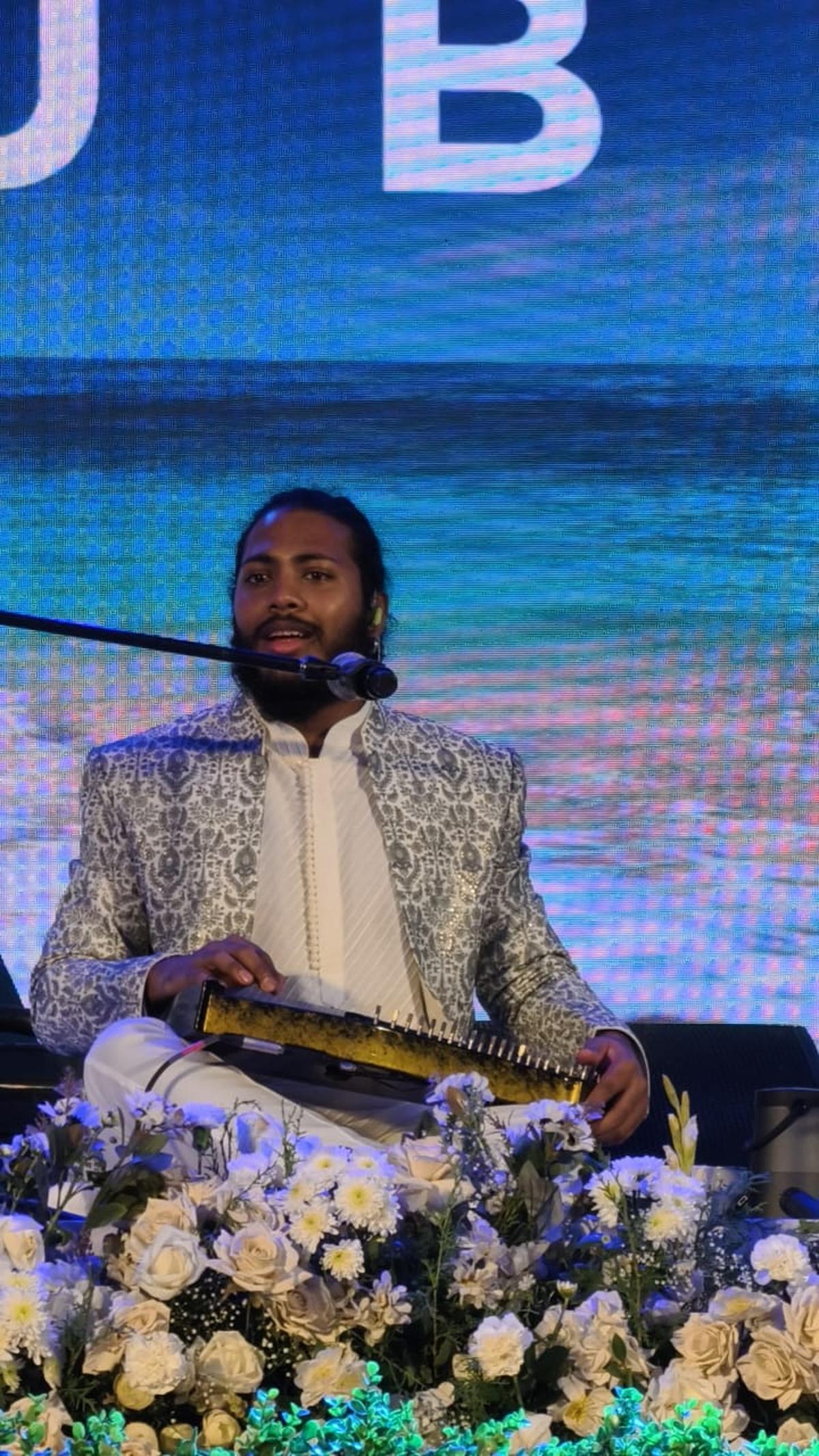
Armaan Khan, talented son of Ustad Rashid Khan. Photo Credit: Special Arrangement
The festival began on a pleasant afternoon, with the pristine white sands of Arossim Beach glistening under the sun. The opening act introduced singer Malini Awasthi, celebrated as the ‘Folk Queen of India.’ Her powerful, vibrant voice filled the air, resonating with thunderous applause and vividly conjuring the essence of India’s rural charm.
Before her performance, Malini, a leading disciple of the legendary thumri singer Girija Devi, expressed her motivation: ‘These multi-genre festivals inspire me to delve into our heritage (darohar) and unearth rare folk compositions. For me, this is a vital way to document and preserve a tradition that is gradually fading.’
The evening’s highlight was a magnificent performance by three generations of sarod masters, led by the incomparable Ustad Amjad Ali Khan, alongside his sons, Ayaan and Amaan Ali Bangash, and his grandsons, Abeer and Zohaan. This concert beautifully illustrated the profound dedication of families to preserving India’s classical music heritage. While his sons continue the legacy and his grandsons show immense promise, the Ustad’s mastery remains unparalleled. His brief but impactful rendition of Raag Malhar showcased its diverse nuances, with melodies flowing from his sarod during both the swar (notes) and sahitya (lyrics), reaffirming the exceptionally high standard he has established in his art.
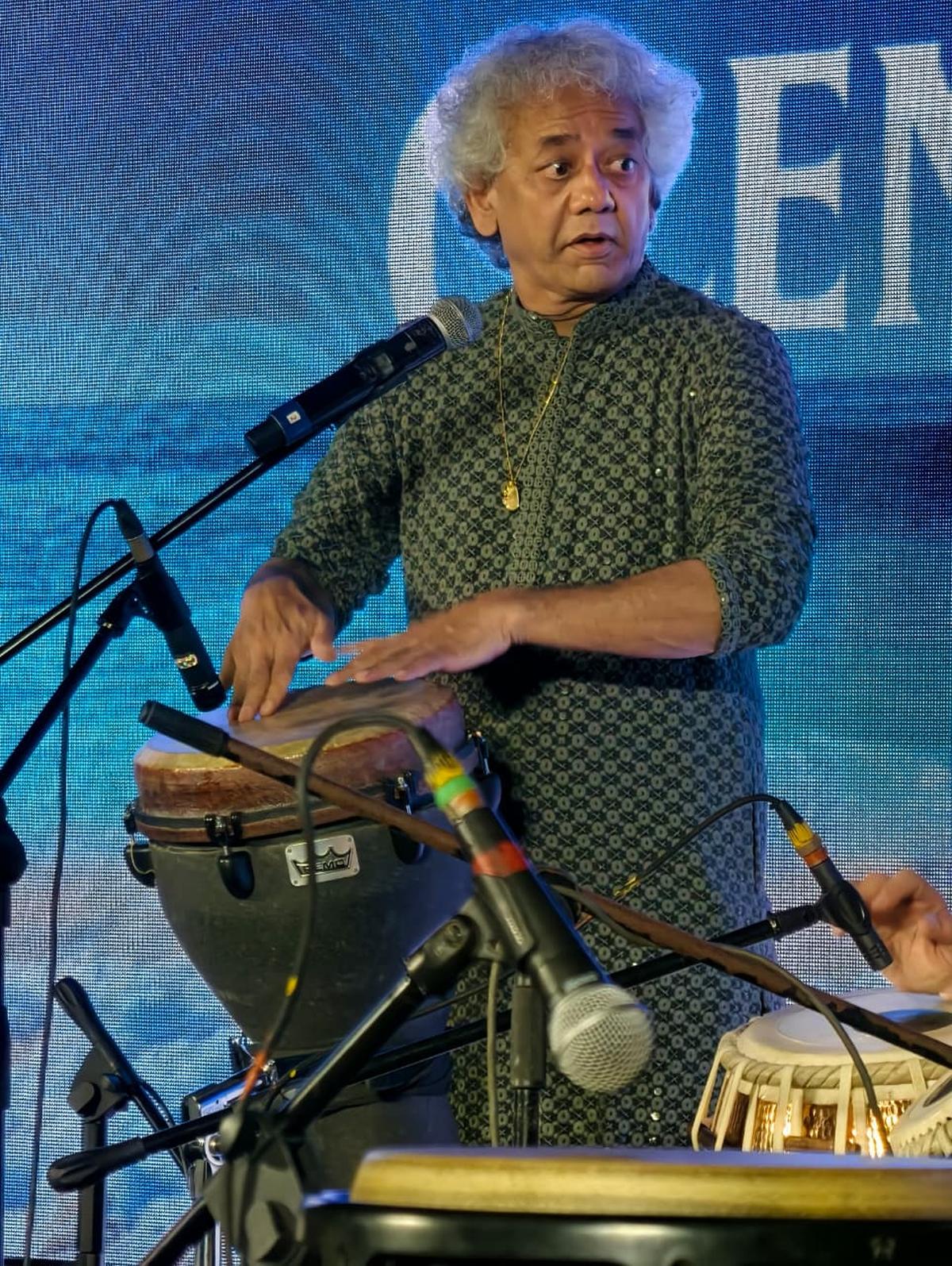
Taufiq Qureshi’s Taal Vadya ensemble created a mesmerizing celebration of rhythm. Photo Credit: Special Arrangement
Festivals held in unique settings like this have proven to be invaluable for percussionists, who are often relegated to accompaniment roles in traditional classical formats. The freedom to experiment empowers them to shine center stage. This was beautifully demonstrated by the late-evening Taal Vadya ensemble, featuring Taufiq Qureshi on djembe, Yogesh Samsi on tabla, Sridhar Parthasarathy on mridangam, and Shikhar Naad Qureshi and Omkar Salunkhe on drums. ‘When festival organizers dedicate space for percussion-focused concerts,’ Taufiq noted, ‘it truly inspires us to innovate within the traditional framework.’
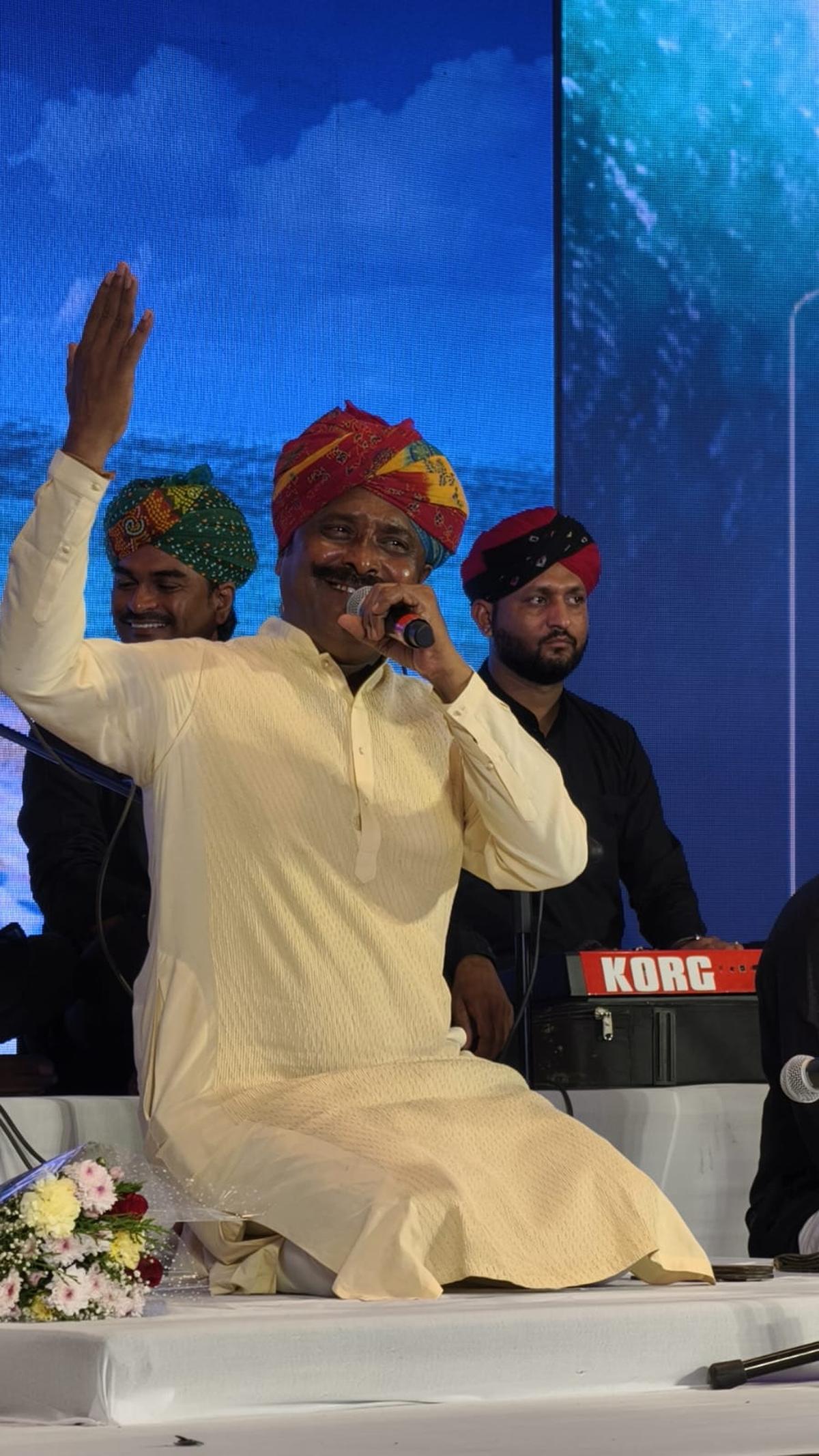
Manganiyar Samandar Khan’s ensemble transported the audience to Rajasthan. Photo Credit: Special Arrangement
Day two shone a spotlight on the next generation of artists. The morning began harmoniously with flautist-sisters Suchismita and Debopriya Chatterjee, while Madhubanti Bagchi delivered a diverse closing set. In between, inheritors of esteemed musical lineages captivated the stage: sitarist Shakir Khan (son of Ustad Shahid Parvez Khan), vocalist Arshad Ali Khan (from the Kirana gharana founders), and Armaan Khan (son of Ustad Rashid Khan). Festivals like ‘Malhar and the Sea’ offer these emerging talents a unique opportunity to hone their craft and showcase their individual brilliance, free from the usual comparisons.
The festival concluded with a captivating performance by Samandar Khan Manganiyar’s 13-member ensemble of singers and instrumentalists. Samandar Khan expressed profound gratitude: ‘We Manganiyars are thankful to cultural curators and impresarios who have dismantled barriers and liberated music from restrictive labels. Thanks to them, our community has flourished, and women have bravely stepped onto the stage to perform alongside us,’ he noted, gesturing towards the veiled woman performer. As his voice soared, rendering the timeless ‘Padharo maro des,’ the spirit of Rajasthan’s desert winds seemed to sweep across the Goan shores, inviting everyone to embrace a rich, shared musical legacy.
Threads of Tradition
The festival also paid homage to the late, legendary Indian fashion designer Wendell Rodricks, celebrating his profound contributions to both fashion and sustainability, in association with the MODA Museum.