
Who would have thought a game called Mewgenics would dive into themes of eugenics? Yet, the gaming world often delivers unexpected surprises. Renowned designer Edmund McMillen, known for his work on The Binding of Isaac, describes Mewgenics as a “randomly generated turn-based strategy game where there’s cats,” infused with “breeding sim” elements. This deeply systemic game isn’t for the faint of heart, but a recent interview unveiled a surprisingly moving reaction from its early community after six years in development.
The inspiration for Mewgenics came directly from McMillen’s personal life. His wife’s passion for rare cat breeds, often marred by health issues due to selective breeding for specific traits, sparked a connection. This, combined with his own childhood experiences, led McMillen to explore the complex themes of breeding and eugenics as core game mechanics.
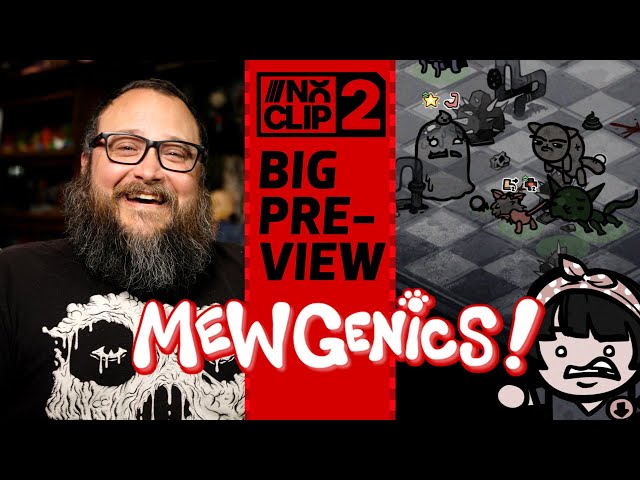
McMillen elaborated on specific in-game traits in an interview with indie documentary channel NoClip_2. He revealed that a trait like ADHD boosts a cat’s intelligence and speed, but players have only five seconds to act before the cat automatically takes an action.
Similarly, the ‘Autism’ trait decreases charisma while increasing intelligence, making cats exceptional at one or two innate abilities but more challenged in other areas.
Drawing from his personal life, McMillen explained how his own experiences with obsessive thinking translated into game design, and his hyperactivity found an outlet in creative endeavors. While echoes of his Newgrounds flash game era (known for its provocative themes) are present, his approach to these sensitive topics in Mewgenics demonstrates a notable evolution and maturity.

McMillen emphasized the importance of a ‘silver lining’ for every trait within the game. He recounted an extraordinary playtest run by his nephew, who managed to conquer the game by selectively breeding cats with cancer. This condition, while slowly damaging their health, also triggered random, often powerful mutations, allowing the nephew’s ‘cancer run’ to succeed.
This design goes beyond mere shock value, creating a deep system with thousands of potential permutations. Intriguingly, McMillen noted that many neurodivergent players have found positive representation within Mewgenics’ feline characters and their varied traits.
He admitted there were concerns (though not his own) that the game’s portrayal of certain conditions might be misinterpreted as mockery. However, after ‘testing the waters’ with viral social media posts, McMillen found an unexpected reaction: ‘It feels like representation, too,’ he observed. ‘Which is really neat, because it wasn’t necessarily intended as such. It was just akin to, ‘I have these disorders. I pass these disorders to my kids. This is going to make their lives in this world, in this generalized society, harder. But, there are things that they’ll be better at’.”

McMillen firmly believes in tackling difficult subjects in his games, stating, ‘You don’t need to constantly just write about things that are safe.’ He drew a parallel to his previous work, remarking, ‘The Binding of Isaac is a game about child abuse.’ He assured that Mewgenics also delves into deeper themes, promising ‘there’s more going on here, I promise.’
Mewgenics is set to launch on Tuesday, February 10, 2026. Players will be able to find it on Steam.
If you’re intrigued by how challenging mechanics can be woven into a game, exploring the world of indie games often reveals boundary-pushing designs that larger developers might shy away from. Fans of systemic gameplay will also find much to enjoy in the roguelike genre.
What are your thoughts on Mewgenics’ unique systems? Join the conversation in our community, where players often share their opinions and even photos of their real-life feline companions.