

Imagine spotting two beautiful arcs of color stretching across the sky – it’s like getting double the magic! The first, brighter rainbow follows the familiar pattern (red at the top, violet at the bottom). But look closely, and you might see a second, fainter arc with its colors reversed. This is a double rainbow, and understanding how these rare beauties appear is truly captivating!
The Basics of a Single Rainbow
Before we explore double rainbows, let’s quickly recap how a regular rainbow forms. Sunlight, which appears white, is actually made up of many different colors, or wavelengths, all blended together. When this sunlight passes through raindrops, it slows down because it’s moving from air to water. This change in speed causes the light to bend and split into its individual colors – a process called refraction. Each color has a unique wavelength, causing them to bend at slightly different angles. Red light has the longest wavelength and bends the least, while violet light has the shortest and bends the most. This is why we see the vibrant spectrum of colors in a rainbow!
The Secret to Double Rainbows: Double Reflection
So, how does the secondary, fainter rainbow appear? It’s all thanks to an extra reflection inside the raindrops! While the light forming the primary rainbow reflects once inside the droplet, the light that creates the secondary arc reflects twice. This double reflection causes the light to exit the raindrop at a different angle, and crucially, it reverses the order of the colors. That’s why the fainter secondary rainbow appears with violet on top and red on the bottom.
Are All Rainbows Double Rainbows?
Surprisingly, yes, in a theoretical sense! Every time a primary rainbow forms, there’s always a secondary arc being created too. However, this second bow is always less intense and harder to see. Often, it’s just too faint, or the weather conditions aren’t perfect for us to spot it. So, when you only see one rainbow, you’re actually just witnessing half of the full atmospheric phenomenon!
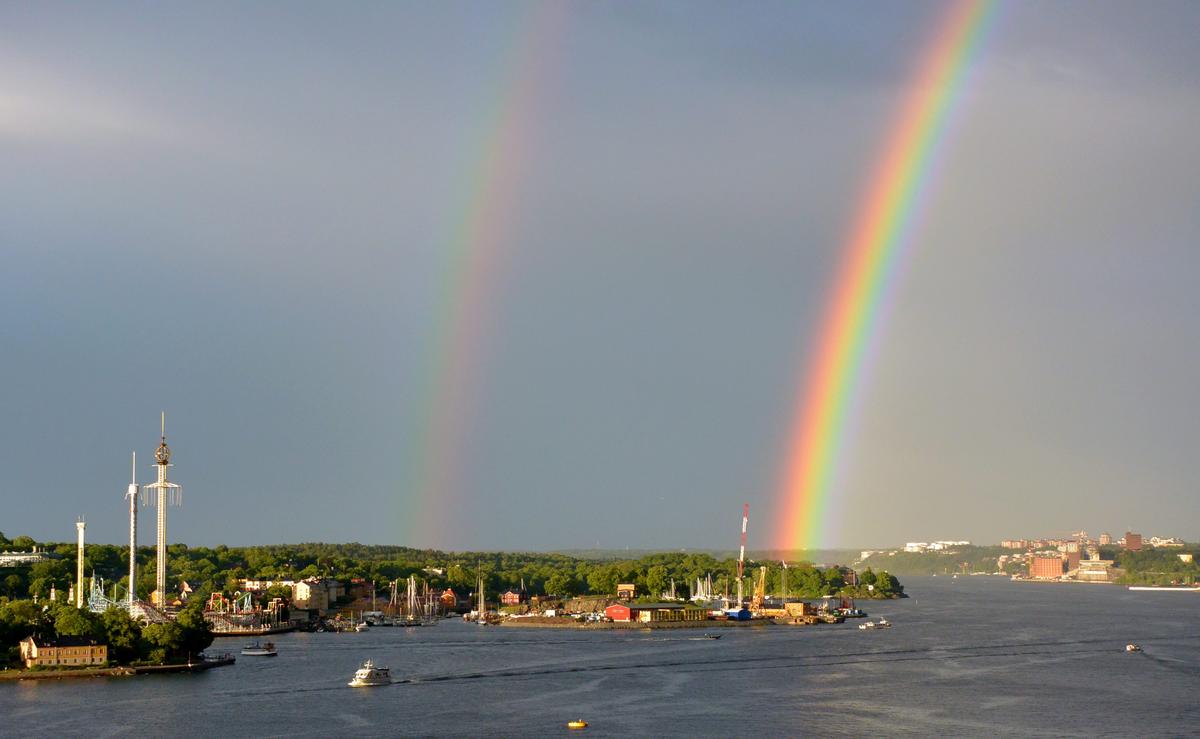
Double rainbows are more than just pretty; they are a fantastic display of light physics in action. The next time you’re lucky enough to witness one, remember – you’re not just enjoying an extra splash of color, you’re observing a truly stunning scientific marvel right before your eyes!