Czech voters are heading to the polls amidst growing European instability and concerns about Russian interference. Andrej Babis, a 71-year-old populist billionaire, is widely expected to become the next Prime Minister, potentially shifting the country away from its current pro-Western stance.
However, Babis’s victory hinges on forming alliances, and his potential partners represent the more extreme ends of the Czech political spectrum. During a rally in Kladno, near Prague, Babis reassured his supporters that he has no intention of steering the Czech Republic towards Russia or leaving the European Union, contrasting his party’s actions with those who have engaged with President Putin.
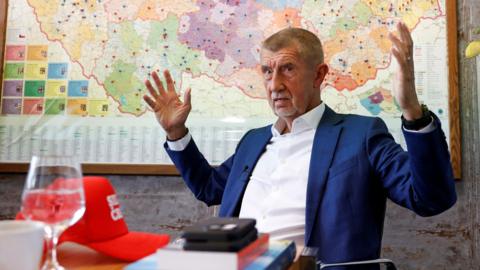
Babis’s campaign style, including his signature red “Strong Czechia” caps, clearly draws inspiration from Donald Trump’s MAGA movement. While he has pledged to avoid radical policies like leaving the EU or NATO, his likely coalition partners hold more extreme views, such as advocating for referendums on leaving these alliances. These potential allies include the ultra-nationalist SPD party and the ‘Enough!’ coalition, which comprises reformed communists and other fringe groups.
Meanwhile, young voters like Ondrej Kapralek, a political science student, are concerned about their country drifting towards illiberalism, similar to Hungary and Slovakia. He emphasizes the need for investment in security and a clear vision for the future to retain young talent.
Security analysts are also sounding the alarm, warning that pro-Russian parties within a Babis-led government could undermine support for Ukraine and challenge sanctions against Russia. While Babis’s ANO party has stated its intention to reform the EU rather than leave it, the radical agendas of its potential partners could significantly influence the Czech Republic’s foreign policy and its relationships within NATO and the EU.