
While some romantic comedies feature lovers meeting delicately in the rain, Chainsaw Man presents a starkly different scene. Here, a passionate kiss under fireworks swiftly devolves into a brutal exchange where characters attempt to slice, maim, and obliterate each other. This is Tatsuki Fujimoto’s distinctive brand of summer romance.
Despite its premise of a boy with chainsaws for a head and arms, Chainsaw Man has always possessed a surprisingly vulnerable core. The new film sees this heart beating more intensely (and bleeding more freely) than ever. It functions as both a continuation of the cult anime series and a wild, standalone exploration of loneliness, desire, and the futility of hoping for simple happiness when a literal demon resides in your chest.
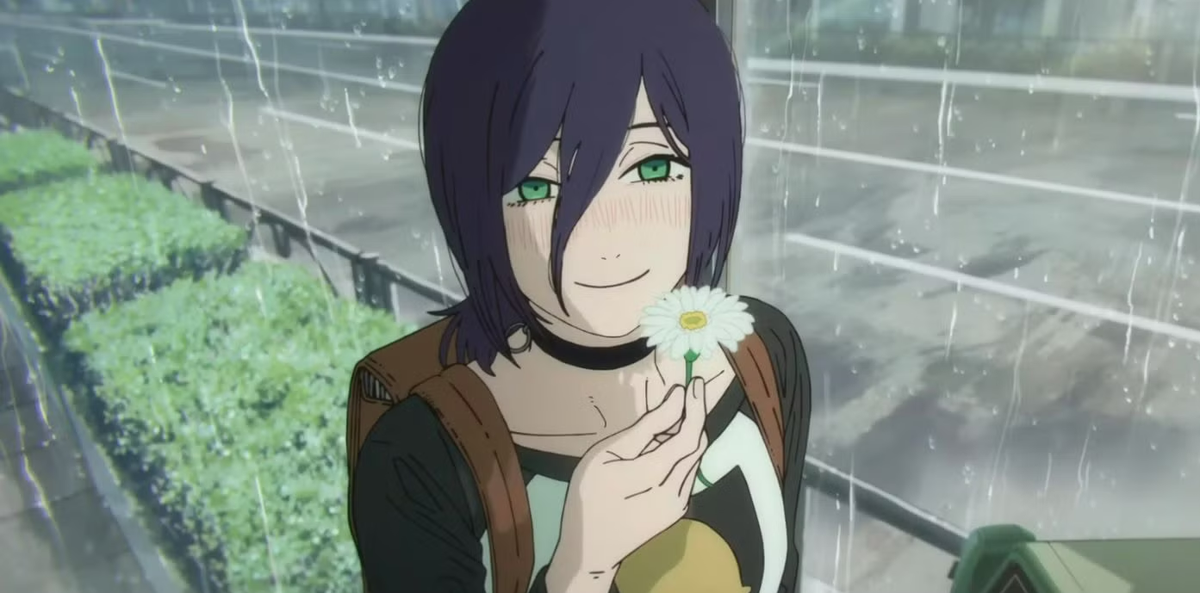
A powerful moment from ‘Chainsaw Man – The Movie: Reze Arc’. Photo Credit: Sony Pictures
Denji, a teenage devil hunter whose primary ambitions include experiencing intimacy and enjoying good food, encounters Reze, a captivating barista with purple hair, emerald eyes, and a teasing laugh, who seems almost too good to be true. Their early flirtations include charming coffee dates, daring midnight swims, and sparkling fireworks overhead. However, this idyllic facade quickly crumbles as Reze reveals her true nature: a living weapon of mass destruction.
Chainsaw Man – The Movie: Reze Arc (Japanese)
As the animation studio renowned for both revolutionizing the medium and intensely pushing its animators, MAPPA orchestrates this narrative with a level of artistry bordering on obsession. The first act shimmers with soft pastels and the inviting glow of movie theater marquees. By the second, these very palettes explode into jagged bursts and suffocating grays, as the screen erupts with dismembered body parts and shrapnel. This transition feels almost intentionally cruel, immediately echoing the kind of visceral trauma MAPPA crafted for Jujutsu Kaisen’s second season.
The incredible voice cast delivers their lines with remarkable sincerity. Kikunosuke Toya perfectly captures Denji’s endearing foolishness as a boy who desperately believes every pretty girl might finally see him for who he truly is. Reina Ueda’s Reze is a velvety menace, effortlessly shifting from the playful giggles of a first date to a full-body detonation without missing a beat. The familiar Natsuki Hanae, known for his katana-wielding exploits as Tanjiro in Demon Slayer, lends his voice to the shark-headed comic relief, Beam, who would gladly sacrifice himself for his chainsaw-headed comrade.
Kensuke Ushio’s score acts as the film’s secret weapon. His compositions subtly shift from hushed distortions accompanying Denji and Reze’s kiss to operatic crescendos as entire city blocks collapse. Even the sound of a sizzling fuse feels charged with suggestive undertones of foreplay.
Reze Arc also cleverly weaves in a surprisingly heartfelt tribute to cinema itself. There’s the memorable matinee marathon where Denji and Makima immerse themselves in movies, eventually convincing themselves that the mere flicker of a projector is enough reason to keep living. It’s unpretentious, almost embarrassingly earnest, and it perfectly sets up the dark humor that the “final scene” of their own story will literally blow them away.
The film’s chaotic climax feels like a chaotic divine sketch drawn at 3 AM. It’s brimming with homages to blockbuster classics, splicing elements from Texas Chainsaw Massacre with Jaws, featuring a tornado or two straight out of Twister, and packing in more gratuitous explosions than Michael Bay has ever conceived for a summer film. It’s deranged, excessive, and almost camp, yet it also feels like Fujimoto’s nod to the absurd, transformative thrill of watching moving pictures achieve what they were never (or perhaps always) meant to do.
Comparisons to Demon Slayer: Infinity Castle are inevitable. Both films arrived in quick succession, showcasing cutting-edge animation. At this point, anime theaters often become staging grounds for Frankenstein-esque “event arcs” cynically inflated into feature films. Reze Arc, however, feels like a rare gem, with devilish blood in its veins rather than a calculated brand strategy. It effortlessly surpasses the high bar set by Demon Slayer’s recent blockbuster with the sheer fluidity of its hand-drawn animation. Every frame pulses with a purity that CG simply cannot replicate.
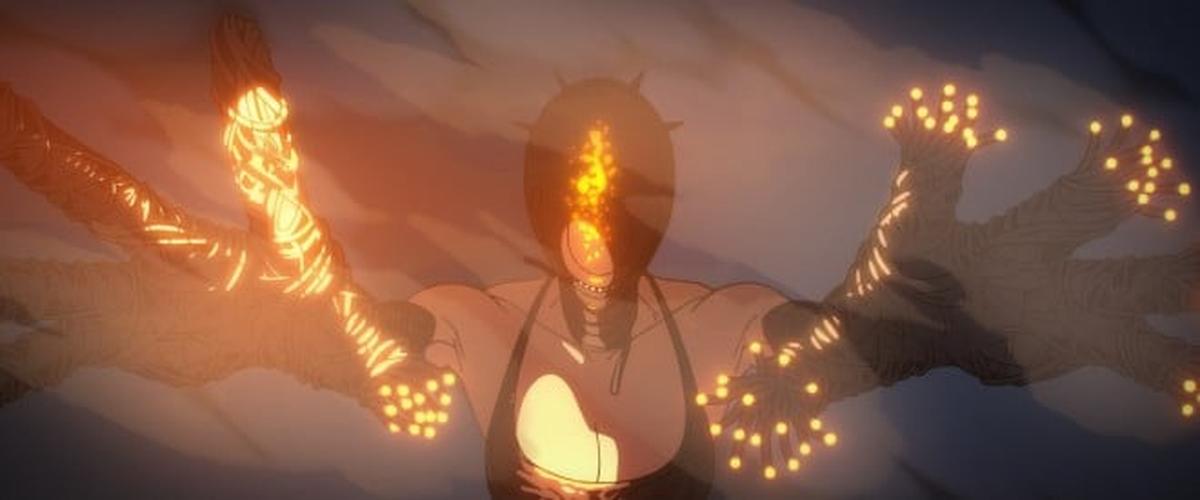
A vibrant scene from ‘Chainsaw Man – The Movie: Reze Arc’. Photo Credit: Sony Pictures
The true victory here is that this isn’t a film crafted for mainstream appeal. If the grand, operatic scope of Demon Slayer had characters dramatically expressing their grief to the heavens in frequent bursts of shounen melodrama, then Chainsaw Man’s spectacle is designed to leave you unsettled about what you just found entertaining. This is a fever dream meticulously carved for the misfits, the perpetually online, and the wonderfully strange who recognize a kind of twisted sanctity in Denji’s mangled desires. Chainsaw Man is something distinctly odder, funnier, and more unforgiving. Chainsaw Man is for the eccentrics.
Is it exploitative to forge such beauty from so much despair? Perhaps. But that appears to be the secret formula of Chainsaw Man. It is grotesque, exhilarating, cynical, sensual, pulpy, and profound. One might label it overindulgent. But one would also be mistaken. Call it instead the undisputed anime film of the year, not merely because it is perfect (which it is), but because it is too magnificently unhinged to be anything less.
Chainsaw Man – The Movie: Reze Arc is currently playing in theaters.