
SAO PAULO: Brazilian authorities recently announced significant strides in addressing the housing shortage for the upcoming UN climate conference, COP30. Simultaneously, they staunchly defended a controversial decision to permit exploratory oil drilling in the Amazon. These two contrasting developments are at the forefront as Brazil prepares to host the pivotal summit in November.
Ana Toni, Brazil’s chief climate change negotiator and CEO of COP30, informed reporters that over 163 national delegations have confirmed their attendance, with a remarkable 80 percent already securing their lodging. Previously, delegations, activists, and other attendees faced immense difficulties in finding affordable accommodations in Belem, the Amazonian host city. Hotel prices had skyrocketed, and even unconventional options like private homes and ‘love motels’ were demanding exorbitant fees.
Toni further noted that the Brazilian government has successfully secured funding from philanthropic organizations to assist delegations from the world’s least developed countries with their expenses. “This issue has now been resolved, and I do not anticipate any further problems concerning the number of delegations or the availability of housing in Belem,” she assured.
However, the initial struggle to find accommodation, and its potential to deter international participation, had already cast a shadow, according to Marcio Astrini, executive secretary of the Climate Observatory—a network comprising 133 environmental, civil society, and academic groups.
“It’s unfortunate that we’re still talking about something that should never have been a concern,” Astrini stated in an interview with The Associated Press. He highlighted that in his 15 years of attending UN climate conferences, the only other instance of significant accommodation challenges occurred during the 2021 Glasgow summit, primarily due to global pandemic restrictions.
Adding to the controversy, Astrini pointed to Brazil’s recent approval of an environmental license for oil exploration, a decision made just weeks before the climate conference. This timing is particularly problematic as the summit will focus on global efforts to reduce the reliance on fossil fuels—oil, gas, and coal—whose combustion releases greenhouse gases, accelerating global warming and intensifying extreme weather events.
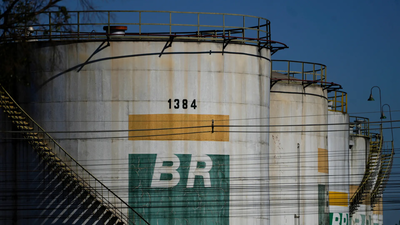
The federal government’s approval, issued on Monday, greenlighted exploratory drilling by the state-owned oil giant Petrobras near the mouth of the Amazon River. This region is believed to hold rich oil and gas reserves but is also home to delicate and largely unexplored ecosystems, including unique mangroves and a coral reef.
Petrobras has consistently asserted its track record of zero spills in its drilling operations. The company also clarified that the approved well is purely for exploration and will not be used for oil production.
Nevertheless, Astrini’s organization, joined by seven other environmental, Indigenous, and Afro-Brazilian rights groups, filed a lawsuit on Thursday against Petrobras and the Brazilian government. They aim to annul the license and secure an injunction to suspend drilling, arguing that the license suffers from significant technical flaws.
“We believe the potential consequences of oil exploration here were not adequately assessed. The risks associated with this project far exceed what the license implies,” Astrini contended. He emphasized, “Even errors have a time and place. Making such a mistake just 20 days before COP30 is a blunder of epic proportions.”
Toni, on the other hand, views fossil fuels as a perennial and central theme in climate discussions, a trend she expects to continue at COP30. “I don’t think this directly undermines Brazil’s credibility or legitimacy as the COP presidency. The contradictions we face are precisely what many other countries are grappling with,” the COP30 officer remarked.
She believes that Brazil’s challenge with fossil fuels is akin to its battle against deforestation: both represent major sources of carbon emissions, demanding innovative approaches to pivot towards more sustainable practices. “The energy debate in Brazil has never been more sophisticated. I am confident that COP30 will further enrich this crucial conversation about the future of Brazil’s energy landscape,” she concluded.