
A young cinephile’s heartfelt declaration, “I’m not Marathi-speaking, but I traveled from Juhu to Dadar just for Dilip Prabhavalkar – I salute you, sir,” perfectly encapsulates the buzz around ‘Dashavatar’. This impromptu speech, delivered at Plaza cinema, quickly went viral, fueling widespread conversation about the Marathi film that inspired such fervent praise.
The journey from Juhu’s upscale shores to Dadar’s bustling middle-class heartland might be short geographically, but it bridges significant cultural divides. When a piece of art can unite such diverse demographics, it clearly resonates deeply, transcending linguistic and socioeconomic barriers.
Released on September 12, ‘Dashavatar’ has indeed become a massive blockbuster. What’s even more remarkable is its ability to draw in not only Marathi-speaking audiences—who often favor Hindi cinema—but also a significant number of non-Marathi viewers.
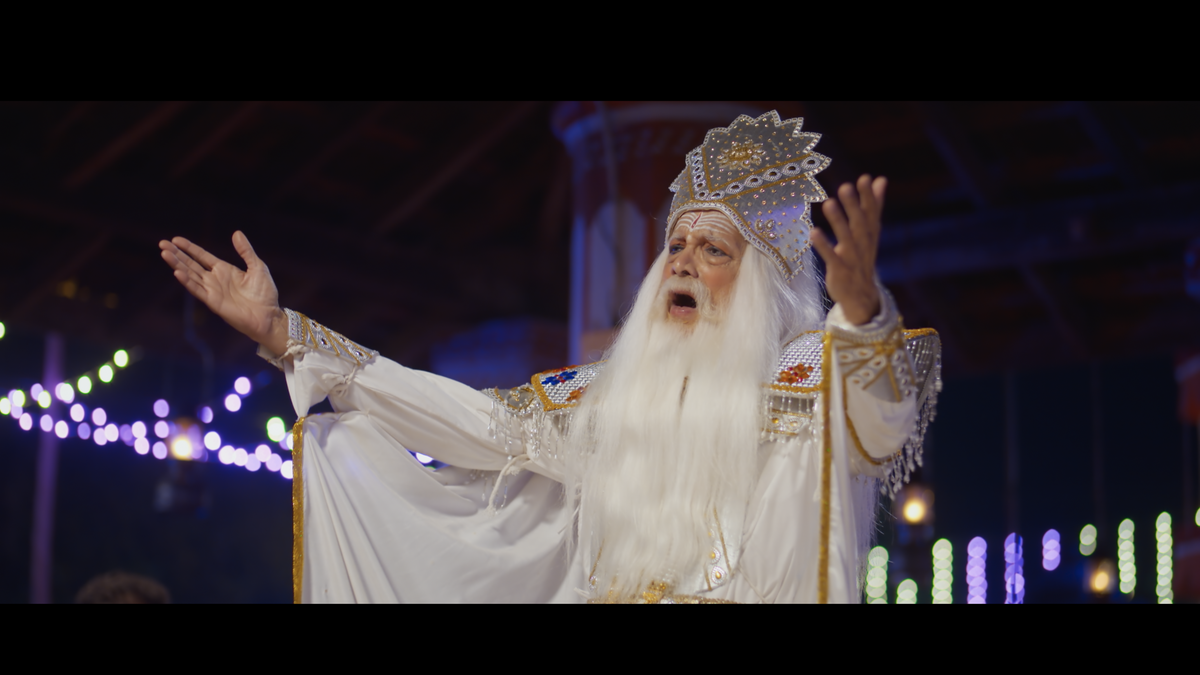
Dilip Prabhavalkar in the Marathi hit ‘Dashavatar’. | Photo Credit: SPECIAL ARRANGEMENT
Subodh Khanolkar, the film’s writer, director, and co-producer, firmly believes that “a compelling story transcends language barriers. If the narrative holds universal appeal, the language truly becomes secondary.” He explained, “We were confident that the universal themes of a father-son relationship, a relevant social issue, and especially folk art, would connect with everyone. By blending these elements into our story, I knew it would break through linguistic divides.”
Marathi cinema has seen a remarkable transformation this century. Once primarily a regional art form, it now boasts films like ‘Sairat’ (2016) and ‘Court’ (2014) that have transcended linguistic and cultural boundaries, earning both national and international acclaim. These films showcase Marathi cinema’s growing ability to craft universally resonant stories while staying true to its cultural roots. However, despite critical success, ‘Sairat’ remains the only Marathi film to have crossed the prestigious Rs. 100-crore box office mark.
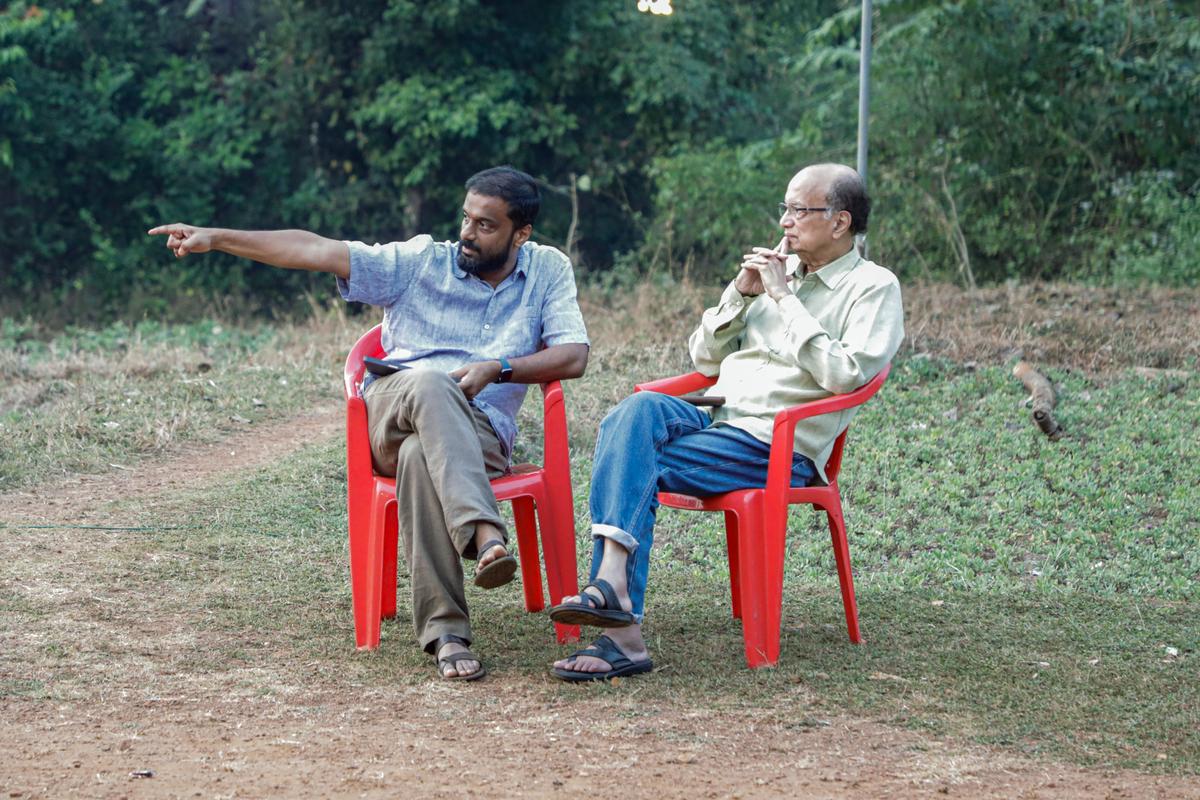
Director Subodh Khanolkar with actor Dilip Prabhavalkar. | Photo Credit: SPECIAL ARRANGEMENT
Within this evolving landscape, ‘Dashavatar’ shines as a film deeply embedded in Konkan traditions yet successfully captivating audiences far beyond Maharashtra’s borders. It distinguishes itself by seamlessly blending local folk art with universally appealing themes. It’s often compared to the Kannada blockbuster ‘Kantara’ (2022), as both films draw heavily from rich regional traditions. ‘Dashavatar’ celebrates Konkan’s ritual theatre, depicting the ten incarnations of Vishnu, while ‘Kantara’ showcases the Bhoota Kola traditions of Tulu Nadu. Both narratives are deeply rooted in the rhythms of local festivals, rituals, and the profound belief systems of their respective regions.
However, it would be inaccurate to label ‘Dashavatar’ as a direct inspiration for ‘Kantara.’ Their common ground lies in their reverence for tradition and their skill in integrating ritualistic practices into cinematic storytelling. Yet, their differences are equally notable. ‘Kantara’ is marked by spectacle, action, and a narrative deeply entwined with land politics, whereas ‘Dashavatar’ explores nostalgia, cultural memory, and the intergenerational passing down of faith and performance. Though both share a spiritual core, their thematic journeys are distinct.
Khanolkar observes that “the southern coastal peninsula boasts numerous cultural similarities. Regions share local deities and folk art forms with remarkable parallels. For instance, Konkan has Dashavatar, coastal Karnataka has Yakshagana, and Kerala features Mohiniyattam. Even after ‘Kantara’s’ success, we remained committed to telling our story in our unique style.”
For Khanolkar, the film’s creation was a deeply personal odyssey. He remembers sharing the story with his wife, Anvita, in 2021, while returning from his ancestral village of Kelus in Sindhudurg district after its centenary celebrations. “It was during that drive back, after the village festivities, that I first shared the story that had been brewing in my mind with Anvita,” he recounted. Just weeks prior, Khanolkar and his Ocean Film Company partners, Sujay Hande and Omkar Kate, had been filming a documentary about that very house. The conversations during that project gradually sowed the seeds for ‘Dashavatar’.
Khanolkar holds vivid memories of the ‘Dashavatar’ courtyard performances in Kelus and the enthusiastic Hanuman Jayanti celebrations he experienced during his summer holidays at his ‘aajol’ (maternal grandparents’ home). Both these visual and emotional recollections are beautifully woven into the film’s fabric. “Witnessing a ritual with the same profound intensity as both a child and an adult leaves a lasting impression,” he reflected. “That feeling of awe, of being connected to something much greater, was precisely what I aimed to portray on screen.”
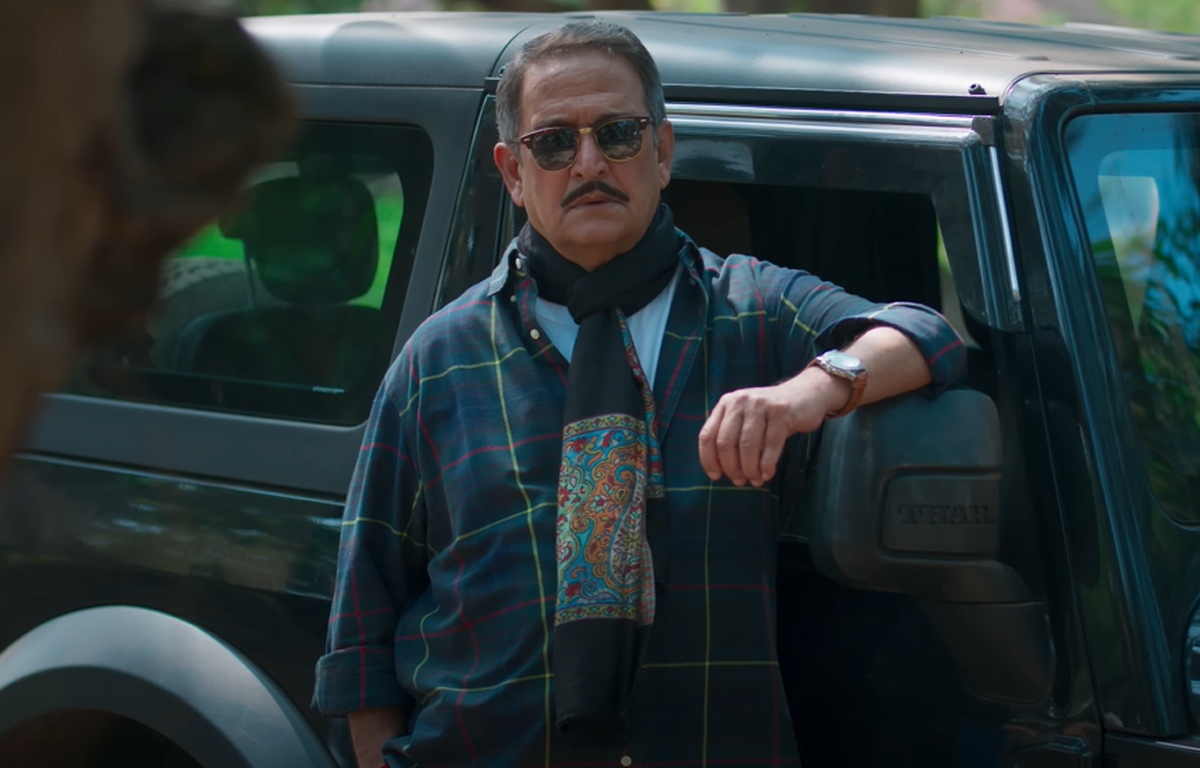
Mahesh Manjrekar in ‘Dashavatar’. | Photo Credit: Zee Movies Marathi/YouTube
Casting was paramount to the film’s authenticity. The choice to feature veteran actor Dilip Prabhavalkar in the lead role served not only as a crucial cinematic decision but also as a bridge connecting generations. Outside Maharashtra, Prabhavalkar, now in his eighties, is widely recognized for his National Award-winning performance as Mahatma Gandhi in ‘Lage Raho Munna Bhai’ (2006). However, for those who grew up in Maharashtra during the 1980s and 90s, Prabhavalkar was already a beloved household name, known for his satirical cricket writing, a popular children’s book series, newspaper columns, and remarkable versatility across stage, television, and film.
In ‘Dashavatar,’ Prabhavalkar’s casting held a deeper meaning than mere recognition; it was about preserving continuity. The film beautifully ensures that his rich legacy, cherished by generations who followed his work across diverse platforms, will easily reach Gen Z and beyond.
Khanolkar clarified that he hadn’t initially conceived the story with Prabhavalkar in mind. Yet, once the narrative was complete, the entire Ocean Film Company team reached a unanimous decision. “We were absolutely clear,” Khanolkar stated, “if he declined, we wouldn’t make the film in Marathi. His cultural rootedness was indispensable; without him, the film simply wouldn’t have been the same.”
Despite primarily being a television writer, Khanolkar didn’t know the open and approachable Prabhavalkar personally. “He needed some convincing,” Khanolkar admitted. “But once he joined, the screenplay was subtly adjusted to complement his natural posture, physicality, and effortless performance. His deep familiarity with the Konkan region and his fluent Malvani accent infused the film with a level of authenticity we couldn’t have achieved with anyone else.”
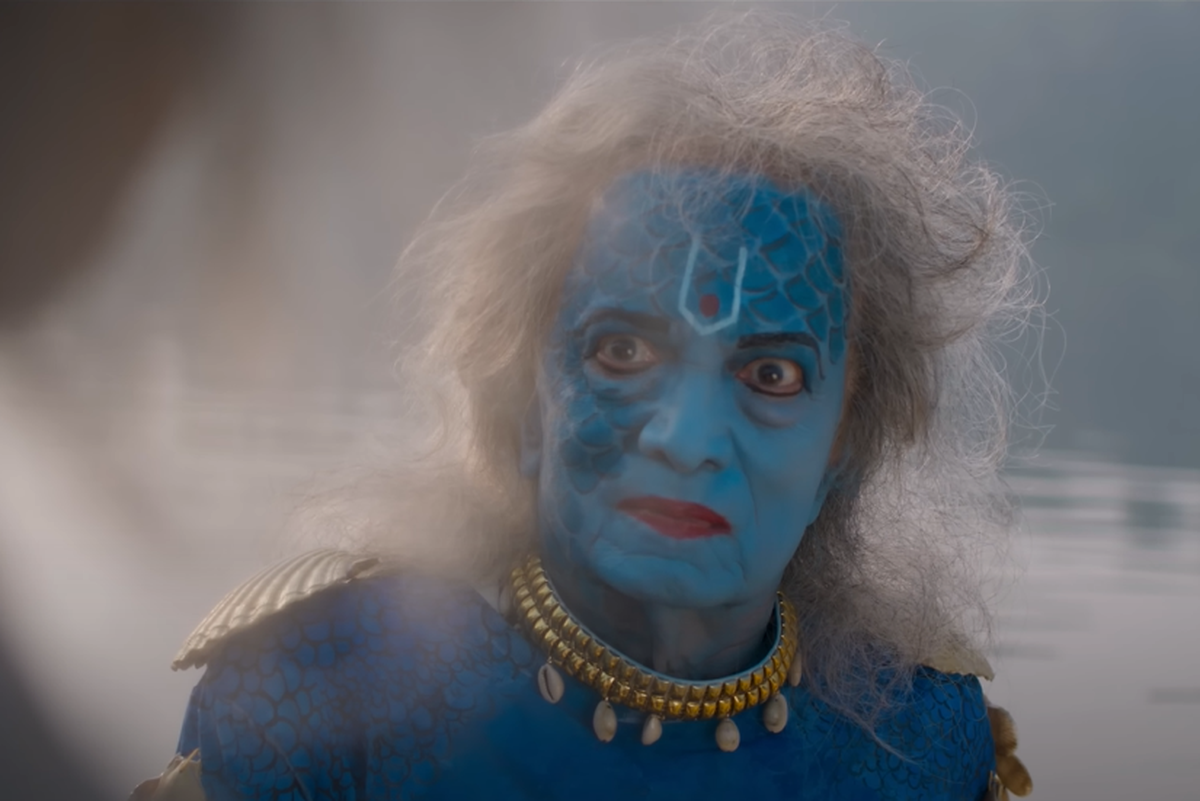
A still from ‘Dashavatar’. | Photo Credit: SPECIAL ARRANGEMENT
The result is a cinematic masterpiece that beautifully marries intimate personal memories with the grandeur of tradition. ‘Dashavatar’ transcends merely reviving a ritual or showcasing folklore; it reinterprets cultural memory for a contemporary audience who might not experience these performances firsthand. This approach aligns perfectly with a wider trend in Indian cinema, where films deeply rooted in regional traditions are successfully captivating audiences far beyond their native states.
Through films like ‘Dashavatar,’ Marathi cinema powerfully demonstrates that cultural specificity isn’t a limitation but rather an enrichment. While Konkan’s folk performances might seem unfamiliar to audiences in Delhi or Bengaluru, the core emotions they stir – faith, community, and belonging – are universally understood. Just as ‘Kantara’ elevated Kannada cinema, ‘Dashavatar’ highlights for Marathi cinema the enduring power of stories deeply connected to their origins.
While the film’s handling of land mining—a critical social issue contributing to Konkan’s environmental degradation—might appear oversimplified in the climax, Khanolkar clarified that this was a deliberate choice. He stated it was “intentional in a quest to reach out to a far wider audience.”
Ultimately, ‘Dashavatar’ serves as a testament to how a profoundly local story can transform into a universally human experience. For Khanolkar and his team, it was a tribute to their heritage, reinforcing the adage: the more personal the narrative, the more widely it resonates.