
Moving to a new country for higher studies is often envisioned as a primary academic challenge: navigating complex assignments, rigorous exams, and intense coursework. However, for an Indian master’s student at the prestigious Massachusetts Institute of Technology (MIT), the reality proved to be quite different. This student candidly shared on Reddit, “I thought the biggest challenge would be academics, but it turned out to be everything else.”
This ‘everything else’ included the profound silence after classes, a deep longing for home-cooked meals, the struggle to form new friendships, and even figuring out mundane tasks like locating grocery stores or setting up bank accounts. The student underscored that few are truly prepared for how isolating and disorienting those initial months in a foreign land can be.
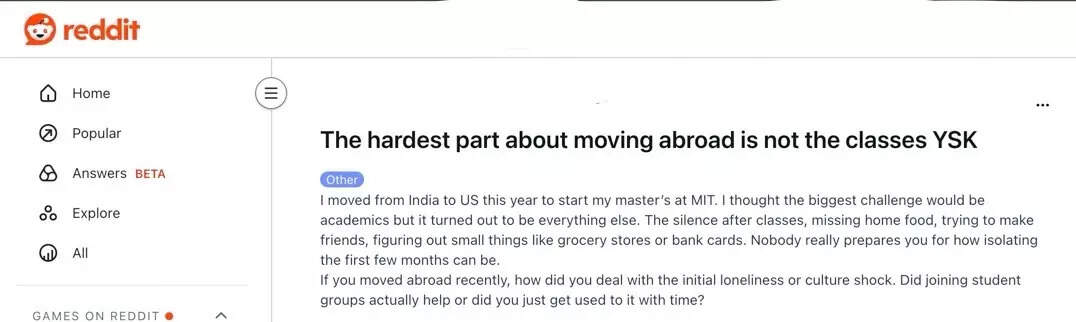
Numerous other users resonated with this experience, sharing their own encounters with loneliness, culture shock, and the intricate process of adapting to life abroad. Their collective advice offers invaluable insights for international students currently navigating or preparing for a similar journey.
Practical Strategies for Navigating Culture Shock
While every student’s experience is unique, certain proactive approaches can significantly ease the process of settling into a new country. These practical strategies are designed to help make the transition smoother, transforming initial difficulties into a more rewarding and enriching experience.
- Cultivate a personal passion beyond academics: An insightful piece of advice from the Reddit thread suggests: “Find the one thing outside of studies that truly motivates you and go all in. You will realize culture isn’t too different and you aren’t alone.” This highlights the power of pursuing interests like sports, creative arts, volunteering, or research. Engaging deeply in personal passions can provide a sense of purpose and belonging that extends beyond the classroom.
- Engage with student organizations and university clubs: As one user wisely noted, large universities, including MIT, are home to students from countless nations. “It’s better to involve more in the overall international student association; you get exposure from around the world,” they advised. These groups offer more than just social interaction; they are gateways to diverse perspectives, helping students forge connections and integrate into a broader community.
- Reframe daily chores as growth opportunities: The seemingly mundane tasks of daily life can feel daunting in a new environment. One student shared, “Socializing doesn’t mean you need a party every night. Rather, learn about yourself through university clubs, gymming, cooking, and grocery shopping.” Mastering these independent routines builds resilience and confidence, transforming everyday activities into valuable lessons in cultural adaptation.
- Allow ample time for adjustment: The process of adapting to a new country doesn’t happen instantly. An experienced international student offered this perspective: “The first six months in a foreign land are hard; eventually you get used to it.” Patience is crucial. Culture shock is a gradual journey, not a singular event. Embracing moments of discomfort while slowly building social networks and routines often leads to more profound and sustainable integration.
- Purposefully venture beyond your comfort zone: Actively seeking new experiences is vital. Whether it’s exploring local neighborhoods, attending social gatherings, or simply striking up conversations with classmates from different backgrounds, intentional engagement fosters personal growth. While comfort zones offer security, they can also perpetuate feelings of isolation. Deliberately stepping into unfamiliar situations is often the quickest route to understanding both yourself and your new surroundings.
A Broader Perspective on Thriving Abroad
Ultimately, success in a foreign country extends far beyond academic achievements. It’s equally about mastering the nuances of daily life and embracing the broader cultural experience. The practical strategies discussed here—cultivating personal interests, actively participating in student life, approaching everyday tasks as learning opportunities, exercising patience during adjustment, and intentionally stepping outside your comfort zone—provide a comprehensive guide. This roadmap can help transform the initial feelings of isolation into a profound period of personal growth and discovery.
For all students venturing abroad, culture shock is a genuine hurdle, but it is certainly not insurmountable. With self-awareness, patience, and a proactive approach to engagement, the unfamiliar can become a rich environment for continuous learning, meaningful connections, and deep self-discovery.